Photo credit: Scott Habermann/Shutterstock.com
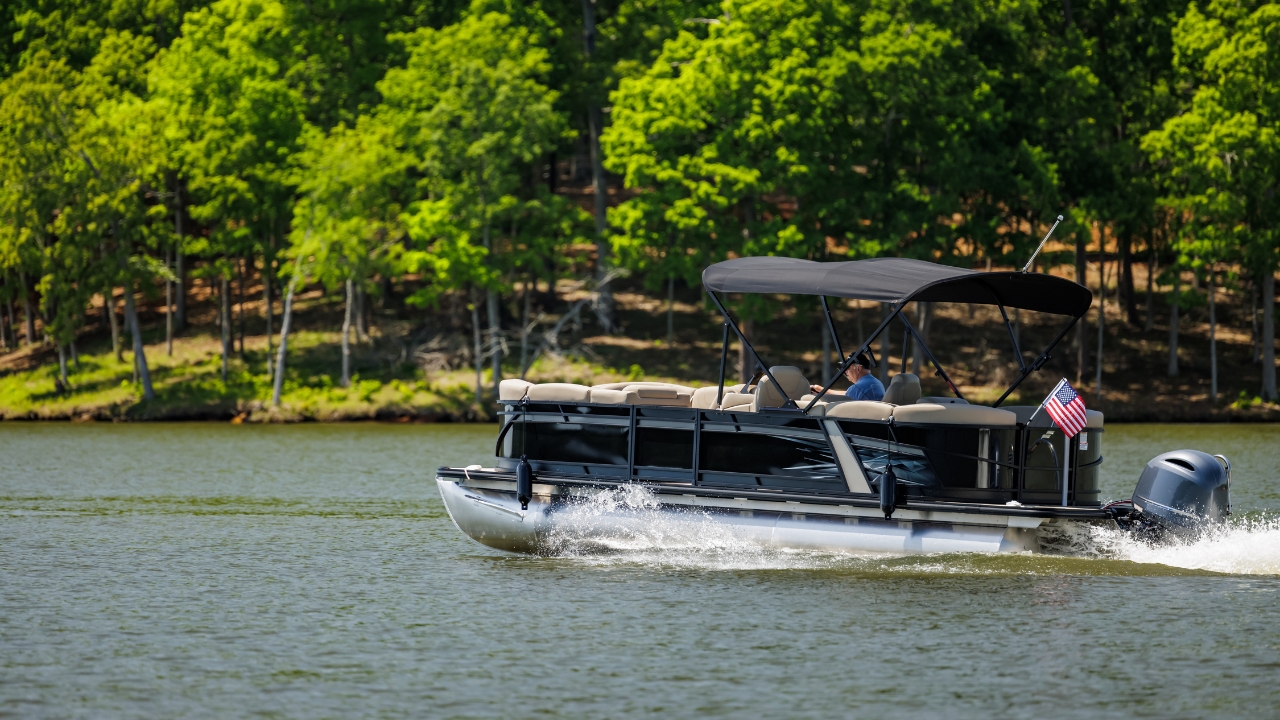
The angler was already anchored up and fishing his spot when the pontoon boats started coming through too close.
He was not drifting across the lake, blocking a ramp, or running a trolling motor across somebody else’s line. In his Reddit post, he said he was bass and panfishing from his boat, anchored where he wanted to fish, casting around like anyone else would do on a normal day out.
The problem was that other boaters kept running right through his space.
According to him, pontoon drivers on that lake had a habit of passing about 10 feet from his boat. Not 50 yards. Not even a polite, wide swing around the area. Ten feet. Close enough to cut right through the water he was actively casting into.
That kind of thing gets old fast when you are trying to fish. A pontoon does not have to hit you to ruin the spot. It can push wake through the area, spook fish, force you to stop casting, and turn a quiet pocket of water into a traffic lane. And when it keeps happening, it starts to feel less like bad luck and more like nobody on the lake has a clue how much room to give someone who is already sitting there.
The fisherman admitted he had thought about tying on a big sinker and launching it into the side of one of the boats. He did not say he had done it, and he clearly knew that would be a bad move. It was more the kind of angry thought that runs through your head after the fourth or fifth person acts like your fishing line is invisible.
Instead, he said he usually just avoided confrontation. He would shake his head, let the pontoon go by, and try to keep fishing. But he was tired of always being the one who backed down.
It was not only the pontoon drivers, either. He said he ran into the same issue with other fishermen working the same shoreline. If he and another boat were fishing toward each other, it turned into a slow game of chicken. Neither boat would clearly yield, and they would keep getting closer until they were near enough to talk without raising their voices.
That is where lake etiquette gets awkward. When two anglers are fishing the same bank in opposite directions, somebody has to make a move. One boat can swing wide, one can pause, or they can talk it out before they end up casting into the same water. But when nobody says anything, both boats keep inching forward like they are waiting for the other guy to blink.
And in this case, the Reddit poster said he always blinked first. He would leave and go fish somewhere else.
That was the part that seemed to bother him most. He was not asking how to win some big showdown. He was asking how other people handle it when boaters keep crowding them and he keeps being the one who gives up the water.
For anyone who fishes busy lakes, the frustration is easy to understand. There is a big difference between sharing water and having someone run almost on top of you. Most anglers expect to deal with jet skis, pleasure boats, pontoons, kayaks, bass boats, and weekend traffic. That comes with public water. But basic courtesy still matters.
If a boat is anchored and someone is casting, a close pass through that casting lane is not just annoying. It can be unsafe. A lure with treble hooks or a heavy sinker can do real damage if somebody runs straight through a cast. Nobody needs a shouting match over it, but nobody should be shocked when an angler gets mad after being crowded over and over again.
The other issue is that not every bad pass is intentional. Some pontoon drivers may not know they are cutting through someone’s fishing water. Some may be distracted. Some may assume that because they are not physically hitting the boat, they are fine. That does not make it less irritating for the person fishing, but it does explain why confrontation can be tricky.
The fisherman seemed stuck between two bad options: say nothing and keep losing his spots, or speak up and risk turning a day on the water into an argument.
Commenters were split between patience, confrontation, and practical lake etiquette.
Several people told him avoiding a fight did not make him weak. One commenter said plenty of boaters are simply oblivious and should not be operating equipment in the first place. That was one of the main themes in the replies: sometimes people are not trying to start trouble. They just do not understand what they are doing.
Others said that when two fishing boats are working toward each other on the same shoreline, the best move is to actually talk. A quick “Can I swing around you?” or “Any luck?” can break the tension before both boats end up crowding the same stretch of water.
A few people said that if pleasure boaters are repeatedly harassing anglers on purpose, photos and reports may be worth it. Others pushed back and said game wardens are not likely to do much over one or two ignorant passes unless someone is clearly trying to interfere again and again.
Some comments were less careful. A few suggested yelling, playing obnoxious music, using a rude hand gesture, or following people back to the ramp. But the more practical advice was to stay calm, avoid throwing anything, and not let a rude boater talk you into doing something that could get you charged or kicked off the lake.
The best middle ground was simple: communicate with other anglers when you can, document repeat harassment if it becomes a pattern, and do not turn one bad pontoon driver into a fight that ruins the whole day.