Photo credit: Zontica/Shutterstock.com
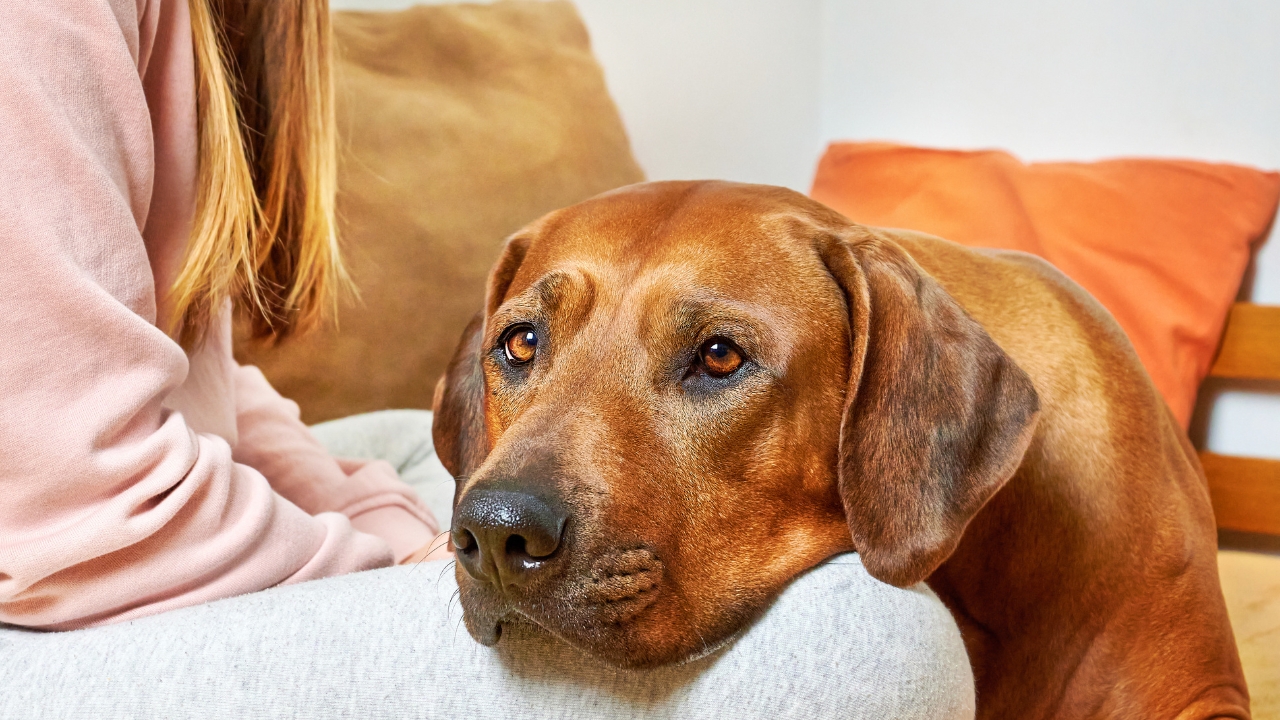
When your dog rests its head on your leg, chest, arm, or lap and just leaves it there, it usually is not random at all. Most of the time, it is a quiet contact behavior. Dogs use body language and physical closeness to communicate comfort, attention, trust, and emotional state far more than people realize. VCA notes that dogs read physical cues closely, and AKC says canine body language is a major part of how dogs express emotion and intention.
A head-rest like that often means your dog wants connection without a lot of movement. It can be affection, a check-in, a request for attention, or a way to settle itself by staying in contact with you. For some dogs, physical affection is rewarding when they are in the mood for it, and VCA notes that affection can function as a reward depending on the dog and the moment.
A lot of the time, it is a trust move
A dog that puts its head on you and stays there is often choosing closeness because it feels safe with you. It is a low-drama way of saying, “I want to be here with you right now.” You see this a lot in dogs that are strongly bonded to one person or that naturally like body contact. Even therapy-dog reporting from AKC describes leaning into people as a comfort behavior that helps put them at ease, which fits the same general idea of dogs using steady contact in a reassuring way.
Usually, the rest of the body tells you whether this is simple affection. If your dog looks loose, calm, soft-eyed, and relaxed, the meaning is probably straightforward. The dog is settled, comfortable, and choosing you as its resting place for a minute. AKC’s guidance on reading dog body language emphasizes looking at the whole dog, not one isolated behavior.
Sometimes it is your dog asking for attention the gentlest way it knows
Some dogs learn that a head on your knee works better than barking, pawing, or bouncing around. It is quiet, direct, and hard to ignore. If you usually pet your dog, talk to it, or shift your focus when it does this, the dog may keep using that behavior because it works. VCA notes that petting and affection can be highly rewarding to dogs when they want that kind of interaction.
That does not make it manipulative in some dramatic sense. It simply means your dog has found a calm way to ask for something. Maybe it wants affection. Maybe it wants you to stop working and notice it. Maybe it wants to go out and has paired closeness with getting your attention first. The head-rest is often less mysterious than people think. It is just a very effective request.
It can also mean your dog is looking for reassurance
If the behavior shows up more during storms, visitors, nighttime noise, routine changes, or tense moments in the house, it may be a comfort-seeking move. VCA says frightened or anxious dogs may freeze, fidget, hide, or stay close, and separation-anxiety guidance notes that overly attached dogs often crave physical contact and try to remain near their owners.
This is where context matters. A relaxed head-rest is different from a dog that presses onto you and seems unable to settle unless it is touching you. If the head-rest comes with pacing, panting, trembling, whining, or clinginess, it can be part of a bigger stress pattern rather than simple affection. VCA’s stress guidance lists behaviors like pacing, panting, trembling, whining, and attention-seeking among common signs of canine stress.
In some cases, it is worth asking whether your dog feels okay
A dog that suddenly becomes much more physically attached can sometimes be reacting to discomfort, pain, or a change in how secure it feels. VCA’s behavior guidance says behavior problems often involve both environment and physical or mental health, and stress guidance advises seeing a veterinarian when behavior changes become frequent or pronounced so medical causes can be ruled out.
So if your dog has just started doing this a lot more than usual, and especially if it comes with restlessness, appetite changes, sleep changes, or a general “not acting like itself” feeling, I would take that seriously. A dog does not always show discomfort in obvious ways first. Sometimes it simply gets quieter, clingier, and more interested in staying close to you than normal.
The meaning is usually in the full picture
Most of the time, when your dog puts its head on you and stays there, it means something pretty simple: trust, affection, comfort, attention, or reassurance. The real clue is everything around it. Is your dog relaxed? Then it is probably a bonding moment. Is your dog tense or newly clingy? Then it may be trying to regulate stress or tell you something feels off. AKC and VCA both stress reading behavior in context rather than assuming one gesture always means one thing.
So no, it usually is not random. Your dog is using contact on purpose. Sometimes that purpose is love. Sometimes it is a request. Sometimes it is a quiet way of saying it feels better with you there.
Like The Avid Outdoorsman’s content? Subscribe to our newsletter so you never miss an article.
Here’s more from us: