Photo credit: Knife Video Channel/YouTube
Fixed blades have always had their place—on belts, in packs, on workbenches—but some knives manage to win folks over without any flashy introduction. You don’t expect them to be the ones you reach for over and over. They’re not backed by heavy marketing, they don’t show up in influencer kits, and they’re not the darlings of forums. But over time, after enough real-world use, they carve out a reputation the hard way. No drama, no hype—just solid performance.
You’ve probably got one or two tucked away that surprised you. Maybe they outcut pricier blades, or maybe they handled abuse that others couldn’t. These fixed blades weren’t supposed to be favorites—but here they are, proving their worth every time you bring them along. This isn’t about boutique steels or elaborate designs. It’s about knives that work. The kind you trust when you’re off the grid, gutting game, splitting kindling, or doing a hundred other things a folding knife won’t.
Buck 119 Special
The Buck 119 doesn’t look like your usual workhorse, but it’s been proving people wrong for decades. It has that classic clip-point hunter look that makes some folks think it’s all show, but once you start using it, it earns its place fast. Whether you’re dressing game or setting up camp, the 119 holds up.
That 6-inch 420HC blade takes a keen edge and isn’t hard to resharpen in the field. It’s not high-end steel, but it’s heat-treated right. The handle fits well in the hand even when things get slick, and it’s tough enough to baton wood if you need to. A lot of folks wrote it off as old-fashioned—until they started using it. Then it became the one they wouldn’t leave behind.
Mora Companion HD
You won’t find a cheaper fixed blade that holds up like this one. The Mora Companion HD is about as no-fuss as it gets, but it cuts like a knife three times its price. It wasn’t supposed to compete with bigger survival knives, yet people keep putting it through the wringer—and it keeps coming back for more.
That carbon steel blade sharpens easily and bites deep. It’s not full tang, and that turns some people away—until they see what it can actually do. Whether you’re carving, skinning, or prepping firewood, it just works. Lightweight, affordable, and surprisingly durable, it’s a knife that turns skeptics into believers. You’ll end up buying two—one for the pack, one for the truck.
Gerber StrongArm
Plenty of folks overlooked the Gerber StrongArm when it first came out, assuming it was just another mass-produced knife with tactical looks. But this thing proved its grit fast. It’s become one of those blades that ends up in bug-out bags, glove boxes, and hunting packs without any fanfare.
It’s got a thick 420HC blade with a great heat treat, and the rubberized grip stays put when your hands are wet or cold. The sheath is adaptable and sturdy, and it actually carries better than you’d expect for a knife this size. You can beat on it, pry with it, baton through logs, and it keeps taking it. It’s not flashy, but it doesn’t flinch when things get rough.
ESEE 3
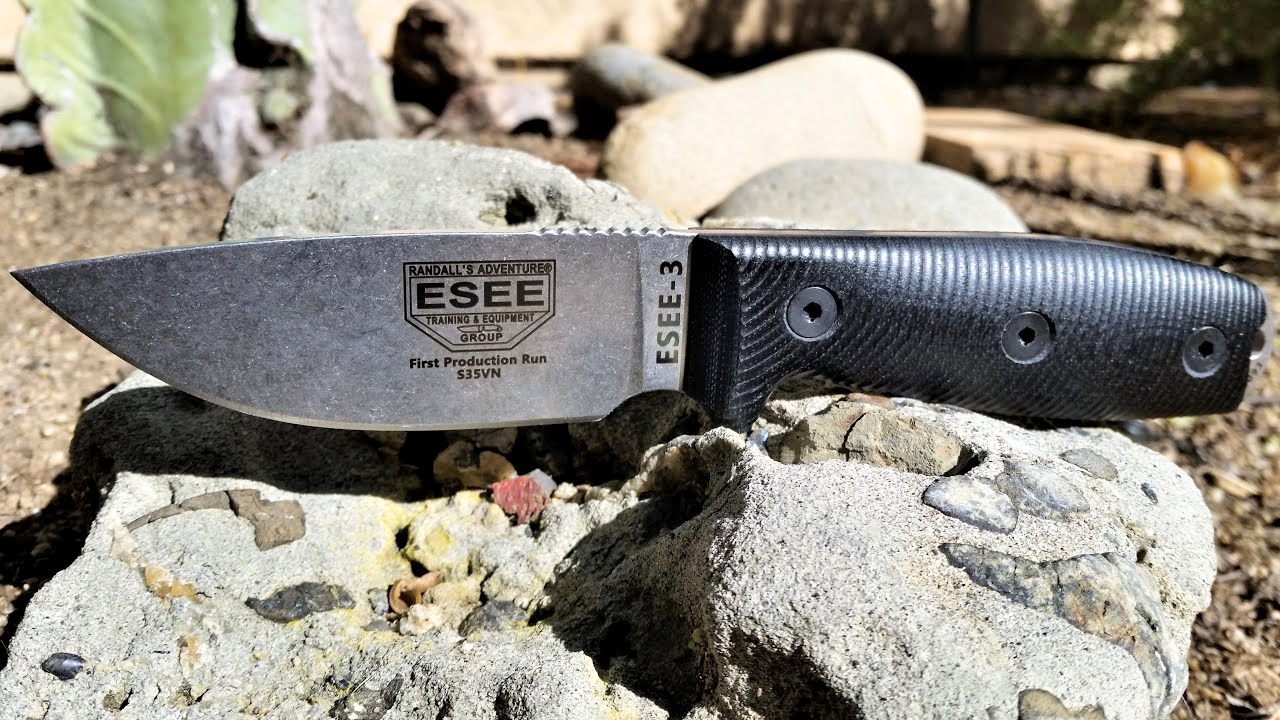
The ESEE 3 wasn’t built to be a flashy survival knife—it was designed as a field tool for professionals. At first glance, it looks small for bushcraft work. But spend any time with it in the field and you’ll start to appreciate how much it can do.
The full flat grind bites deep and slices well, and that 1095 steel, while not stainless, is easy to maintain with a little oil. It’s nimble enough for fine tasks but sturdy enough for light batoning. The micarta handle stays grippy even when things get messy. It doesn’t get the spotlight like the bigger ESEE 5 or 6, but in the real world, it’s often the better choice.
Cold Steel SRK
Cold Steel has always leaned heavy into the tactical look, so the SRK didn’t scream “reliable field knife” when it came out. But turns out, this thing can take serious punishment. It’s one of those blades you can abuse and not feel bad about—and it’ll keep showing up ready for more.
The 6-inch blade is thick enough for batoning and prying, and the Kray-Ex handle gives you a locked-in grip. It comes in several steel options, and even the more affordable versions hold up surprisingly well. Whether it’s tied to a pack or strapped to your belt, the SRK is one of those blades you end up trusting without meaning to.
Becker BK16
The Becker BK16 didn’t arrive with much fanfare, but it’s become a quiet favorite among folks who know what they’re doing in the woods. The size is just right for general camp chores, and the 1095 Cro-Van steel has the kind of toughness that doesn’t quit.
It’s light in the hand but still big enough to split kindling or prep food. The handle scales feel a little plain at first, but they fit well and don’t slip around. Once you put a good edge on it and start using it, it quickly becomes a go-to. It doesn’t scream for attention, but it earns it anyway.
Fallkniven F1
The Fallkniven F1 was designed for Swedish air force pilots, but it took a while before it started catching on with outdoorsmen. It’s not huge, not flashy, and doesn’t follow the usual survival knife formula—but it’s become one of those fixed blades that people end up trusting with their lives.
The laminated VG10 blade is incredibly tough, and the convex edge is built for long-term use. The thermorun handle isn’t fancy, but it gives great grip and doesn’t care about wet, cold, or grime. Once you’ve used one in bad weather or under pressure, you understand why so many people swear by it.
Schrade SCHF36
A lot of folks looked at the price tag and assumed the Schrade SCHF36 was another throwaway knife. But it turns out to be a serious contender for anyone on a budget. It’s thick, heavy, and a bit crude—but it’s also tough, easy to sharpen, and built to take abuse.
The 1095 blade takes a keen edge, and the handle, while not refined, fills the hand and stays put under pressure. It won’t win any beauty contests, but in real-world use, it earns respect. Once you start using it for chopping, splitting, and scraping, you stop caring about how it looks and appreciate what it can do.
Tops BOB Fieldcraft
The Tops BOB Fieldcraft wasn’t expected to catch on outside of the bushcraft niche. But word of mouth spread fast, and it’s now one of those knives that shows up in kits and packs everywhere. It’s a serious tool built with real use in mind.
The 1095 blade is thick and strong with a modified Scandi grind that bites deep but still holds up. The micarta scales are shaped to fit your hand, even after hours of carving or fire prep. It’s one of those knives you end up relying on more and more, even if you started out thinking it was too specialized. It just works.
Ka-Bar Dozier D2 Fixed
Ka-Bar’s Dozier D2 fixed blade wasn’t supposed to be anything special—it’s compact, affordable, and plain-looking. But that D2 steel, paired with a solid design, turned it into a sleeper hit. It punches way above its weight class for edge retention and durability.
The handle feels simple but secure, and the knife carries light without feeling flimsy. It’s not meant for chopping, but it handles most field and camp tasks without complaint. Once you’ve used one for a season or two, it becomes the blade you grab on the way out the door without thinking.
Ontario RAT-3
The Ontario RAT-3 didn’t look like a standout when it first hit the market. It seemed small for a survival knife and didn’t have much buzz behind it. But once it got into people’s hands, it started gaining traction. Now it’s one of those underrated knives that folks hang onto.
It’s compact but tough, with a full tang 1095 blade and well-contoured micarta scales. It handles bushcraft tasks, light batoning, and food prep with ease. The sheath carries well and doesn’t get in the way. It’s a knife you end up appreciating more every time you use it—and eventually, it’s the one you recommend to others.
Condor Bushlore
The Condor Bushlore was never supposed to be a star. It came in with a low price, basic looks, and an old-world style that didn’t catch much attention. But people started using it—and realizing it could take real abuse and keep going.
The 1075 carbon steel blade is easy to sharpen and tough enough to handle camp chores without babying it. The hardwood handle is comfortable, even if it’s not fancy. It’s not stainless, so you’ve got to take care of it, but in return, you get a blade that feels right in hand and performs when it counts. It’s one of those knives that works better than it looks—and keeps on earning trust the more you use it.
Like The Avid Outdoorsman’s content? Subscribe to our newsletter so you never miss an article.
Here’s more from us: