
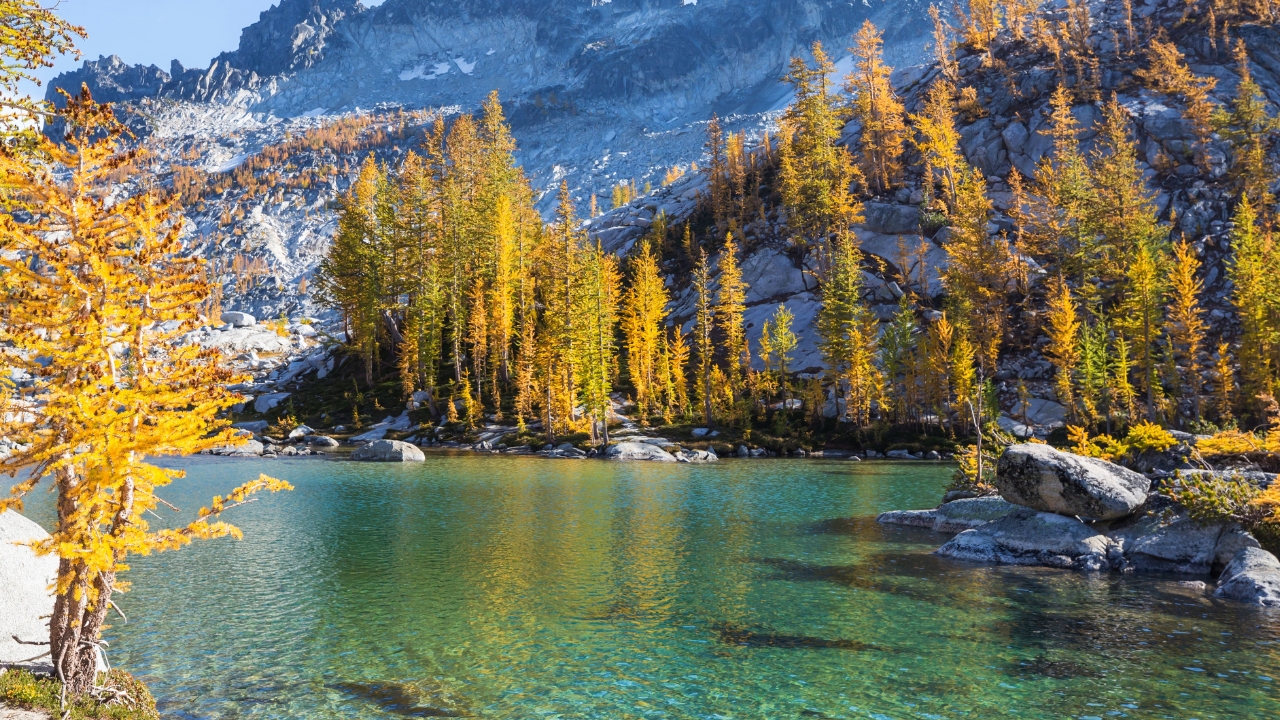
Photo credit: Galyna Andrushko/ Shutterstock.com
If you spend enough time outside, you start noticing the places that stop you in your tracks. The spots where light hits right, the terrain tells a story, and every direction offers something worth remembering. Some of those moments are best left alone, but others beg to be framed. Whether you’re toting a full-frame DSLR or something more compact, the real trick is finding the kind of locations that reward patience and a good eye.
You don’t need to be a professional photographer to enjoy bringing back the kind of photos that make other folks pause. All you really need is the right backdrop and a little time. The places listed below aren’t gimmicky or overhyped — they’re the kind of real-deal landscapes where a camera becomes part of the experience. And if you’re already living the outdoor life, odds are you’ve stood in a few of them already.
High desert in late afternoon
There’s something special about the high desert when the sun starts to dip. The shadows stretch long, the colors warm up, and everything turns soft without losing its edge. Sagebrush, red rock, and a few well-placed clouds can give you layers to work with that don’t need any filters.
Photographing in the high desert rewards patience. Wait for that golden hour and you’ll see what I mean. The terrain may look sparse at first glance, but it’s loaded with texture and light. Don’t skip the details — a weathered fence post or the way sand catches the sun can turn out better than the wide shot.
Backcountry lakes at sunrise
If you’re willing to haul your gear before daylight, backcountry lakes can be pure gold. The still water reflects every color of the sky, and if you time it right, you’ll catch that moment before the breeze picks up and ruins the mirror.
Bring a tripod if you’ve got it. Long exposures with a little morning mist can turn a quiet lake into something that feels almost surreal. And don’t forget to turn around — sometimes the best light is hitting the treeline behind you while you’re focused on the water.
Burned forest with fresh growth
A burned-out forest might not sound like much to photograph, but once new growth starts pushing through the ash, it tells a different kind of story. The contrast between blackened trunks and bright green undergrowth gives your camera something real to work with.
There’s also something honest about those landscapes. They’re raw, quiet, and filled with the kind of resilience that doesn’t need explaining. Early morning or overcast light can help balance the contrast, and if there’s a little fog, all the better. Keep your shots simple and let the scene speak for itself.
Remote river bends
Find a spot where a river snakes through the landscape, and you’ve got the kind of natural curve that leads the eye right through the frame. Add in some rocky banks, a few cottonwoods leaning over the edge, and a cloud-streaked sky, and you’ve got a shot worth carrying home.
Timing makes a big difference. Catching it during late afternoon gives you rich shadows and texture in the water. Or if you hit it in early fall, those yellow leaves against the blue water can punch through without much editing. A polarizing filter can help cut glare and bring out detail if you’re shooting mid-day.
Foggy hardwood forests
On a foggy morning, a hardwood forest turns into something out of a different time. The haze mutes the background, isolates your subject, and softens everything just enough to pull attention right where you want it. Oaks, maples, even beeches — they all work well when you can catch that kind of weather.
Stick to a longer lens if you want to compress the trees and stack the trunks. Or go wider to let the fog create depth. Paths, streams, or old stone walls help anchor the shot and give it a sense of place. This kind of setting does more with less, so you don’t have to overthink it.
Prairie grasslands during storm season
If you’ve ever been out on open grassland when a thunderstorm rolls in, you know how fast things can go from peaceful to dramatic. The sky goes dark, the wind starts talking, and the light gets weird in all the best ways. It’s the kind of scene that doesn’t last long, but it’s worth waiting for.
Photographing under those skies takes a little nerve and a fast setup. Keep your gear protected and be ready to move if things go sideways. But when you get it right — the tension in the sky, the wind-blown grass, maybe a bolt in the distance — it’s hard to beat.
Coastal cliffs and sea stacks
Anywhere the land meets the sea with a little drama, your camera is going to have a field day. Cliffs, sea stacks, crashing surf — they give you shape, motion, and depth in every frame. Add in changing light or a few low clouds and it’s hard to mess it up.
Early morning light tends to hit the water just right, especially if you’re on the west coast looking south. Long exposures can turn the waves into motion blur, or you can freeze the splash for something sharper. Look for birds, driftwood, or tide pools to round out your shot.
Abandoned buildings in wild landscapes
Old cabins, barns, or even weather-beaten homesteads tucked into the middle of nowhere have a draw that’s hard to explain. They hint at stories without giving everything away, and when you frame them right, they almost speak on their own.
Look for broken windows, sagging roofs, or tools left behind. Don’t center the building unless you have a reason — letting the landscape crowd in from one side can say more than a straight-on shot. Sunrise or sunset helps add character, but these spots hold up even in overcast light.
Rocky high-country passes
Up above the treeline, everything feels exposed — the wind, the sky, the scree underfoot. It’s not always comfortable, but it’s photogenic in a way that sticks with you. Jagged ridgelines, snowfields, and the wide-open horizon make for photos that show scale and isolation without needing much explanation.
This kind of terrain benefits from clear skies or dramatic weather. You’re not going to get soft pastels up here — it’s all about hard light and big contrast. Shoot wide, but don’t forget the close details. A cairn, a wildflower, or a boot track in the dust can add a personal layer.
Slow-moving creeks through old woods
Sometimes what you need is a spot that’s quiet. Slow-moving water meandering through the woods — filtered light, mossy stones, maybe a log bridging the stream. It’s peaceful in person, and it shows up that way on camera too, especially if you slow your shutter and let the water blur.
You don’t need perfect symmetry here. Let the creek pull the viewer through the shot. Frame it low, get your feet wet, and don’t be afraid to shoot with the light behind you if it’s glowing through the canopy. These kinds of photos don’t shout — they hang around quietly.
Tallgrass at golden hour
Tallgrass lit up in the last hour of daylight looks almost unreal. It catches fire in all directions, moves with the wind, and adds warmth to everything it touches. Whether you’re out on a preserve or just caught the right spot at the edge of a field, it’s worth stopping for.
You can shoot into the sun for silhouette and glow, or go sideways for contrast and depth. Look for fence lines, old farm equipment, or deer trails cutting through — they all help give a sense of place. This is where patience pays off. You’ll know when the light’s right.
Alpine meadows during bloom
High-country meadows don’t get a long growing season, but when they bloom, they go all in. Lupine, paintbrush, and daisies show up fast and in bunches. You might only have a few weeks to catch them, but if you time it right, it’s worth the hike.
Shoot low to let the flowers fill the foreground. Get your knees dirty and let the color lead into the hills behind. Early morning light brings out the saturation without blowing things out, and a few scattered clouds can give the sky some interest. Keep it natural — this kind of beauty doesn’t need any dressing up.
Like The Avid Outdoorsman’s content? Subscribe to our newsletter so you never miss an article.
Here’s more from us:


