Photo credit: Virrage Images/Shutterstock.com
Tracking isn’t magic. It’s details—quiet feet, good light, and the ability to read sign without turning every step into noise and confusion. The wrong gear doesn’t just slow you down. It makes you miss blood, misread direction, spook the deer, and lose the trail at the exact point where you needed one more clue. Most tracking problems start before the shot: bad light, bad plan, and gear that’s “fine for the walk in” but terrible once you’re crawling around leaves and brush. Here are 15 gear choices that make tracking harder than it should be, plus what they do wrong in the real world.
A flashlight that’s bright but has terrible beam pattern
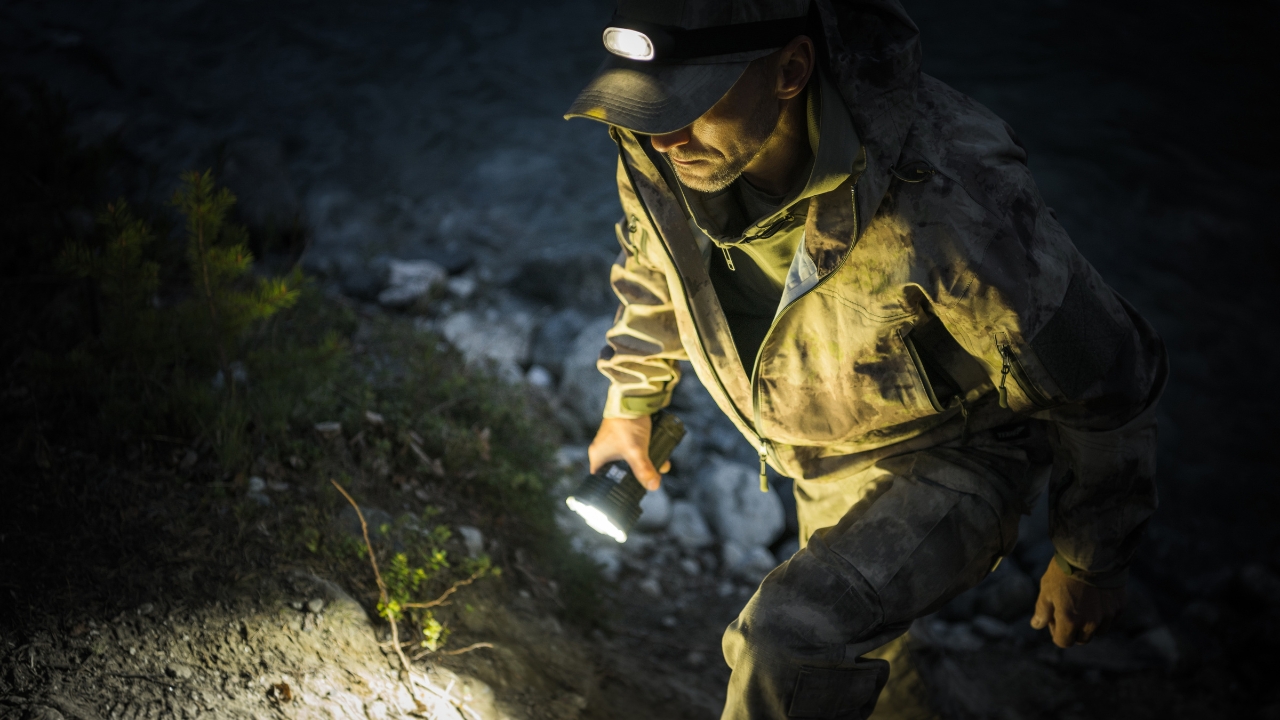
People buy lumens and ignore beam shape. A super bright light with a tight hot spot will blow out detail and make blood look like shiny leaves. A beam that’s too wide can wash everything into a flat gray mess. For tracking, you want a beam that lets you scan without losing contrast—something with usable spill and a defined center, not a pure spotlight. You also want a light that handles movement without flicker and doesn’t jump between brightness levels when it gets bumped. If your light turns the forest floor into a glare zone, you’ll walk right past blood and convince yourself there wasn’t any. The best tracking light makes blood pop without turning every wet leaf into a false hit. And if you’re using a headlamp, it needs the same beam quality—not just “hands free.”
Headlamps that sit too high and throw shadows at the worst angles
Headlamps are great until the angle is wrong. A lot of them sit high and throw light forward and down, which creates shadows behind every twig and leaf. That shadowing hides blood on the back side of grass and makes sign look less obvious than it is. It also causes you to scan too fast because the ground looks “clean.” A headlamp should sit low enough and be adjustable enough that you can change angle quickly when you’re down on hands and knees. A headlamp with a weak tilt mechanism is a liability. If you’re tracking at night, you need the ability to rake light across the ground at a low angle so texture and color changes stand out. A fixed, high-angle headlamp makes everything look the same, and that’s how trails get lost.
No backup light or dead batteries “because it was charged yesterday”
This one is brutal because it’s so avoidable. Tracking often happens at the worst time—last light, after dark, in cold weather. Batteries drain faster when it’s cold, and “it was full yesterday” doesn’t mean anything. If your light dies halfway through, your pace changes, your patience changes, and your decisions get worse. You start pushing when you should slow down, because you don’t want to be in the woods with no light. A second light and spare batteries weigh almost nothing compared to losing a deer. If you’re using rechargeable lights, bring a small backup that uses common batteries. If you’re using disposable batteries, keep them in a waterproof bag where they don’t get crushed. Your tracking plan should never rely on one power source.
Boots that are loud, stiff, and make you stomp
Heavy, noisy boots are fine for a long walk, but they can ruin the quiet part of tracking. When you’re close to a wounded deer, noise matters. Stiff soles make you step harder, crunch louder, and lose the ability to “feel” the ground. That leads to rushing and missing sign. The other problem is traction: some boots that are great on dry ground are terrible on wet leaves and slick clay, so you start looking at your feet instead of reading sign. A good tracking boot is quiet, stable, and gives you control at slow speeds. I’m not saying wear sneakers. I’m saying don’t wear boots that turn every step into a drum. The best tracking happens when you can move like you’re stalking, not hiking.
Cheap rain gear that sounds like a tarp
Rain is when tracking gets tricky—blood gets diluted, washed, and smeared. That’s already hard enough. If your rain gear is loud, you’ll spook deer, spook other deer that may bump your wounded animal, and you’ll also rush because you’re annoyed. Noisy rain gear also makes it harder to hear subtle stuff: a deer shifting, a cough, a stumble in thick cover. A soft shell or quiet rain layer that doesn’t crackle is worth it if you hunt in wet climates. Also, cheap rain gear can fog your glasses or drip water into your light beam, making your visibility worse. Quiet, functional rain gear keeps your pace controlled, your eyes up, and your brain calm. A loud plastic jacket turns every tracking job into a stress test.
Gloves that kill your feel and make you clumsy
Gloves are important in cold weather, but thick gloves can make you clumsy at the exact moment you need precision. Tracking involves touching sign, picking up hair, checking blood on leaves, and using a light without fumbling. Big insulated gloves turn that into a mess. You drop your flashlight, you smear blood, you can’t use your phone, and you get frustrated. The fix is a glove system: thin dexterity gloves you can actually work in, plus warmer gloves you can throw on between tasks. If you’re wearing “ski gloves,” you’re going to do dumb stuff because your hands don’t work. Tracking rewards patience and detail work. If your gloves make detail work impossible, your tracking efficiency drops, and you start making decisions based on discomfort instead of sign.
Not carrying flagging tape or markers because “I’ll remember”
You won’t remember. Not in thick brush, not in the dark, not when the trail turns and the terrain looks the same every ten yards. Marking last blood is a basic skill, but it’s also a gear issue. If you don’t have flagging tape, biodegradable markers, small reflectors, or even a few pieces of bright cord, you’re relying on memory under stress. That’s how people lose the trail and then circle until everything is trampled. The smarter move is to mark last blood, mark direction of travel, and mark any major sign changes. That lets you back out and return without guessing. If you’re worried about leaving trash, use biodegradable tape or pick it up on the way out. But have something to mark with.
Using your phone as your only navigation tool
Phones are great until they aren’t. Cold kills batteries, thick cover kills signal, and a cracked screen kills your night. If your only navigation tool is a phone app, you’re one bad fall away from getting turned around. Tracking often pulls you off your planned path, and if you’re following a wounded deer into unfamiliar ground, you need redundancy. A simple compass and a basic map awareness can keep you from making a bad situation worse. Even better: have a small handheld GPS or at least a power bank that’s actually charged. Phones are still useful for dropping pins on last blood and your shot location, but don’t pretend a phone is a bulletproof system. If it dies, you still need to know how to get back without panic-walking.
Wearing a pack that’s too big, too noisy, or snag-prone
Tracking is not a backpacking trip. Huge packs snag on brush, shift your balance, and make you louder. They also make you tired faster, and tired people miss sign. A pack that squeaks, creaks, or has dangling straps will drag and catch on limbs. It also makes it harder to crouch and crawl when you need to get low and follow blood under grass. A small, tight pack that carries essentials—light, markers, water, gloves, knife, maybe a small first aid kit—is what you want. If you’re dragging a full-size pack through brush, you’ll make more noise, lose patience, and you’ll also tear up vegetation that you actually needed to read. Tracking gear should be streamlined, quiet, and ready to move in tight cover.
No knee pads or something to protect your knees in rough ground
This sounds like comfort gear until you’ve spent 45 minutes crawling around leaves and briars trying to find a pin drop of blood. When your knees hurt, your patience goes away and your scanning gets sloppy. Knee pads, or even just durable pants, make a difference because tracking often becomes a ground-level job. You’re getting low, getting close, and raking light across the forest floor. If you can’t stay down comfortably, you won’t stay down long enough to find the sign you missed. I’ve watched guys stand up every ten seconds because their knees hurt, which changes their perspective and makes them miss what was right there. Protecting your knees isn’t “soft.” It keeps you in the work longer.
Bringing the wrong dog gear—or no control gear at all
If you’re using a tracking dog, your gear needs to match the job. A dog on a short leash in thick cover can create chaos. A dog on no control gear can trample sign, drag you, or blow past critical turns. A proper tracking lead, harness, and a plan for how you’ll handle the dog in brush matters. Even if you’re not using a dog, hunters often bring buddies who act like dogs—walking ahead, stepping on sign, and turning the track into a stomp trail. Gear is part of controlling that: keep people behind you, keep the lead hand on the sign, and don’t let the crew swarm the trail. If you’re using a dog, the right harness and lead are what let the dog work clean and let you interpret what it’s telling you.
No optics, or the wrong optics for checking ahead
Tracking isn’t just looking at the ground. It’s also scanning ahead for a bedded deer, movement, or a white belly in brush. If you don’t have a simple set of binos, you end up walking too close before you ever spot the animal, and then you bump it. That can turn a recoverable deer into a long chase. The flip side is carrying giant optics that you never use because they’re heavy and annoying. A compact binocular or even a small monocular can help you check ahead quietly. If you’re in thick cover, you’re not glassing a mountain. You’re looking for shape, ear flicks, and the subtle stuff. That’s where small optics help. They keep you from walking into the next bad decision.
Using the wrong light color mode and confusing yourself
Some lights have red, green, or blue modes. People hear “blue makes blood pop” and assume it’s automatic. In reality, different surfaces reflect differently, and certain modes can make blood look black or make wet leaves look like blood. If you haven’t tested your light modes on blood and on local ground cover, you’re guessing. A lot of hunters would be better off with a solid white light and the discipline to scan properly. Colored modes can help, but they can also create false positives that waste time and create doubt. If you’re switching modes constantly, you’re also changing how your eyes adapt, which can fatigue you. Pick one mode that works for your environment and stick with it. The best tool is the one you understand.
No drag rope, no game cart plan, and no way to move the deer cleanly
This sounds like “after you find it” gear, but it affects tracking decisions. If you know you have no way to get the deer out, you’ll push harder than you should because you don’t want to be out there all night. Or you’ll take a terrible route because you’re thinking about extraction, not sign. Having a drag rope, sled, cart, or at least a plan changes your mindset. It lets you slow down and track correctly because you’re not mentally panicking about the recovery job. Also, if you find the deer in a nasty spot, having the right gear prevents you from turning the area into a wreck while you figure out how to move it. Recovery is part of tracking. If you’re unprepared, it changes your decisions in bad ways.
Wearing clothing that soaks and makes you rush
When you’re wet and cold, your brain starts screaming “hurry up.” That’s when you miss sign and make bad calls. Clothing that soaks through quickly—cotton, cheap layers, stuff that holds moisture—turns a calm tracking job into an urgent one. The problem is urgency doesn’t find deer. Patience finds deer. If your clothing is making you miserable, you’ll push too fast, you’ll step on blood, and you’ll bump the animal. Good base layers, a wind layer, and something that keeps you dry enough to stay calm matters. This isn’t a fashion thing. It’s decision-making. Comfort keeps you methodical. Misery makes you sloppy.
Not carrying a small spray bottle for blood confirmation in dry conditions
In dry leaves and dust, blood can look like nothing—especially if it’s old, thin, or smeared. A small spray bottle with water can help you confirm sign by wetting leaves and bringing out color contrast. This is a simple trick, and it’s cheap. You’re not doing science—you’re helping your eyes. It also keeps you from licking leaves or smearing blood with your fingers trying to “see” it better. In dry conditions, a light mist can make a tiny spot of blood stand out. In wet conditions, it’s less useful, but in dry early season hunts it can save you time. If you’re serious about recovery, this little piece of gear is an easy win.
Using the wrong footwear traction setup for the terrain
Traction is tracking. If you’re slipping, you’re loud, you’re distracted, and you’re stepping where you shouldn’t. In steep or slick terrain, some boots need better lugs, or you need traction aids depending on the conditions. If you’re tip-toeing because you can’t trust your footing, your eyes are on your feet instead of on sign. That’s how you miss turns and lose last blood. The goal is controlled movement at a slow pace, and that requires confidence in your footing. This is especially true on wet leaves, mud, and creek crossings where blood sign can disappear fast. If your boots aren’t right for the terrain, you’ll compensate with speed and noise, and both of those are tracking killers.
Like The Avid Outdoorsman’s content? Subscribe to our newsletter so you never miss an article.
Here’s more from us: