Photo credit: The Avid Outdoorsman
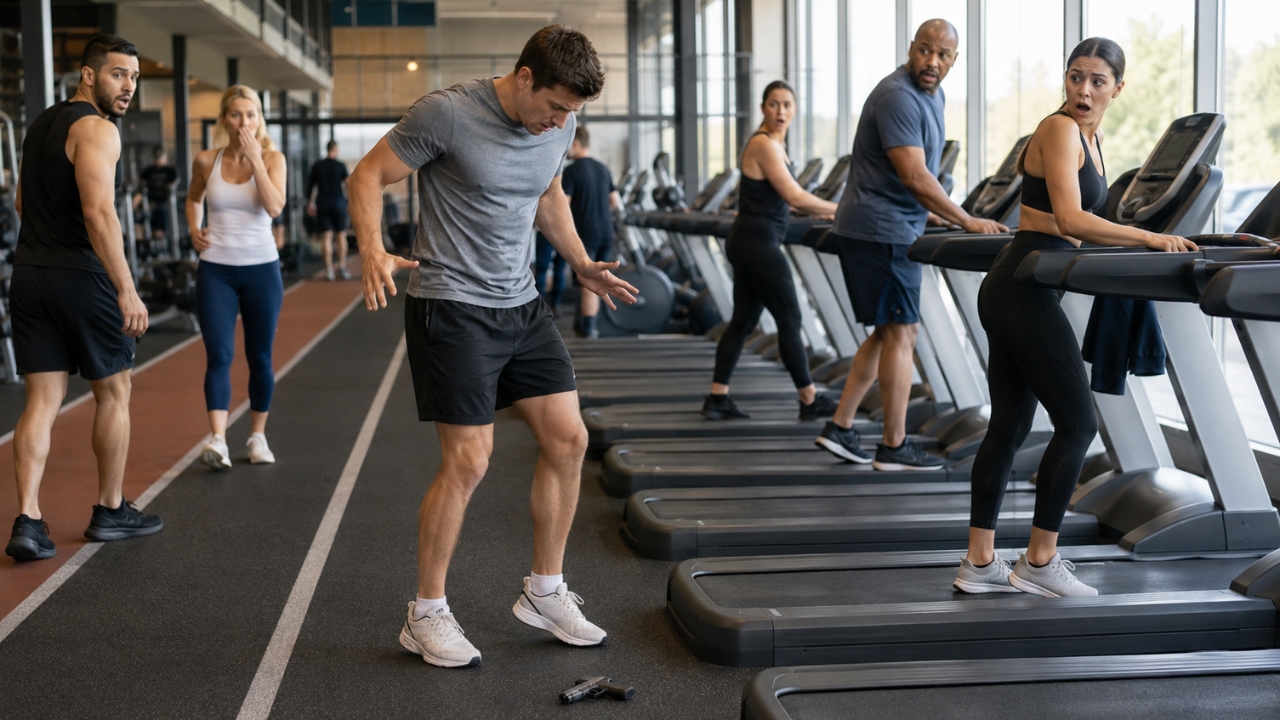
A concealed carrier in Reddit’s r/CCW described the kind of public carry failure that turns a normal routine into instant embarrassment. In the thread, he said he was at the gym, running laps, when his pistol came loose and hit the floor. The gun did not stay private, it did not stay hidden, and it did not give him a second to quietly fix the problem before anyone noticed. By the time he got to it, the moment had already become public. The original Reddit thread is here: https://www.reddit.com/r/CCW/comments/2w1cqi/carrying_to_the_gym/. (reddit.com)
From the way the post was framed, the bigger issue was not just that the gun fell. It was where it fell and what that said about the whole setup. A gym is one of the worst places for a sloppy carry arrangement to get exposed. People are moving, bending, stretching, running, and doing all the little body motions that stress a holster and belt far more than ordinary standing or walking. If a setup is only barely working, the gym is exactly the kind of place where it gets found out. That is what this story feels like: not a bizarre fluke, but a carry system being pushed into the kind of movement it was not really secure enough to handle.
The post also lives right in the middle of a question a lot of carriers wrestle with and rarely answer the same way: what do you do with a gun at the gym? Leave it in the car and accept the risk there? Carry it anyway and try to make the clothing and movement work? Use some kind of off-body solution and hope nobody gets into it? The original poster’s story did not answer that question so much as show what can happen when one answer fails in the most visible way possible. Once the pistol hits the floor during a run, the whole issue stops being theoretical. It becomes whatever every person in the room now thinks about the guy whose gun just came loose mid-workout.
That public setting is really what gives the story its shape. A holster failure at home is embarrassing. A holster failure in a gym carries a different kind of social damage. People are close. Eyes are already up because someone is moving around the track or floor. The gun is no longer a hidden personal responsibility. It becomes the center of the room for a few awful seconds. Even if no one screams, even if no one calls the police, even if the owner gets to it fast, the moment has already happened. Other people saw it. Other people are now deciding what kind of person brings a gun to the gym badly enough that it falls out while he is running laps.
The comments on the thread turned quickly into a broader discussion of whether carrying at the gym is worth the hassle at all. Some people basically said the original poster’s experience was exactly why they avoid it. In their view, too many exercise clothes, too much movement, and too little structure make it hard to keep a handgun both secure and concealed unless a person has a very carefully chosen setup. Others pushed back and said they do carry at the gym, but only with very specific gear, very specific clothing, or a carry method built for that kind of movement. That difference mattered, because it showed the debate was not simply “carry” versus “don’t carry.” It was much more about whether the person doing it had actually built a system for the environment.
A lot of the more practical replies focused on that system. People talked about belly bands, deeper concealment options, pocket carry in the right shorts, more secure holsters, stronger belt arrangements, and compression-wear solutions that hold the gun tighter to the body during movement. Some mentioned off-body gym bags, though that brought its own set of arguments about theft, access, and leaving a loaded gun away from direct control. The common thread through all of those replies was that ordinary daily-carry gear often does not translate cleanly into a workout setting. What works standing in a store or sitting in a car may fail once the body starts bouncing, twisting, and sweating through a real gym session.
There was also the harsher side of the comments, the side that shows up whenever a concealed weapon stops being concealed in public. Some users treated the incident as proof that the original poster’s setup was careless from the start. From that point of view, a gun does not “just fall out” at the gym. It falls out because something about the holster, retention, clothing, or decision-making was wrong well before the laps started. That kind of reaction can sound unforgiving, but it fits the mood around stories like this. Once a firearm is loose on the floor in a public workout space, people lose patience quickly with explanations that sound too casual.
The original incident also carried the quiet fear that shows up anytime a gun leaves the body unexpectedly: the split-second question of whether it is going to stay inert. A pistol hitting the floor in public is bad enough without a discharge, and most readers know that. Even if the gun never fired, the drop alone would have been enough to spike everybody’s heart rate, including the owner’s. In that moment, he was not only scrambling to grab it before anyone else could. He was also dealing with the fact that one failed piece of retention had just put a loaded firearm on the ground in a room full of civilians who did not come there to be part of someone else’s carry mistake.
That is why the social aftermath matters so much in this kind of story. Once the gun is back in hand, the technical problem may be over, but the public part remains. People in the room now know. Staff may now know. The owner knows that they know. That is what makes a gym carry failure sting in a different way than a purely private mistake. It puts the carrier in the position of having to live through the exact situation concealment is supposed to prevent: not just being armed in public, but being visibly, awkwardly, and incompetently armed in public.
The discussion around the post kept circling back to the same basic point: a gym is one of those environments where concealed carry either needs a real dedicated plan or probably should not happen at all. Not because people should be disarmed in principle, but because the clothing, the motion, and the public setting punish half-working setups fast. The original poster’s experience became the example everyone else used to argue their side. Some saw it as proof that gym carry is a bad idea. Others saw it as proof that most people trying it have not tested their method hard enough.
By the end of the thread, the hardest part of the story was not the hardware. It was the moment itself. A man running laps, a pistol coming loose, the sound of it hitting the floor, and the realization that the whole room noticed before he could put the problem back under control. Once that happens, the workout is over in more ways than one. The real question is no longer whether carrying at the gym can work. The question is whether the setup you trusted was ever actually ready for that much movement in the first place. (reddit.com)