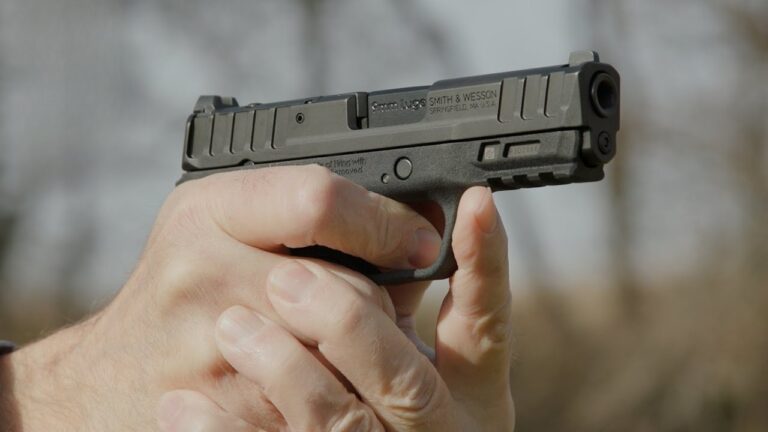
Photo credit: Springfield Armory
Compact handguns that once defined the concealed carry market are suddenly looking dated next to a new wave of high capacity, optics-ready pistols. Instead of clinging to older designs, many gun owners are gravitating toward modern compacts that promise more rounds, better ergonomics, and cleaner triggers in packages that are barely larger. The shift is not about a single model collapsing overnight, but about a whole category of legacy compacts being quietly sidelined as buyers chase newer platforms.
In conversations with retailers and trainers, I keep hearing the same pattern: owners who relied on a slim, low-capacity 9 mm a decade ago are now trading up to pistols that carry nearly twice the ammunition with better shootability. The headline story is not panic selling or a crash in value, it is a steady migration away from one-time favorites as the market rewards designs that take full advantage of modern engineering and changing laws.
The compact that quietly lost its crown
Every era has a benchmark carry gun, and for years that benchmark was a thin, lightweight 9 mm with limited capacity that fit almost any waistband. That archetype, once celebrated for being “good enough,” is now overshadowed by micro-compacts that match or beat service-pistol capacity while staying just as concealable. The result is that the older single-stack style of compact, which dominated holsters for a long stretch, is no longer the default recommendation at gun counters, even if it still serves competently for those who keep it.
What I see in current sales chatter is not a dramatic collapse of one model, but a broad loss of status for that earlier generation of compacts as buyers compare them side by side with newer designs. When a pistol that holds barely half the ammunition of a modern micro-compact takes up almost the same footprint, it becomes a harder sell, especially for new carriers who are starting from scratch rather than already owning the older gun. That is the context in which the “once-popular compact” is being left behind, not because it suddenly failed, but because the rest of the field sprinted ahead.
How the micro‑compact revolution changed expectations
The turning point came when manufacturers proved they could fit double-digit 9 mm capacity into frames that previously would have been limited to six or seven rounds. Designs like the modular, high capacity P365 family showed that shooters no longer had to choose between deep concealment and meaningful firepower. Once that standard was set, the bar for what counted as an acceptable everyday carry pistol rose sharply, and older compacts that could not match those numbers began to look like transitional technology.
Other brands followed the same playbook, refining grip geometry, trigger feel, and slide design to make small guns shoot more like duty pistols. The result is a class of micro-compacts that are easier to control, easier to reload, and more forgiving under stress than the thin, snappy pistols they are replacing. In that environment, it is understandable that many owners who once swore by a low-capacity compact now see it as a backup or glovebox gun rather than their primary defensive tool.
Springfield, Walther and the new standard for “small but serious”
Springfield Armory leaned into this shift with its high capacity Hellcat series, which packs extended magazines and aggressive texturing into a footprint that still disappears under a T-shirt. The Hellcat’s ability to carry a substantial round count while remaining genuinely compact illustrates why older designs are losing ground: it delivers more performance in essentially the same space. For a buyer comparing options at the counter, that kind of capacity advantage is hard to ignore.
Walther took a slightly different route with its optics-ready PDP line, emphasizing refined ergonomics and a duty-grade trigger in a pistol that can still serve as a concealed carry gun when configured with compact slides and frames. The PDP’s focus on red-dot readiness and controllability reflects a broader trend toward pistols that are not just small, but also optimized for modern training and accessories. Against that backdrop, the once-popular compact that lacks optics cuts, accessory rail space, or a comfortable grip starts to feel like a relic from a different era of concealed carry.
What current “Top 10” lists reveal about buyer priorities
Independent testing of compact 9 mm pistols for 2025 underscores how far the category has moved. In one widely circulated evaluation of Top 10 Compact Pistols for the current market, the spotlight falls on models that combine high capacity, shootability, and optics-ready slides rather than on the thin, low-capacity compacts that once dominated. The presence of premium offerings like the WILSON COMBAT VICKERS EDITION GLOCK 9MM LUGER, listed at $1375, alongside more affordable options around $630, shows that buyers at every price point are being steered toward modern feature sets.
Those rankings also highlight how much weight reviewers now place on controllability and accessory support. Pistols that accept weapon lights, run reliably with red-dot sights, and offer interchangeable backstraps or grip modules tend to climb the list, while older compacts with fixed sights and minimalist frames fall behind. The message to consumers is clear: if you are still carrying a pistol that predates this wave of innovation, you are not getting the full benefit of what the compact 9 mm category can now deliver.
From duty-size to carry-size: full‑featured compacts squeeze the middle
At the same time that micro-compacts have grown more capable, full-size inspired designs have been trimmed down to serve as carry guns without sacrificing performance. SIG Sauer’s P320 AXG Legion is a good example of this trend, bringing a metal frame, tuned trigger, and competition-friendly features into a package that can still be concealed with the right holster and wardrobe. For shooters who prioritize shootability over absolute minimal size, pistols like this make older, simpler compacts feel like a compromise in both directions.
When a shooter can choose between a micro-compact that carries more rounds than yesterday’s single-stack, or a downsized duty pistol that shoots like a full-size gun, the middle ground occupied by the once-popular compact shrinks. That does not mean those older guns are unusable, but it does mean they are less likely to be the first choice for new buyers or for experienced owners looking to upgrade. The market is effectively squeezing them from both ends, with high-tech micros on one side and refined carry-size duty pistols on the other.
Budget carry guns and the squeeze on legacy designs
Even at the budget end of the spectrum, newer designs are crowding out older compacts by offering more features for similar money. Smith & Wesson’s updated Bodyguard 2 illustrates how manufacturers are refreshing small defensive pistols with improved ergonomics and modern styling while keeping them accessible to first-time buyers. When an entry-level gun comes with better sights, a more comfortable grip, and compatibility with current holsters and accessories, it becomes harder to justify sticking with a dated compact that lacks those advantages.
Price-sensitive buyers are also paying attention to how much performance they can get per dollar, and current testing that lists pistols like the WILSON COMBAT VICKERS EDITION GLOCK 9MM LUGER at $1375 alongside models priced at $630 or even $137 shows a wide spread in the compact market. As newer designs filter down into lower price brackets, the older compact that once seemed like a smart compromise now competes against guns that simply do more for the same or less money. That economic reality is a major driver of why those legacy models are being retired to safes or sold off in favor of something more current.
YouTube data: what “dominating” and “best‑selling” really signal
Content creators who track handgun sales and trends are seeing the same pattern in the data they pull from gun counters and distributors. One detailed breakdown of which 9 mm pistols are “dominating” the market in 2025 highlights how modern, optics-ready designs with generous capacity have become the default recommendations for both home defense and concealed carry, even if some older full-size pistols still find a niche for duty-style use in the right hands. That analysis, shared in a video titled These 9mm Pistols Are DOMINATING the Gun Market in 2025!, frames the shift as a change in what buyers expect from a defensive handgun rather than a sudden collapse of any single model.
Another creator who dug into real sales data rather than forum chatter reported a ranked list of the best-selling handguns of the year, noting in a video released in Nov that some of the top spots were held by compact and micro-compact 9 mm pistols with modern feature sets. In that breakdown, shared under the title The Top 7 Best Selling Handguns of 2025 — And One Will …, the emphasis again falls on capacity, optics readiness, and shootability. The takeaway is that when buyers vote with their wallets, they are overwhelmingly choosing newer designs, which naturally pushes older compacts into the background even if they remain in circulation.
Finish, durability and why training habits matter
Durability and finish quality have also become selling points that favor newer compacts over their predecessors. In a widely watched review of pistols that are “flying off” store shelves, one reviewer singled out a compact with a PVD slide finish, noting that this coating holds up better than many traditional treatments during high volume training or frequent holster use. That observation, shared in the video These Pistols Are Flying Off Gun Store Shelves in 2025 …, reflects a broader shift toward guns that can withstand more aggressive practice schedules without looking battered.
As more concealed carriers commit to regular range time and classes, they are discovering that older compacts with basic finishes and minimal corrosion resistance can start to show wear quickly. When a newer pistol offers better protection against sweat, holster friction, and environmental exposure, it becomes an attractive upgrade for someone who trains hard. That training-driven demand for tougher, more refined compacts further erodes the appeal of the once-popular models that were designed for occasional carry rather than constant use and high round counts.
Law changes, caliber shifts and the next wave of churn
Legal changes are adding another layer of pressure on legacy compacts, especially in restrictive states. In California, for example, a detailed overview of new rules explains that a measure described as the Glock and Glock Clone Sales Ban will, Starting in mid‑2026, limit how Firearms Dealers can sell certain models that regulators view as easily convertible. While that discussion focuses on a specific family of pistols, it illustrates how quickly the legal environment can make some designs less attractive to own or harder to replace, nudging buyers toward newer, compliant platforms.
At the same time, some analysts argue that the long dominance of 9 mm itself is starting to face competition from other calibers and hybrid platforms. One video essay framed this as Americans “quietly replacing 9 mm with this” in 2025, pointing to changing preferences in recoil, terminal performance, and platform versatility. That argument, laid out in Americans Are Quietly Replacing 9mm With THIS in 2025, suggests that the churn we are seeing around compact 9 mm pistols may be only the first phase of a broader reshuffling. If caliber preferences shift, the once-popular compact that is already lagging behind on features could find itself doubly out of step, accelerating the move toward more modern designs that can adapt to whatever comes next.
Like The Avid Outdoorsman’s content? Subscribe to our newsletter so you never miss an article.
Here’s more from us: