Photo credit: PRESSLAB/Shutterstock.com
Every hunting camp has at least one topic that gets the fire burning hotter—and it’s usually not the weather. Guns are the quickest way to turn a quiet night into a debate that lasts until midnight. Everyone’s got an opinion, and certain rifles, handguns, and cartridges spark more back-and-forth than any deer or elk ever will. Some swear by them, others swear at them, and neither side will ever give an inch.
These are the guns that divide camps, strain friendships, and send at least one guy stomping back to his truck. They’ve each got a loyal following and an equally passionate crowd that can’t stand them. Whether it’s reliability, accuracy, or pure nostalgia, these firearms stir up more stories than they fill freezers. If you’ve spent enough seasons swapping campfire lies, you’ve heard these names tossed around more than you’ve heard “nice shot.”
6.5 Creedmoor Rifles

Bring up the 6.5 Creedmoor at camp, and someone’s guaranteed to roll their eyes. You’ll hear one guy swear it’s the best long-range hunting round ever made, while another mutters something about “Creedmoors being for influencers.” The truth is, it’s an accurate, efficient cartridge—but the fanbase turned it into a meme. Its popularity exploded so fast that traditionalists never stopped scoffing.
Those who use it appreciate its low recoil, flat trajectory, and modern ballistics. The critics say it doesn’t do anything a .260 or .270 didn’t already handle decades ago. Either way, it’s become the cartridge equivalent of politics—you’re either all in or done hearing about it. It’s accurate, capable, and everywhere, but it’s also the reason many hunters avoid talking about calibers altogether until the coffee’s brewed.
Glock Pistols
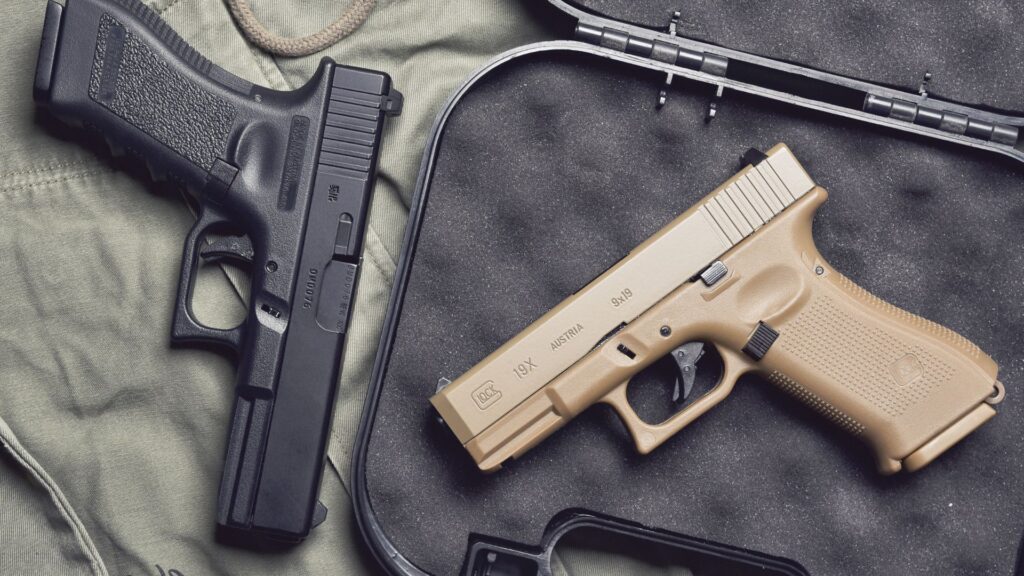
Few guns divide hunters like a Glock. Some see it as the ultimate sidearm—reliable, simple, and practically indestructible. Others can’t stand the grip angle, the trigger feel, or the fact that it’s polymer instead of steel. The arguments usually start when someone calls it “perfection,” and someone else replies, “Yeah, for people who don’t shoot much.”
The thing is, both sides have a point. Glocks do run no matter what, but they lack the refinement or personality of metal-frame pistols. They’re workhorses, not showpieces. Around camp, the Glock debate always spirals into caliber talk—9mm versus .45—and before you know it, everyone’s shouting over the fire. Love it or hate it, no gun has inspired more “you’re wrong” energy than the one with “Safe Action” stamped on the slide.
.270 Winchester Rifles

The .270 Winchester argument goes back generations. One camp swears it’s all you’ll ever need for deer, elk, or even moose. The other side calls it overrated and insists it’s only “flat-shooting” on paper. Every season, someone brings up Jack O’Connor, and someone else says, “Yeah, well, that was seventy years ago.”
There’s no middle ground with the .270. Shooters either love how light it kicks and how flat it flies, or they say it lacks the punch needed for bigger game. Despite the debates, the .270 keeps showing up at camp because it works—and always has. It’s not the cartridge that starts fights, it’s the attitude of the guy holding it, convinced his rifle’s better than whatever you brought.
.30-06 Springfield

If there were a national argument gun, the .30-06 would be it. Every hunter’s either owned one, hated one, or lost one to their brother-in-law. It’s the round that defined American big game hunting, but it’s also the one every other caliber gets compared to. The “.30-06 versus everything” debate has been running longer than most hunters have been alive.
Fans love its versatility—light bullets for deer, heavy ones for elk—and its proven history in the field. The critics call it outdated, claiming modern cartridges like the .308 or 6.5 Creedmoor do the same job with less recoil. But here’s the truth: it’s still dropping animals cleanly every year. The arguments never end because it’s too good to die and too old to seem exciting. It’s the perfect recipe for campfire tension.
10mm Handguns

The 10mm has its diehards—hunters who swear it’s the only legitimate bear-defense handgun caliber. Then there’s the crowd who says it’s overkill, too snappy, or unnecessary when a good revolver or 9mm can do the job. You can’t go a weekend without someone saying, “If you can’t shoot it well, it doesn’t matter how powerful it is.”
In camp, the 10mm debate usually starts when someone unholsters a Glock 20 or a SIG P320 XTen and claims it’s the only thing they trust in the backcountry. Then someone else points out that they can’t hit anything past ten yards with it. The cartridge is undeniably capable, but it’s the personalities behind it that make sparks fly. Hunters who carry it see themselves as prepared. Everyone else sees it as overcompensation.
AR-15 Rifles

Few firearms trigger louder camp opinions than an AR-15. Some hunters argue it’s the most versatile rifle ever made, ideal for varmints and hogs, and even capable on deer with the right ammo. Others say it doesn’t belong in the woods, claiming it’s a “range toy” or too tactical for hunting. The argument usually boils down to perception more than performance.
The AR-15’s modular design makes it incredibly adaptable, but its image keeps it controversial. Traditionalists prefer walnut and blued steel; the modern crowd values customization and reliability. Both sides have a point. The AR is accurate, dependable, and easy to shoot—but it’s not exactly “heritage hunting” gear. Still, it’s showing up in more camps every year, whether old-timers like it or not.
7mm Remington Magnum

If you want to see a heated debate, mention the 7mm Rem Mag at a camp full of elk hunters. Some swear it’s the perfect western round—flat shooting, hard hitting, and manageable in recoil. Others say it’s overrated and burns out barrels faster than it drops bulls. It’s a cartridge that’s earned respect but also a reputation for exaggeration.
The 7mm Mag crowd tends to be passionate, and they’ve got plenty of real-world success to back it up. But critics argue that similar results can be achieved with less flash from the .30-06 or .300 Win Mag. It’s a matter of pride more than performance, and that’s what makes it such a reliable argument starter. When someone brags about how far they’ve dropped elk with it, you can bet someone else will be reaching for their coffee with an eye roll.
6mm Creedmoor

The 6mm Creedmoor is the little sibling to the 6.5, and in camp, it gets nearly the same reaction—half admiration, half annoyance. Its fans praise it for laser-flat accuracy and mild recoil, especially for younger shooters or precision junkies. Its critics say it’s just another niche round that’ll vanish once the hype fades.
The debate isn’t really about performance—it’s about purpose. Hunters want to know if it’s truly different or just marketing. Those who’ve used it on deer and antelope say it performs beautifully. Those who haven’t call it redundant. Like the 6.5, it’s a capable cartridge that got tangled up in internet fandom. Around camp, it’s less about ballistics and more about bragging rights—and it rarely ends peacefully.
.300 Winchester Magnum

The .300 Win Mag divides hunters like few others. Some call it the ultimate all-around cartridge, perfect for anything short of dangerous game. Others say it’s too much recoil, too loud, and unnecessary for most hunts in the Lower 48. Every camp has that one guy who insists it’s “the only real elk round,” and another who says his shoulder disagrees.
There’s no questioning its effectiveness, but it’s not a round you practice with casually. Most .300 Win Mag owners shoot a box or two a year—if that. Still, it remains one of the most polarizing calibers in existence. You either love the power or hate the punishment. Bring it up at camp, and someone’s bound to start reminiscing about the time they “sighted one in for a buddy” and couldn’t feel their arm for two days.
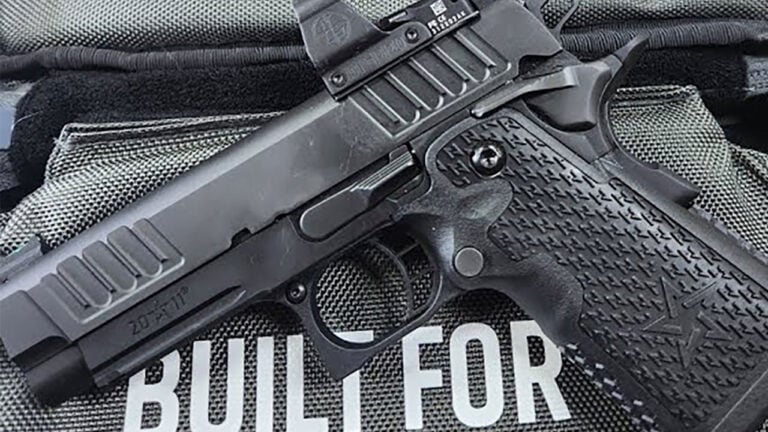
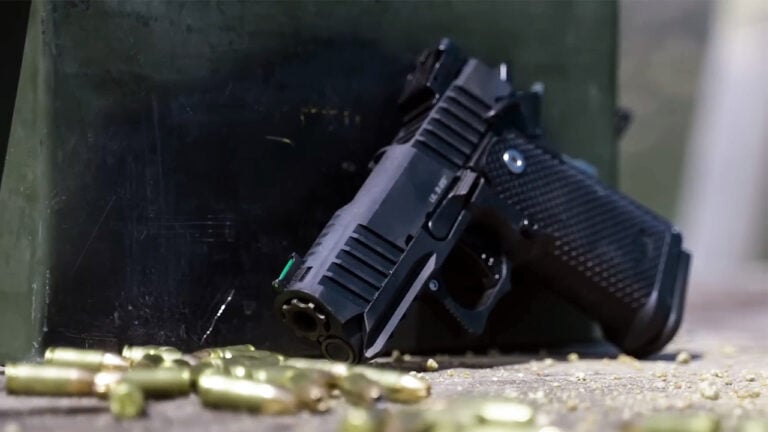
1911 Pistols

Few handguns inspire more heated loyalty—or dismissal—than the 1911. Fans claim it’s the most reliable, natural-pointing, and accurate design ever made. Detractors call it heavy, outdated, and finicky with modern ammo. No one’s neutral on it. The 1911 argument is a tradition at camp, often sandwiched between “what’s the best truck” and “what’s the best bourbon.”
Those who carry them love the crisp trigger and timeless feel. The critics can’t get past the low capacity and constant upkeep. Every time someone mentions “God’s gun,” there’s a groan from across the fire. Yet, year after year, it remains one of the most shot and argued-about pistols in America. It’s not going away—and neither is the debate.
.243 Winchester

The .243 is one of the most-used deer cartridges ever made, but you wouldn’t know it from the way hunters argue about it. Half the camp claims it’s too light, the other half swears it’s perfect. It’s the classic “shot placement versus power” debate that never ends. Everyone’s got a story about a deer that ran too far—or dropped right there.
The .243 works beautifully when used within its limits. The problem is that everyone defines those limits differently. It’s accurate, flat-shooting, and easy to shoot well, but it can punish bad shot placement. Around the fire, someone always brings up how they’ve “never lost a deer with one,” and someone else mutters, “You haven’t hunted enough.” It’s not the cartridge—it’s the pride behind it that keeps the argument alive.
.223 Remington

The .223 sparks instant debate in any hunting camp. Some call it unethical for deer, while others swear it’s fine with the right bullet. It’s a round originally designed for military use, which makes it a lightning rod for controversy. Hunters who use it for varmints love its precision and mild recoil; those who’ve tracked wounded deer hit with one have no patience for it.
The truth sits somewhere in the middle. With modern bonded or copper bullets, it can drop deer cleanly—but only if the shooter does their part. Still, that nuance gets lost around the fire. For every story of a one-shot kill, there’s another of a lost trail and regret. The .223 is the round that proves hunters don’t argue about ballistics—they argue about experience. And this one’s provided plenty of both.
*This article was developed with AI-powered tools and has been carefully reviewed by our editors.