Photo credit: AI-generated image created using ChatGPT. Illustrative only
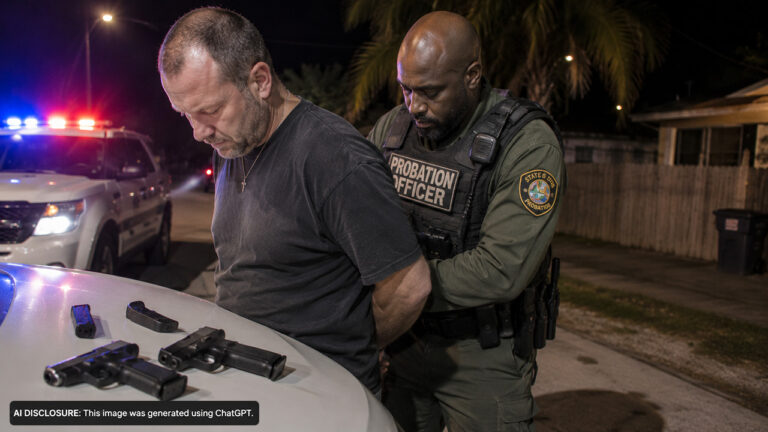
Out in the real world, bad things don’t always give you time to sort out paperwork. A guy sees a violent situation unfolding, steps in, and uses the gun on his hip to stop it. Then the dust settles and the person he helped goes home… while he’s the one looking at a serious charge because the gun wasn’t carried legally.
That’s the hard, practical question raised in the original post: if someone carries a concealed handgun without a permit, and then uses it in a situation they believe is justified, do they still face legal repercussions for the illegal carry?
Carrying illegally doesn’t get erased by doing the “right” thing
The coworker in the post has a belief a lot of folks have heard at deer camp or on a jobsite: “I know when I’m justified.” In his mind, a clean self-defense shoot should protect him from consequences tied to carrying without a permit.
But those are two separate lanes. One is the use of force—whether the shooting (or even just presenting the firearm) is legally justified. The other is the carry itself—whether he had legal authority to have that handgun concealed on his person in the first place. A justified defensive act doesn’t automatically wipe away a carry violation.
Why this gets people in trouble even when no one doubts the threat
In a serious incident, responding officers and prosecutors don’t only look at the attacker’s behavior. They inventory the whole scene: who had what, who did what, and whether anyone committed crimes along the way.
If the gun was carried unlawfully, that can still be charged even if the defensive use was justified. The same event can produce two very different outcomes: no charge (or a clean ruling) on self-defense, and a charge on illegal concealed carry. That’s where the “the guy I saved walked free while I was charged” scenario comes from.
Permits and “knowing the law” aren’t the same thing
The coworker’s reasoning hinges on confidence—he thinks he understands when deadly force is justified. Even if his judgment is solid, that doesn’t solve the permit problem. Carry laws aren’t based on intentions, they’re based on whether you’re authorized.
In plain terms: you can be 100% convinced you’d only use a firearm in a righteous moment and still be committing a crime every day you carry it concealed without the required permit. The legal system isn’t going to treat that like a minor technicality if the violation is classified as a misdemeanor or felony where he lives.
The “better judged by 12 than carried by 6” mindset has real costs
A lot of outdoorsmen understand the instinct to be prepared. Folks live far from town, help can be a long way off, and trouble doesn’t schedule itself. But there’s a difference between being prepared and being exposed.
If that coworker ever has to draw or fire, he’s essentially volunteering for the deepest possible look into his life: where he was carrying, why he was there, whether he was drinking, whether he was trespassing, whether he escalated, whether he had prior issues, and whether the gun itself was lawfully possessed and carried. Even if the self-defense claim holds up, the carry violation can still hang him up—financially, professionally, and legally.
What people tend to focus on in situations like this
The question in the post is straightforward: “Is my friend in danger of going to prison?” That’s not drama—depending on the state and the exact statute, carrying concealed without a permit can be serious business, and some places treat certain gun violations as felonies, especially if other factors stack up.
The common sense angle most gun owners land on is also straightforward: don’t bet your future on a legal technicality going your way after the worst day of your life. If your area requires a permit, get the permit. If your area doesn’t, make sure you’re still legal on prohibited places, vehicle carry rules, and reciprocity if you cross state lines for work, hunting trips, or family visits.
How a “good deed” can still turn into a felony case
It’s easy to picture the scene the headline points to: someone steps in to protect another person, the bad guy runs off or gets arrested, the victim is grateful, and then the rescuer gets hooked up for the gun. That isn’t because the system hates self-defense. It’s because law enforcement can treat the carry statute as a separate violation with its own elements.
And there’s another piece people don’t like to talk about: once a firearm is introduced, everything becomes higher stakes. Even if no shots are fired, simply displaying a concealed handgun can trigger investigations that wouldn’t have happened otherwise. If the gun was being carried illegally, it’s now front and center.
For the coworker in the post, the “I know when it’s justified” logic is a shaky foundation. The safer, smarter play is boring: follow your state’s carry requirements, keep your head on a swivel, avoid trouble, and don’t rely on a courtroom argument to clean up a decision you can fix now with paperwork and training.
Like The Avid Outdoorsman’s content? Subscribe to our newsletter so you never miss an article.
Here’s more from us: