Photo credit: The Avid Outdoorsman
The gun owner said the pistol was expensive enough that losing it already hurt. According to the Reddit post, the firearm was worth around $4,000, and he had reported it stolen after believing it was gone.
The original Reddit post can be found here: https://www.reddit.com/r/legaladvice/comments/1gg26y7/in_possession_of_stolen_firearm_that_is_mine_what/
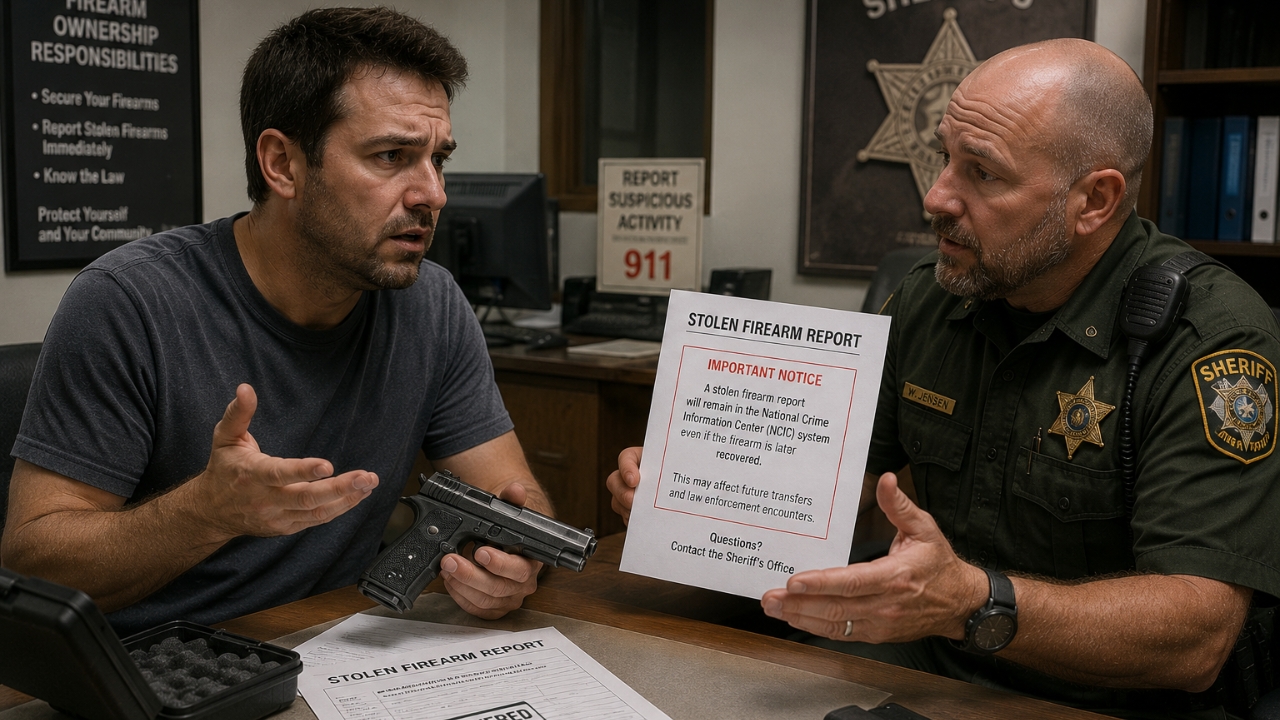
Then the situation took an unexpected turn. He later found the pistol. That should have been good news, and in one way it was. The gun was not actually in a thief’s hands. It was back with the owner. But because it had already been reported stolen, the problem was not over.
That is the part people do not always think about. Once a firearm is entered as stolen, that status can follow the serial number until the record is updated. If the owner keeps the gun, transports it, takes it to a range, sells it, or transfers it later, the old stolen report could create confusion if the serial number gets checked.
For the owner, the issue was not whether the gun belonged to him. It did. The problem was making sure the official record matched reality. A stolen-firearm report is not something to leave floating around just because the owner later found the gun in a safe, vehicle, bag, or wherever it had been misplaced.
The post was really about cleanup. He needed to know how to tell law enforcement the firearm had been recovered, whether he could legally keep possessing it, and how to make sure the stolen status was removed from the system.
That matters because a gun falsely left listed as stolen can create headaches years later. A buyer, dealer, officer, or agency may see the report and treat the firearm as stolen property even if the original owner is the one holding it. The owner’s best protection is paperwork showing the report was updated, canceled, or closed properly.
The situation also shows why accuracy matters when reporting stolen firearms. If a gun is truly missing, reporting it is the responsible move. But if it is later found, the owner has to be just as responsible about updating the report. The record needs to show both sides of the story: reported stolen, then recovered by owner.
Commenters told him to contact the agency where he filed the stolen-gun report. Several said he should not assume the report would clear itself just because he found the firearm. He needed to call, explain that the pistol had been recovered, and ask what paperwork or verification they required.
Others suggested getting written confirmation that the gun was no longer listed as stolen. That could mean an updated report, case closure notice, or some other record from the department. The goal was to avoid future problems if the serial number was ever checked.
Some commenters warned him not to sell or transfer the gun until the stolen status was cleared. If the firearm still showed as stolen during a transfer, it could be seized or create confusion for both the owner and buyer.
A few people said he should keep all documents tied to the original report and the recovery. With a valuable pistol, the paper trail mattered. If the gun ever became part of a future transaction, he would want proof that he handled the mistaken stolen status properly.
The post ended with the owner in the odd position of possessing a gun that was both his and officially problematic. Finding the pistol solved the mystery, but it did not fix the record. That required one more step: making sure the stolen-firearm report no longer followed his own gun.
Like The Avid Outdoorsman’s content? Subscribe to our newsletter so you never miss an article.
Here’s more from us: