Photo credit: ExxonV/YouTube
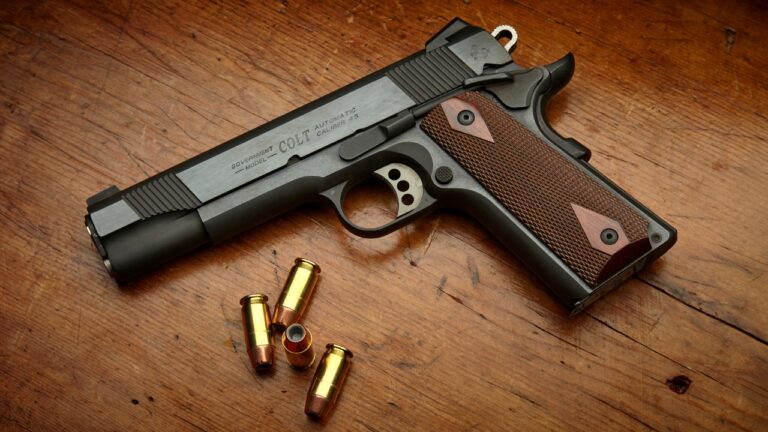
New firearms hitting the market are not arriving in a vacuum. They are landing in a country where gun ownership is expanding into new demographics, public concern about safety is rising, and buyers are demanding handguns and rifles that fit very specific roles in their daily lives. The latest releases, from micro-compacts to sleek tactical platforms, are a window into how shooters now balance concealability, capacity, and perceived protection.
As manufacturers refine models around those expectations, they are quietly reshaping what “typical” gun ownership looks like. I see the current wave of designs as a response to two converging pressures: a broader, more diverse customer base and a political climate in which firearms are simultaneously normalized as tools of self-defense and scrutinized as public risks.
Public anxiety and the split between ownership and regulation
The first clue that new guns are being built for a different era is the gap between how Americans feel about safety and how they feel about regulation. Surveys show that a majority of adults now favor stricter gun laws, yet millions still choose to bring firearms into their homes. One national poll found that support for tighter rules has remained high even as more people say guns make them feel safer at home, a tension that frames every new product launch in the industry and is captured in detail in the broader public opinion data.
Within that same research, a specific Line graph tracks the shifting Percentages of Americans who believe firearms make homes safer or more dangerous. Currently, 64% say guns make homes safer, even as many of those same respondents endorse tighter controls. That split helps explain why manufacturers emphasize defensive features and user-friendly ergonomics while avoiding overtly political branding, and why new models are pitched as tools for responsible individuals rather than symbols in a culture war.
First-time buyers and the rise of tactical aesthetics
Recent sales spikes have been driven heavily by people purchasing their first firearm, and that influx is changing what sells. Industry analysis of the Tactical segment notes that the current surge in tactical-style rifles and pistols is closely tied to a rise in first-time gun owners and to an increasingly diverse demographic profile. When a market suddenly fills with newcomers, companies respond with platforms that look modern, promise versatility, and are marketed as approachable even for those without a long shooting background.
Academic work on firearm markets reinforces that this is not just a marketing story but a structural shift. One working paper on transactions and preferences points out that regulatory debates, including limits on how the Centers for Disease Control and Prevention and the CDC can address gun violence, shape how and where people buy. As policy fights play out, manufacturers lean into modular, accessorized designs that appeal to buyers who want a single rifle or pistol to cover home defense, range use, and, if laws allow, concealed carry, which is exactly the niche that many new tactical-branded releases now target.
Concealed carry drives micro-compact innovation
If there is a single category that captures changing shooter preferences, it is the micro-compact concealed carry pistol. Buyers increasingly want handguns that disappear under light clothing yet still carry enough ammunition to feel prepared for a worst-case scenario. Guides aimed at new owners emphasize that choosing a carry gun means balancing size, recoil, and capacity, and they walk readers through how to evaluate those tradeoffs in practical terms, as in one detailed primer on choosing a carry gun that treats concealability and shootability as equal priorities.
Retail trends show how that advice translates into specific models. A recent ranking of top concealed carry options highlights the SIG Sauer P365 line, describing the P365 Series Top Choice for Best Concealed Carry Gun thanks to its 10+1 to 15+1 9 mm capacity in a micro-sized frame. That combination of small footprint and double-digit round count has become the template for competitors, and it reflects a buyer who expects a pistol to be both comfortable to carry all day and capable of handling a high-stress defensive encounter without frequent reloads.
What surveys reveal about who is buying and why
Behind those product choices are shifting motivations that researchers are only beginning to map. A national survey conducted as part of the Health, Ethnicity and Pandemic Study used cross-sectional data from a sample of 2,70 respondents to model recent gun purchases, and it found that concerns about personal safety during periods of social disruption were a powerful driver. The study’s authors argue that improving access to training programs could help align these new owners’ skills with the responsibilities that come with carrying a firearm in public.
Another analysis of Purchase motivations, focused on political and racial violence, reports that Overall, 17% of recent firearm purchasers said their decision was motivated by fears of political unrest, with a confidence interval of 95% (ranging from 12.8 to 22.5). Those figures suggest that a significant share of new buyers are not just thinking about generic crime but about broader instability, which helps explain why compact pistols and tactical-style rifles that promise readiness for a range of scenarios have become central to manufacturers’ catalogs.
How ownership patterns shape product design
To understand how these motivations translate into specific guns, it helps to look at how firearms are distributed within households. A working paper on Preferences for Firearms and their regulatory implications uses detailed survey data to map what kinds of guns people actually own. The authors find that handguns dominate among those who own only one firearm, while long guns and multiple-weapon collections are more common among established enthusiasts, a pattern that pushes manufacturers to keep refreshing entry-level pistols even as they cater to collectors with higher-end releases.
In the same research, Appendix Figure 30 Appendix Figure 6 shows the distribution of firearm ownership among households that own at least one firearm, and it notes that the majority of these households own only a single gun, a finding that lines up closely with numbers from Gallup 2020. When most households are one-gun homes, the pressure on that lone firearm to do everything, from home defense to concealed carry, is intense, and it is no accident that many of the newest releases are marketed as do-it-all platforms that can be configured for multiple roles with different holsters, optics, and accessories.
From revolvers to polymer frames: the enthusiast niche
Even as polymer-framed semi-automatics dominate the mass market, there is still a thriving niche for more specialized or nostalgic designs, and manufacturers are leaning into that diversity. Enthusiast guides that walk new owners through their options often pause to celebrate unusual models, such as the S&W 610, a 10 mm revolver described as “an insanely cool gun.” That kind of praise signals that even in a market dominated by practical concerns like capacity and concealment, there is room for firearms that appeal to collectors, hobbyists, and those who simply enjoy shooting something distinctive.
Sales data from online marketplaces show how mainstream and enthusiast tastes intersect. In one annual rundown of top-selling models, fourth place in the top-10 list was the Smith & Wesson M&P9, a polymer-framed 9 mm that blends duty-gun durability with features that appeal to concealed carriers and range shooters alike. Its popularity underscores how many buyers now want a handgun that can serve as both a primary defensive tool and a platform for training, competition, or recreational shooting, and manufacturers are responding with incremental updates to triggers, optics cuts, and grip modules rather than radical redesigns.
Design language: sleek, modular, and optics-ready
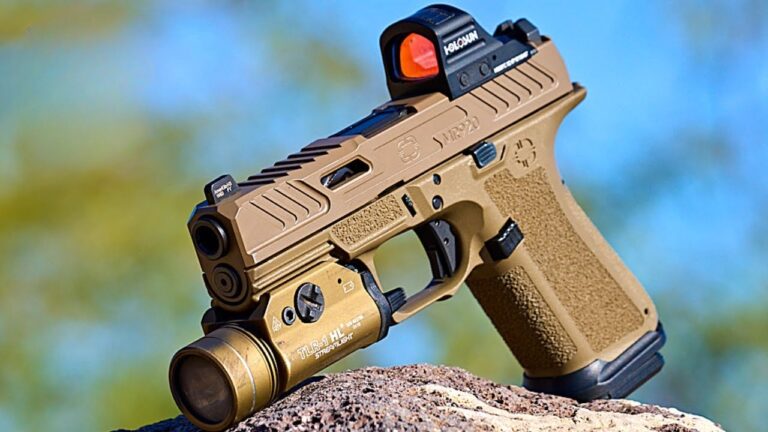
Look closely at the latest catalogues and one design language stands out: sleek lines, modular controls, and slides cut to accept red-dot sights. A showcase of new guns for 2023 highlights how one reimagining of a renowned Beretta platform sports a new, sleek design and enhanced features, signaling that even legacy brands feel compelled to modernize ergonomics and optics compatibility. That shift reflects a shooter who expects out-of-the-box readiness for red-dot sights and weapon lights, not just iron sights and basic rails.
At the same time, research from institutions such as the Becker Friedman Institute has examined how firearm technologies and markets evolve together, noting that innovation often clusters around features that lower the perceived cost of ownership, such as reliability, ease of use, and aftermarket support. When buyers know they can customize a pistol with different backstraps, triggers, and optics, they are more likely to see it as a long-term investment, and manufacturers have responded by standardizing mounting patterns and internal layouts to support a thriving ecosystem of third-party parts.
Security tech, public spaces, and the next wave of demand
The conversation about new guns does not stop at the gun counter. As more people carry firearms in public, demand is also rising for systems that can detect weapons in crowded spaces without turning every entrance into an airport checkpoint. Market research on Shifts in the Concealed Weapon Detection Systems Market describes a Market Shift driven by rising security concerns in public infrastructure and events, and it outlines Future Trends in sensors and software that can spot hidden firearms without intrusive searches. As these systems become more common, they will inevitably influence how and where people feel comfortable carrying, and may even shape which sizes and materials manufacturers favor in future designs.
All of this unfolds against a backdrop of persistent public unease about gun violence and a political environment in which regulation remains contested. As I look across the latest releases, from micro-compacts to updated tactical rifles, the throughline is clear: shooters are asking for firearms that are easier to carry, simpler to use under stress, and more adaptable to uncertain times, and the industry is listening. Whether that trend ultimately narrows or widens the gap between personal security and public safety is, for now, Unverified based on available sources.
Like The Avid Outdoorsman’s content? Subscribe to our newsletter so you never miss an article.
Here’s more from us: