Photo credit: Te178407, CC BY-SA 3.0/Wiki Commons
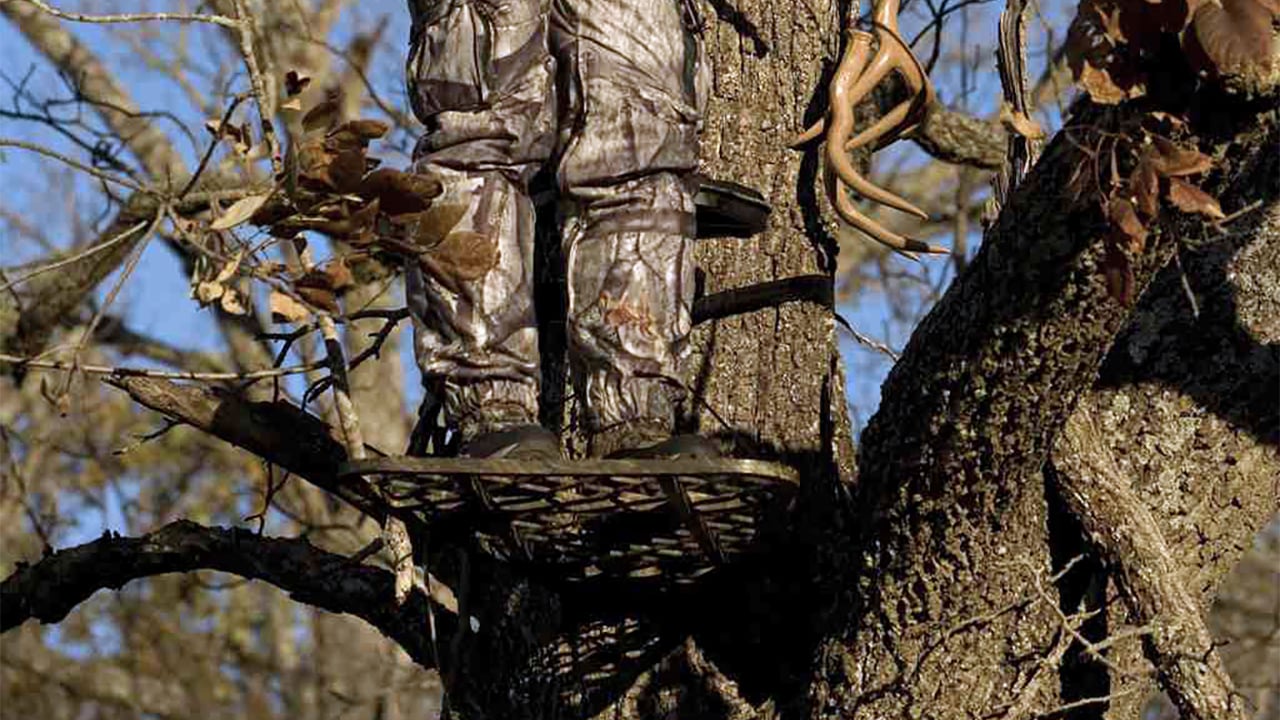
The hunter was already in his stand when the shooting started.
Not one shot way off in the distance. Not the kind of muffled gunfire you hear during deer season and barely think twice about. This was close enough that it immediately changed the feel of the morning.
In a Reddit post, the hunter shared the kind of story that makes every safety rule about backstops, shooting lanes, and roads feel a whole lot less theoretical. He said the neighbors had started shooting, and one of their rounds ricocheted close enough to his stand that he could hear it spinning through the air.
That is the sort of sound you do not forget.
Anybody who has been around guns enough knows there are normal gunshot sounds, and then there are sounds that make your whole body tighten up. A round hitting something wrong, skipping, whining, spinning, or cutting through the air nearby is in a different category. It is not just noise anymore. It is a reminder that the bullet is still moving, still dangerous, and no longer under anybody’s control.
The hunter’s point was simple: check your lanes and don’t shoot toward roads.
That might sound basic, but that is exactly why stories like this are so aggravating. The basics are what keep people alive. Know what you are shooting at. Know what is behind it. Know where the road is. Know where nearby houses, stands, barns, vehicles, and property lines are. If you are not sure what the bullet can hit after it leaves the muzzle, you should not be sending it.
From the stand, though, the hunter had no control over any of that. He was just sitting there while somebody else made a bad decision nearby.
That is what makes ricochet stories so unsettling. You can do everything right on your end and still end up in danger because someone else is careless. You can pick a safe stand, wear orange, know your own lanes, and hunt responsibly, but if another person fires toward a road, rocks, metal, frozen ground, water, or some other hard surface, their mistake can cross onto your side of the world fast.
The poster did not make the story bigger than it needed to be. He did not turn it into some drawn-out drama with a huge confrontation. The whole scare was right there in the sound and the warning. A ricochet came close. It was close enough to get his attention. And it was close enough that he felt the need to tell other hunters to think harder before pulling the trigger.
That kind of post feels short because real close calls often are. There is the moment before, when everything feels normal. Then the sound. Then the frozen second where your brain is trying to figure out where it came from, where it went, and whether more are coming. Then the anger hits.
Because once the fear passes, you start thinking about how avoidable it was.
A ricochet is not always predictable down to the inch, but unsafe shooting conditions are usually easier to spot than people like to admit. Shooting near roads is asking for trouble. Shooting without a proper backstop is asking for trouble. Shooting at low angles across hard ground or toward objects that can throw a round off course is asking for trouble. The bullet does not care that someone “thought it would be fine.”
And for a hunter sitting in a stand nearby, “fine” is not good enough.
There is also a strange helplessness to being in a stand during something like that. On the ground, you might duck behind cover, move away, or at least feel like your feet can take you somewhere. Up in a stand, strapped in or perched above the ground, you are exposed. You may be safer from some directions and wide open from others. If rounds are coming from the wrong area, you cannot exactly sprint away.
That is probably why the sound stuck with him so much. He could hear the ricochet spinning close by. Not miles away. Not safely off in the distance. Close enough to make the warning worth posting.
For hunters, that is the nightmare: not the shot you take, but the one somebody else takes without thinking through where it can end up.
Commenters understood immediately why the hunter posted it. Nobody needed a long explanation of why a ricochet near a stand is a big deal.
Several people echoed the same basic safety rule: know your backstop. A deer, target, or random object is not enough. The ground, trees, rocks, roads, houses, and neighboring properties all matter too. A bullet does not stop being dangerous just because the shooter missed or because it hit something first.
Some commenters talked about how many hunters and recreational shooters underestimate ricochets. They think a bullet either hits the target or disappears into the dirt, but that is not always how it works. Depending on the angle, surface, distance, and caliber, a round can skip, fragment, whine off in another direction, or carry much farther than expected.
Others focused on roads. Shooting toward or across a road is one of those things that responsible gun owners do not play around with. Even if a road looks empty, it only takes one vehicle, one person walking, one hunter crossing, or one bad bounce to turn a careless shot into something life-changing.
A few people said this is why they are so picky about where they hunt during firearm season. Public land, shared boundaries, and neighboring properties all bring unknown shooters into the picture. You can trust yourself and your group, but you still have to worry about the people over the ridge or across the fence.
There was also some frustration toward people who treat hunting season like an excuse to shoot without thinking. Commenters made it clear that most hunters are careful, but the few who are not can make everyone else look bad and put people in real danger.
Some said they would have reported the incident if they knew where the shots came from, especially if someone was firing toward a road or occupied area. Others said at minimum, it would be worth talking to the neighbors if that could be done safely. A calm conversation before the next hunt might prevent another close call.
The bigger reaction, though, was less about punishment and more about awareness. The hunter’s post worked as a reminder because the situation did not end in tragedy. Nobody got hit. Nobody had to call an ambulance. But the only reason it stayed a story instead of becoming something worse was luck.
For the hunter in the stand, the lesson was already burned in. Check your lanes. Know what sits beyond the shot. And if there is any chance a bullet can end up near a road, a house, or another hunter, do not take it.