Photo credit: Tony Webster, CC BY-SA 2.0/Wiki Commons
The landowner already knew there had been some tension around the property line. What he did not expect was to find signs that someone may have pushed past that line completely.
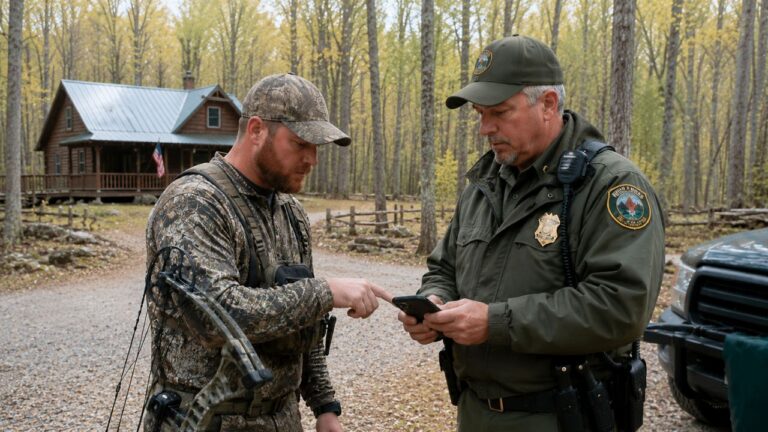
In a Reddit post, the poster said he owns private hunting land and had been dealing with a neighbor who had recently leased the property next door. According to him, the person hunting that neighboring tract was new to the area and new to hunting there, but he had already started acting in ways that made the poster uncomfortable.
The first issue was the stand.
The poster said one of his own stands had been knocked over. He did not frame it like a weather issue or some harmless accident. The timing and situation made him suspect the neighboring hunter had something to do with it, especially because there had already been boundary concerns between the two properties.
Then came the blind.
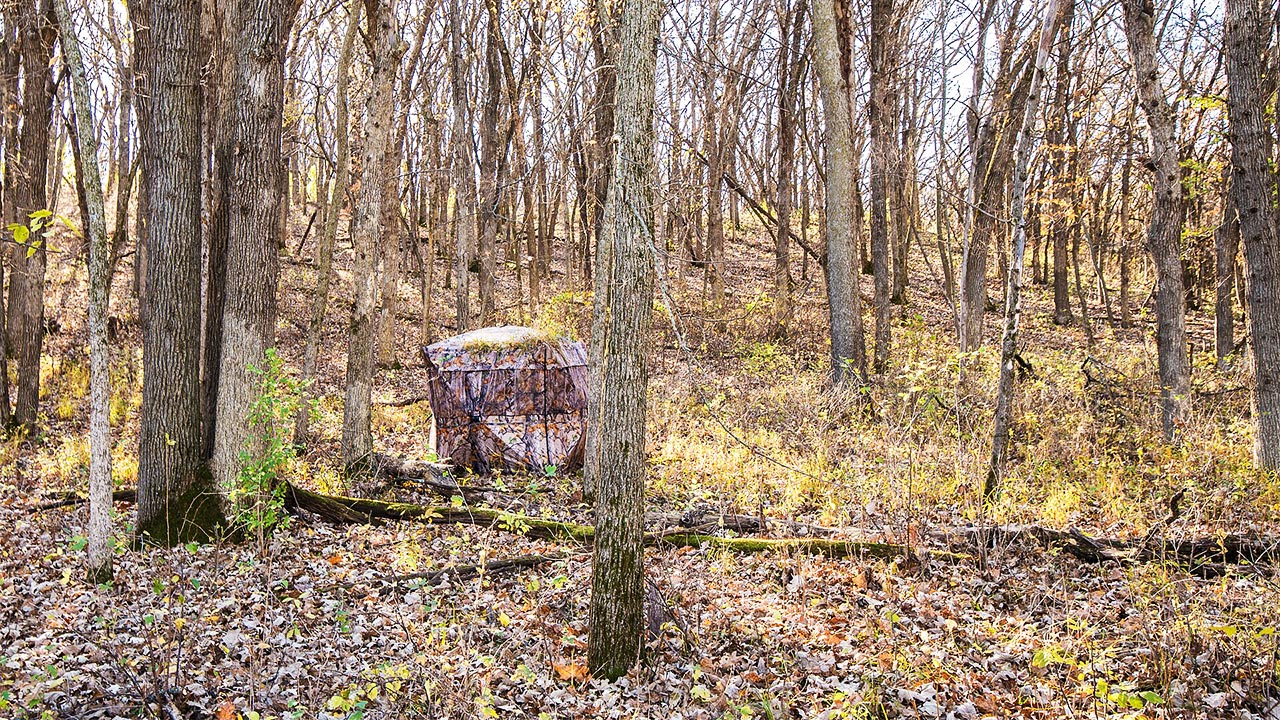
According to the post, the neighboring hunter had set up a ground blind on the poster’s property. Not close to the line. Not in a gray area where someone might reasonably wonder which side they were on. The poster said it was on his land.
That is the kind of thing that makes a property owner’s stomach turn, because it is not just a simple mistake once there are multiple signs of trouble. A stand gets knocked over. A blind shows up where it does not belong. A new hunter next door is suddenly tied to both problems. Even if the poster did not have every answer yet, he had enough to know the situation needed to be handled carefully.
He also seemed to understand that this was the kind of issue that could escalate fast. Rural property disputes have a way of turning personal, especially during hunting season. A person may think they are defending their access. Another may think they are protecting their land. Before long, what started as a blind in the wrong spot turns into trucks at the gate, angry phone calls, and people accusing each other of things they cannot prove.
The poster’s question was simple: how should he handle it?
That question said a lot. He did not come in bragging about tearing the blind down or threatening the hunter. He was trying to figure out the right move before making the wrong one. He wanted the issue fixed, but he also seemed to know that there is a big difference between being firm and creating a mess that lingers for years.
That is especially true when the other person is a new hunter. Some commenters later picked up on that part. A new hunter might not fully understand property boundaries, hunting etiquette, or how serious it is to place a blind on land you do not have permission to use. But being new does not excuse crossing lines, damaging another person’s setup, or creating unsafe conditions.
From the landowner’s side, the facts were still frustrating either way. His stand had been knocked over. A blind had appeared on his property. And the neighboring hunter was close enough to the situation that the poster felt he needed outside advice before deciding what came next.
There is also the safety side of it. A blind on the wrong property means someone may be sitting there during hunting hours, possibly armed, possibly aiming into land they do not know, and possibly unaware of where the actual owner or his family may be set up. That is not a small problem. During deer season, a hidden hunter in the wrong place can make the entire area feel unsafe.
The poster seemed to be stuck between wanting to keep peace and needing to protect his land. If he ignored the blind, he risked sending the message that the behavior was acceptable. If he reacted too hard without proof, he risked starting a fight with someone he still had to share a boundary with.
That is the miserable middle ground a lot of landowners end up in. They are expected to stay calm, document everything, avoid confrontation, and be neighborly, even when someone else is the one stepping over the line.
In this case, the poster wanted a solution before the situation got worse. The blind needed to come off his property. The stand issue needed to be addressed. And the new hunter next door needed to understand that private land is not something you feel out as you go.
Commenters mostly told the poster to slow down, document everything, and avoid handling it in a way that could hurt him later.
Several people said he should take photos of the blind, the property line, the knocked-over stand, and anything else that showed what had happened. A few suggested trail cameras, especially if he suspected the same person might come back. The idea was not to turn the property into a surveillance operation for fun. It was to have proof before making an accusation.
Some told him to talk to the hunter directly, but only if he could do it calmly. Their suggestion was to approach the situation as a boundary issue first: explain where the line is, tell him the blind is on private property, and give him a chance to remove it. That kind of conversation can still be tense, but it gives the other person one opportunity to fix the problem without law enforcement or the landowner getting more aggressive.
Others were less forgiving. To them, a blind on someone else’s land was trespassing, plain and simple. They said if the hunter was leasing land next door, then he had a responsibility to know where that lease ended. If he did not know, he should not be hunting near the line in the first place.
A few commenters brought up the game warden. That advice came up because hunting trespass can be more serious than a random walk through the woods. If someone is setting up to hunt on land they do not have permission to use, a warden may be the right person to handle it, especially if the hunter refuses to move the blind or keeps coming back.
There were also comments about keeping things neighborly where possible. Some hunters said new hunters make dumb mistakes, and a clear conversation might solve it. But even those commenters usually added that the blind needed to be removed and the property line needed to be respected from that point forward.
The biggest warning was not to destroy or steal the blind without checking local laws. A few people said it may feel satisfying to drag it out or toss it, but that could create its own problems. Better to document, notify, and then involve the right authorities if the person refuses to cooperate.
For the landowner, the message from Reddit was pretty clear: do not ignore it, but do not lose your cool either. Get proof, make the boundary clear, and give the hunter one chance to correct it. After that, it stops being a misunderstanding and starts looking a whole lot more like deliberate trespassing.