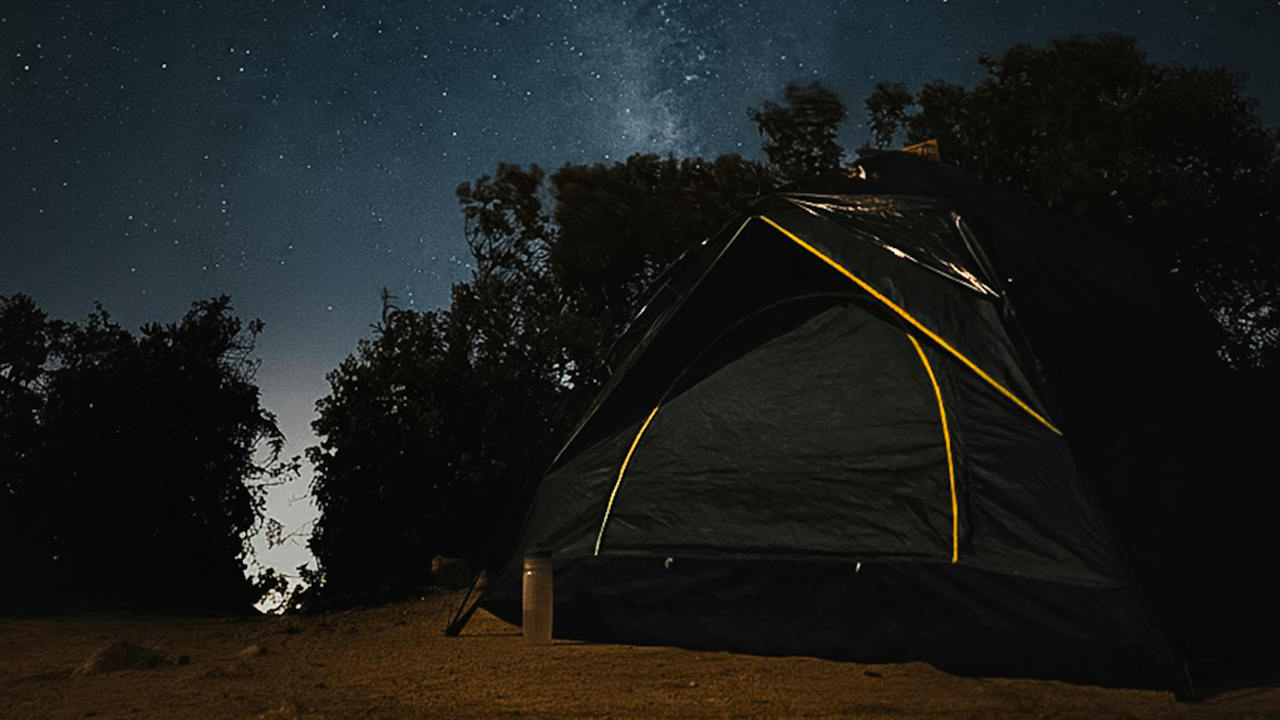
Photo credit: Edwin Mijares/Pexels.com
The camper knew there were mountain lions in the area.
That is one thing when you’re talking about it at home, looking at maps, reading signs at the trailhead, or hearing someone else’s story around a fire. It is a very different thing when you are lying in a tent at night and something is moving around your camp in the dark.
The story came up in a Reddit thread where people were talking about whether they carry a gun while camping. One commenter shared the kind of experience that makes that question feel a lot less theoretical.
They said a mountain lion kept prowling around their campsite.
Not passing through once. Not making a noise far off in the brush and disappearing. Prowling around close enough, long enough, that the people in camp decided the safest move was to leave in the middle of the night.
That is the part that tells you how serious it felt. Breaking camp at night is miserable even when nothing is wrong. You are tired. It is dark. Everything takes longer. You are fumbling with gear, lights, bags, zippers, stakes, food containers, and whatever else you dragged into the woods. Nobody wants to do that unless staying put feels worse.
And in this case, staying put apparently felt worse.
A mountain lion around camp is not like a raccoon trying to steal crackers or a deer wandering through. It changes the air around you. You start noticing every sound. A twig breaks and your whole body tightens. Brush moves and you stop breathing for a second. The dark starts feeling thicker than it did 20 minutes earlier.
Even if the animal never charges, the fact that it keeps circling or hanging around tells you something is off. Maybe it is curious. Maybe it smells food. Maybe it is young and bold. Maybe it is sick. Maybe it has no interest in people at all and is only moving through its normal range. But from inside a tent, you do not get the luxury of knowing which version you are dealing with.
You just know there is a predator outside, and the tent suddenly feels thin.
That is one of the uncomfortable truths about camping in big-cat country. A tent gives you privacy from other campers and some protection from wind and bugs. It does not make you feel especially secure when the animal outside is built to stalk quietly. The nylon wall between you and the dark starts feeling like a polite suggestion, not a barrier.
The commenter said the experience made them decide to leave. That choice probably came with a lot of second-guessing in the moment. Are we overreacting? Is it really close? Should we wait it out? Will packing up make it worse? Is it safer to get to the vehicle? What if it follows us? What if it is already between us and the car?
Those thoughts can stack up fast when you’re scared.
But leaving also makes sense. If an animal keeps coming around camp and you cannot make it leave, the safest option may be to remove yourself from the situation before it gets worse. Nobody gets extra points for staying just to prove they are calm. The woods do not care about pride.
The story also shows why people get so divided over carrying protection outdoors. Some campers hear a story like this and immediately think, “That is exactly why I want a firearm with me.” Others think about bear spray, bright lights, noise, better food storage, or simply choosing campsites more carefully. The tool changes depending on the person and the place, but the fear underneath it is the same: if something dangerous comes into camp at night, you need options.
And options feel very important when you are half-awake, in the dark, with a mountain lion nearby.
There is no need to turn the animal into some horror-movie monster. Mountain lions usually avoid people, and most outdoor trips in lion country end without anyone seeing one. But “usually” is not much comfort when one is actually near your tent. At that point, the general statistics stop mattering. You are dealing with the animal in front of you, or the animal you can hear but cannot see.
That may be the most unsettling part. A mountain lion is quiet when it wants to be. If you hear it, you start wondering what you are not hearing. If you catch a glimpse of it, you wonder how long it was there before you noticed. That uncertainty can make even experienced campers feel exposed.
The commenter did not turn it into a long survival tale. There was no dramatic fight, no heroic standoff, no last-second rescue. They simply decided that a mountain lion hanging around camp at night was enough reason to get out.
Honestly, that may be the most believable part of the whole thing.
A lot of outdoor close calls do not end with some big movie scene. They end with someone saying, “Nope,” grabbing their gear, and making the smartest exit they can. Sometimes that is the win. You do not need to defeat the animal. You just need to avoid becoming part of a worse story.
The thread was mostly about carrying a gun while camping, so the mountain lion story naturally fed into a bigger debate about what people want nearby when something goes wrong in the woods.
Some commenters were firmly in the camp of carrying a firearm. For them, a predator prowling around camp at night is exactly the kind of situation they think about when they pack. Their argument was not that they expect to use it on every trip. It was that if the worst-case moment ever comes, they do not want to be standing there empty-handed.
Others pointed out that a gun is not a magic fix. You still have to wake up, identify what is happening, know where everyone in camp is, avoid panicking, and make a safe decision in the dark. That is a lot to ask when you are scared and half-asleep. Some people said bear spray, a bright flashlight, an air horn, and good camp habits may be more practical for most campers.
A few people talked about how rare mountain lion attacks are, but even those comments did not really dismiss the fear. Rare does not mean impossible, and it does not mean you should ignore an animal that keeps hanging around camp. The right move is not to panic, but it is also not to act like a big predator near your tent is no big deal.
Food storage came up too. Commenters often bring that up in camping threads because food smells can draw in all kinds of animals, not just bears. A clean camp, sealed food, trash stored correctly, and no scraps left around sleeping areas can make a big difference. It may not explain every predator encounter, but it removes one obvious reason for animals to come close.
Some campers said they would have left too. That was probably the most grounded reaction. There is no shame in packing out when something feels wrong. You can always come back another weekend. You cannot undo a bad decision made because you were too stubborn to leave.
Others shared their own stories about animals near camp: bears sniffing around tents, coyotes yipping close by, strange footsteps at night, and eyes reflecting back in a flashlight beam. Those stories all had the same nervous thread running through them. The outdoors is peaceful until suddenly it is not, and the switch can flip fast after dark.
For this camper, the decision was simple by the end. A mountain lion kept prowling around the campsite, and leaving felt safer than waiting to see what happened next. That may not be dramatic, but it is exactly the kind of judgment that keeps a scary night from turning into something worse.