Photo credit: The Avid Outdoorsman
The trespasser seemed to think he had solved the problem.
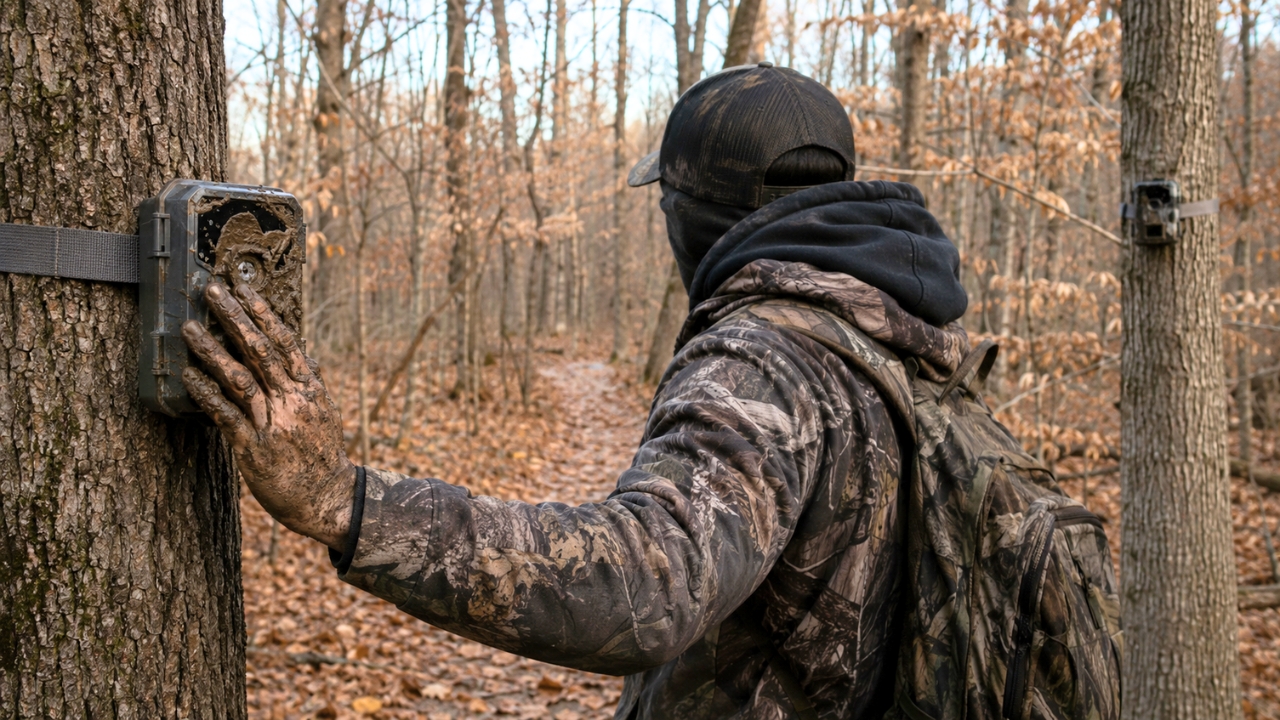
He found the trail camera, walked up to it, and smeared mud over the lens like that would erase him from the property. It is the kind of move that feels almost childish at first, until you remember why someone would do it.
He did not want to be seen.
The story came up in a Reddit thread where hunters were talking about time in the field, access, and the kind of things that happen when people are moving through hunting country. One commenter shared a trespasser story that had one beautiful little twist: the man who muddied the camera did not realize another camera was watching him do it.
That is where the whole thing goes from irritating to almost satisfying.
Trail cameras are one of the few ways landowners and hunters can prove what is happening when they are not there. You can suspect someone is crossing your land. You can find boot tracks, tire ruts, cut fences, missing gear, or strange activity near stands. But a picture changes the conversation. A picture gives you a face, a time, a direction of travel, and sometimes enough proof to make the person stop pretending it was all a misunderstanding.
That is probably why trespassers hate them so much.
The man in this story apparently saw the camera and decided to blind it with mud. Maybe he thought he had already been caught and wanted to stop future pictures. Maybe he thought smearing the lens would ruin the evidence. Maybe he was just mad that someone had the nerve to watch their own property.
Whatever his thinking was, he missed the second camera.
That is the kind of setup experienced landowners recommend for a reason. One obvious camera catches deer. A better-hidden camera catches the people who mess with the obvious one. It is not paranoid when people keep proving why it is needed.
You can picture the trespasser standing there, probably feeling pretty clever, rubbing mud over the lens and thinking he had made himself disappear. Meanwhile, a second camera, tucked somewhere else, was catching the whole thing. His face, his posture, maybe his clothes, maybe the direction he came from. The exact evidence he was trying to destroy was being created from another angle.
And honestly, that is about as close to poetic justice as trail-cam drama gets.
The bigger issue, though, was not the mud. It was what the mud showed. A person who accidentally wanders across a line usually does not walk up and sabotage a camera. Someone with innocent intentions does not normally hide the lens. That action suggests he knew he was not supposed to be there or at least knew he did not want the owner seeing him there.
That makes it harder to sell the “I didn’t know” excuse later.
A lot of trespass issues start in gray areas. Somebody claims the property line is confusing. Somebody says they thought they had permission. Somebody says an app showed the wrong parcel. Somebody says they were looking for a wounded animal or a lost dog. Sometimes those excuses are real. Sometimes they are not. But once a person starts tampering with cameras, the whole tone changes.
Now it looks deliberate.
For hunters, that is especially frustrating because cameras are not cheap. Even basic ones cost money, and cellular cameras can get expensive fast. They also take time to place, check, maintain, and hide. Smearing mud over a lens may not destroy the camera permanently, but it can ruin the whole purpose of having it there. If the camera misses deer movement, trespass activity, or a person coming through later because someone blinded it, that is still damage in a practical sense.
And if the trespasser is willing to muddy one camera, there is always the worry he may come back to steal it, break it, or look for more.
That is why the second camera mattered so much. It did not just catch the man. It showed the landowner or hunter that the person was willing to interfere with equipment. That kind of proof can make the difference between “someone walked through” and “someone intentionally tried to hide his presence.”
The story also hits on a truth every landowner eventually learns: people act different when they think nobody is watching. Some people respect signs and gates because it is the right thing to do. Others only behave when they think they might get caught. And a few will try to destroy the thing catching them instead of simply leaving.
This guy picked the wrong camera.
Commenters loved the second-camera detail because it is exactly the kind of move people recommend in trespass situations.
Several hunters said it is smart to have one visible camera and one hidden camera nearby. The visible one catches normal activity and acts as a deterrent. The hidden one catches whoever tries to steal, cover, or damage the visible one. It may feel excessive until someone walks up and proves why it was needed.
Others pointed out that tampering with the camera made the trespasser look guilty. A person who is lost or confused usually waves, leaves, or tries to figure out where he is. A person smearing mud on a lens is trying not to be recorded.
A few commenters talked about how often trail cameras get stolen or vandalized. Many said they stopped putting expensive cameras in obvious spots because people will take anything that is not locked down. Some recommended cable locks, lock boxes, elevated camera placement, and cameras angled from higher in the tree so they are harder to spot.
There was also the usual advice to document everything. Save the photos from both cameras. Take pictures of the muddied lens. Note the time, date, location, and access route. If the person comes back or if law enforcement gets involved, a clean record matters more than a heated accusation.
Some hunters said the next step depends on whether the person can be identified. If he is a neighbor, a calm but firm conversation may work. If he is unknown or keeps coming back, the game warden or sheriff should be involved, especially if this is tied to hunting trespass.
The most practical takeaway was simple: do not assume one camera is enough. If someone is bold enough to trespass, he may be bold enough to mess with your gear. And if he is going to do that, it sure helps to have another camera quietly watching him make the mistake.