Photo credit: Amir Hosseini/Unsplash.com
The shot was close. The deer was hit hard. And for a few seconds, it looked like the kind of hunt that should have ended with meat in the freezer.
Then the blood trail crossed into the wrong woods.
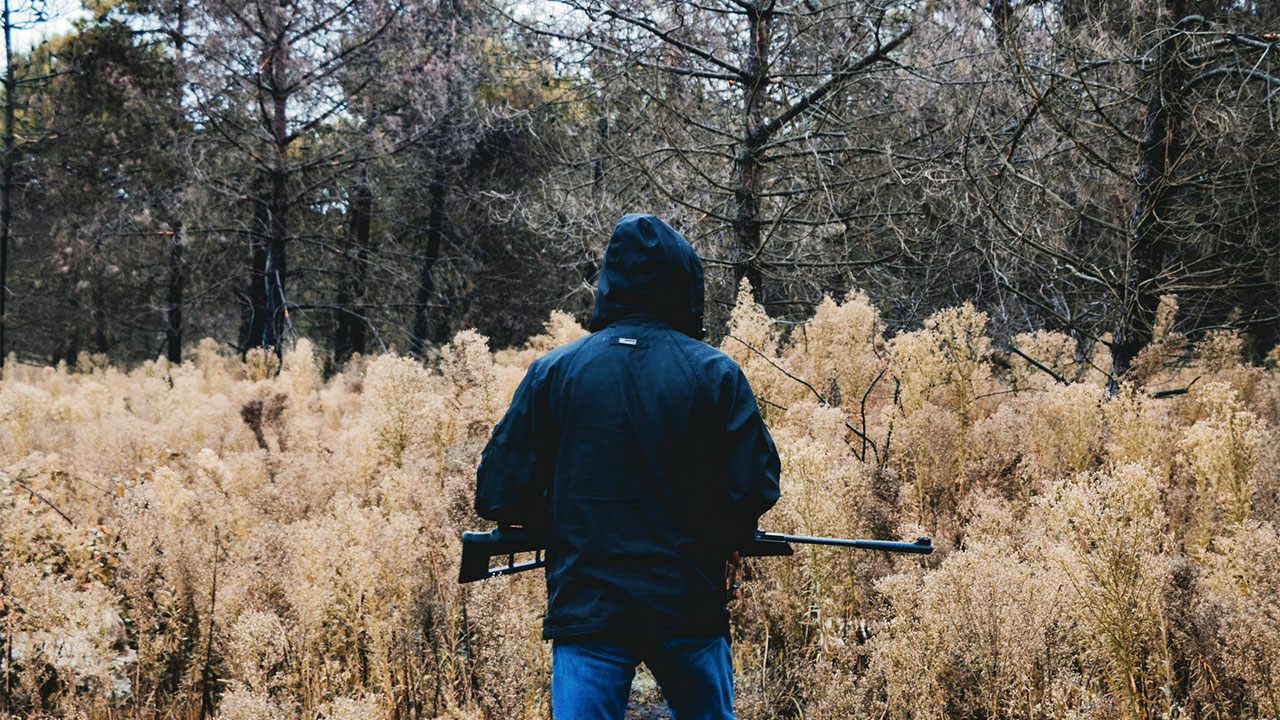
In a Reddit post, a hunter said he shot a doe around 4:45 in the afternoon right in front of his blind. The deer went down and flopped for about 15 seconds before getting back up and limping out of sight. He could tell she was badly hurt, and he did what plenty of hunters are taught to do after a shot like that: he waited.
The poster said he gave it a respectful hour and waited until after sunset before going to recover the deer. His family owns 13 acres, and he hunts a corner of the property inside 75 yards. Next door, there is a hunting club with more than 150 acres. According to the poster, the club had several guys hunting right along the edge of his family’s land because there was supposedly a good buck in the area.
That meant when he shot the doe, one of the club hunters was already sitting right on the property line near him.
Once the poster started tracking, he found heavy blood leading into the canopy behind his property. He estimated the deer was about 50 to 100 yards from where he shot her, and he believed she could not have gone far. For him, that made the situation feel worse. He said he hunts for meat and hates the idea of wasting an animal.
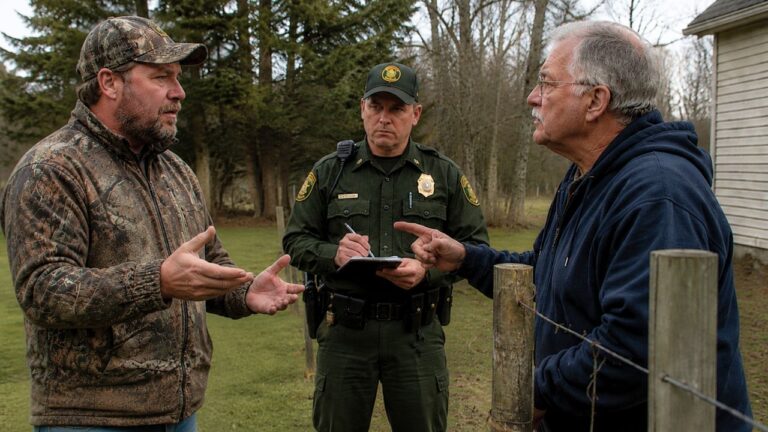
But the blood trail was heading toward land he did not own, so he went and asked for permission.
That is where everything went sideways.
According to the post, the neighbor blew up over it. The argument, as the poster described it, seemed to reach back to something that happened years before his family owned the property. The neighbor apparently brought up how the previous owners had a stand over the property line more than 10 years earlier.
The poster did not see how that had anything to do with the wounded doe. From his side, he was trying to do the responsible thing. He had not marched across the line. He had not ignored the boundary. He had asked. But because of an old property dispute involving people who owned the land before him, he was told no.
That left him stuck with the worst feeling a hunter can have after a bad recovery: knowing an animal may be down close by and not being allowed to go look.
He said his family did not want to talk to the neighbors again after the blowup, but he still wanted to clear things up. He described his family as respectful people and said this was the one weekend a year he got to hunt, while the hunting club was there every week. That part clearly bothered him, especially because the club already had access to more than 150 acres with food plots and land near a DNR nature reserve.
From his view, they had plenty of room. He only had 13 acres, and now he could not even recover a deer that likely died shortly after leaving his property.
The poster also mentioned OnX, the mapping app many hunters use to check boundaries. He believed the app was part of the tension because it showed his property line in a way the neighbors did not like. He had worked with GIS before and understood that digital boundary lines can be off by 10 to 25 feet. But he also said his father had shown the leaseholder a physical stake to explain their view of the property, and the leaseholder seemed satisfied at the time.
That made the neighbor’s refusal feel even more frustrating. This was not a case where the poster was claiming half the neighbor’s land. He wanted to follow a blood trail and recover an animal he had legally shot. Instead, he got dragged into a fight over old boundary resentment, a hunting club, and who had done what a decade earlier.
He later explained in the comments that the person making the call may not even have been the landowner himself. He said the leaseholder and renter did not seem to communicate well, and the leaseholder was connected to the owner somehow. That confusion only added to the mess. Nobody seemed to be on the same page, and the deer was somewhere in the middle of all of it.
For the poster, the moral part was clear. He did not want the animal wasted. He wanted to retrieve it, process it, and put the meat to use. But rural property lines can turn simple things into ugly standoffs fast, especially when hunting leases, old grudges, and wounded deer all collide at once.
Commenters overwhelmingly sided with the hunter’s frustration, though they did not all agree on what the law allowed.
A lot of hunters told him to call the game warden. Their reasoning was simple: once a legally shot animal crosses a property line, the hunter still has a responsibility to make every reasonable effort to recover it. Several commenters said a warden could at least mediate the situation and maybe help get permission or clarify what could legally happen next.
Some were blunt about it. They said if the neighbor wanted to make the situation difficult, then the game warden should be involved. To them, refusing access to recover a deer was not neighborly, and it showed a lack of respect for the animal.
Others were more cautious. A few commenters pointed out that recovery laws vary by state. In some places, a hunter still cannot enter posted private land without permission, even if a wounded deer crossed the line. In other states, the rules may be more flexible under certain conditions. One commenter specifically noted that in Ohio, entering without permission would still be trespassing, while Minnesota has different rules when land is not posted.
That legal uncertainty became a major part of the discussion. Commenters agreed the ethical thing would be to let the hunter recover the doe, but several warned that ethics and law are not always the same thing. Their advice was to call the warden instead of guessing.
There were also hunters who shared their own bitter stories. One commenter said he had once shot a strong buck, only for a neighbor to refuse recovery and later take the deer himself. Years later, the same neighbor ended up needing access to recover his own deer, and the commenter made him leave. That story hit the same nerve as the original post: when landowners and hunters stop helping each other, everybody loses eventually.
A few commenters focused on the old property dispute. They said holding a new landowner responsible for something the previous owners supposedly did 10 years earlier made no sense. Others said the hunting club sounded territorial, especially if they were crowding the edge of a 13-acre property while sitting on more than 150 acres themselves.
The strongest theme was that the poster needed a clear plan before it happened again. Some suggested introducing himself to the actual landowner, not just the leaseholder or renter, and trying to create a written recovery agreement. Others said he should document boundaries, stay polite, and keep the game warden’s number handy.
Nobody could undo what happened to that doe. That was the part that bothered the poster most. He made the shot, waited like he was supposed to, found blood, asked permission, and still ended the night feeling like an animal had been wasted because a neighbor wanted to keep an old grudge alive.