Photo credit: Roman Biernacki/Pexels.com
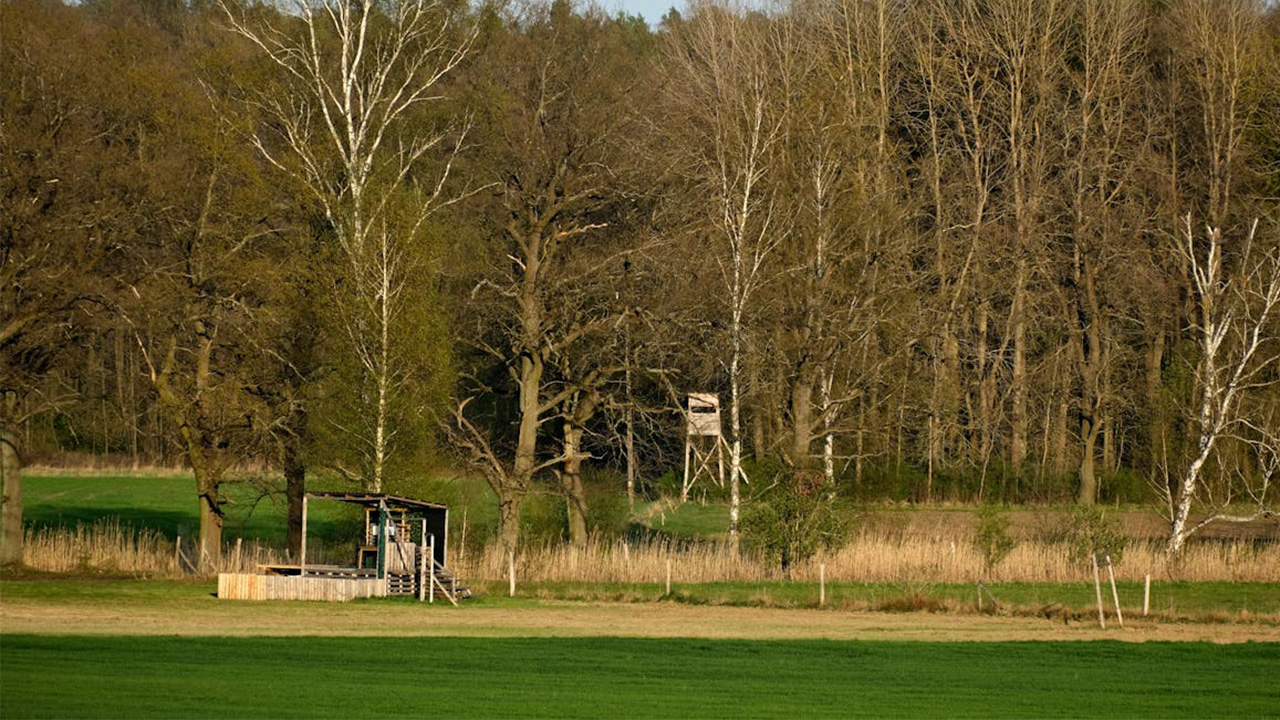
The hunter said he knew his neighbor had stands near the property line. That alone was not the issue.
The problem was where they were pointed.
In a Reddit post, the poster explained that his neighbor had hunting stands sitting right along the edge of the property, and those stands appeared to be aimed directly into his land. From the poster’s side, that raised an obvious concern: if a hunter is set up on the line and facing the wrong way, what exactly is he planning to shoot?
The poster said he had already spoken with local authorities and was told the neighbor could legally place a stand on his own side of the property line. That part made sense. A landowner can usually set up on his own land, even if the location annoys the person next door.
But the poster’s concern was not just that the stands existed. It was that they were positioned in a way that made it look like the neighbor was hunting deer that crossed onto the poster’s property. That is where things get ugly fast. A stand can be technically legal on one side of the line while still creating a situation where everybody knows what is likely happening once the season opens.
For hunters and landowners, property-line setups are one of those gray-zone headaches that can turn neighbors against each other. A stand set a few feet off the line may be legal. Shooting across the line is not. Recovering an animal across the line may require permission. And if there is no trust between the neighbors, every shot, every track, and every gut pile can become an argument.
The poster seemed stuck in that exact frustration. He could see the stands. He could see the direction they faced. He had already checked with authorities. But unless he had proof that the neighbor was actually shooting across the line, there was only so much anyone could do.
That kind of answer does not feel very satisfying when it is your land.
A neighbor does not have to step foot across the boundary to make you feel like your property is being pressured. If his stands are angled toward your woods, your food plot, your field edge, or your travel corridor, it can feel like he is trying to use your land without technically standing on it. That may not always be illegal, but it can absolutely sour the relationship.
The poster also seemed worried about safety. If a stand is facing toward another person’s land, then a shot could be headed that direction too. Depending on the terrain, backstop, distance, and weapon involved, that is not something to shrug off. A bullet does not care where the property line is. Neither does a bad decision made at first light.
That is why commenters kept coming back to one issue: the exact line matters.
A lot of rural property disputes start because both sides think they know where the line is. Maybe there is an old fence. Maybe there is a row of trees. Maybe somebody’s granddad always said the line ran along a ditch or creek. But old assumptions can be wrong, and apps can be off. When hunting pressure is involved, “pretty sure” is not good enough.
The poster did not appear to be looking for permission to start a feud. He wanted to know what could be done when a neighbor’s stands were right on the boundary and aimed into land he did not own. The answer from the thread was not dramatic, but it was practical: get the line confirmed, document what is happening, and be ready to involve the game warden if there is proof of illegal hunting.
That leaves the landowner in a frustrating position. He may know exactly what the setup looks like. He may have every reason to believe the neighbor is trying to take advantage of deer movement on his property. But without proof of a shot crossing the line or a hunter entering his land, the stand itself may be allowed.
Still, that does not make it neighborly.
There is a difference between hunting your side of the fence and setting up in a way that all but invites trouble. Property-line stands are legal in plenty of places, but they are also one of the fastest ways to destroy trust between landowners. Once that trust is gone, every deer season turns into watching the boundary instead of enjoying the hunt.
Commenters mostly told the poster to stop relying on guesses and get the property line officially marked.
Several people said a survey was the first real step. Not a map app. Not an old fence. Not a verbal description from a neighbor. A proper survey. If the stands were actually over the line, that would change everything. If they were on the neighbor’s property, then the poster would at least know exactly what he was dealing with.
Some commenters said that once the line was confirmed, the poster could post signs directly along the boundary. Clear signs would make it harder for anyone to claim confusion if they crossed over, tracked onto the property without permission, or tried to argue about where the line ran.
Others suggested cameras. A few recommended setting trail cameras where they could document activity near the boundary, especially if the poster suspected the neighbor might be crossing over after shots. Commenters warned him to place cameras carefully and legally on his own side, but they saw documentation as the only real way to prove more than suspicion.
Several hunters pointed out that a stand facing the property line is not automatically illegal. A person may be hunting a trail, field edge, or funnel on his own side. He may be watching deer movement along the boundary without planning to shoot across it. That does not mean the setup looks great, but commenters said the law usually cares about actions, not vibes.
Still, plenty of people understood why the poster was irritated. Some said they would never set up that close to a neighbor’s line because it creates bad blood and unnecessary temptation. Others said if a neighbor’s stand was facing their property, they would assume the worst until proven otherwise.
A few suggested making the land less useful from that angle. Depending on the property, that could mean adding brush, hinge-cutting trees, putting up visual barriers, or improving habitat deeper inside the poster’s own land so deer movement shifted away from the line. That advice was less about confrontation and more about taking control of what he could control.
The game warden came up too. Commenters said if the poster ever had evidence of shots crossing the line, illegal recovery, trespass, baiting, or harassment, he should call the warden instead of trying to settle it himself. Boundary disputes get heated enough without two armed hunters arguing in the woods.
The strongest advice was boring but solid: confirm the line, post it clearly, document everything, and do not accuse the neighbor without proof.
For the poster, that may not have been the answer he wanted. He could see the stands, and he did not like where they were pointed. But in a property-line hunting fight, suspicion only gets you so far. Proof is what turns a bad feeling into something the authorities can actually act on.