Photo credit: The Avid Outdoorsman
The first sign was the gut piles.
Not one. Three.
That is the kind of thing that changes the whole feel of a hunting property in about five seconds. You show up expecting to check cameras, look over the woods, maybe get ready for the weekend, and instead you find proof that somebody has been killing deer where they should not be.
The story came up in a Reddit thread where hunters were talking about stolen and broken trail cameras. One commenter said he had two cameras stolen from private land, but the camera theft was only part of the mess.
He said they arrived at the property one Friday afternoon and found three piles of guts.
That meant somebody had been in there that morning or the night before. And from the sound of it, this was not a case of one hunter making a boundary mistake and wandering across a line. Three gut piles suggest someone had enough time and confidence to shoot deer, field dress them, and leave before the property’s actual hunters showed up.
That is a sickening discovery if it is your land or land you have permission to hunt. Poaching is not just somebody “getting a deer.” It is someone stealing from the people who manage that ground, follow the rules, buy licenses, hang stands, check cameras, and wait their turn. It is also stealing from the resource itself, especially if the deer were taken illegally, out of season, over limit, or without regard for management goals.
The hunters decided to do something about it.
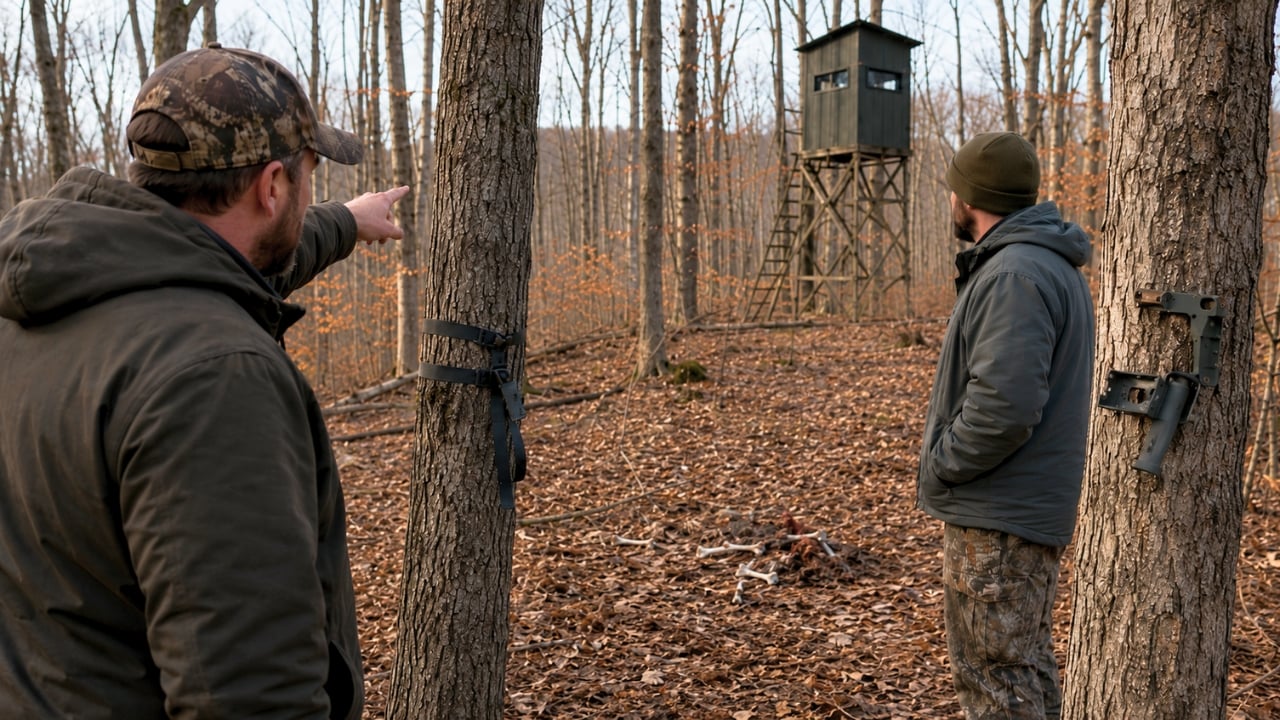
They put up wire fences across several entrance ways, trying to make it harder for whoever was coming in to slip through unnoticed. Then they set up two trail cameras high in the trees. That detail matters because trail cameras at eye level are easy to spot and easy to steal. Once somebody knows you are watching, they may take the camera before it ever gets a good picture. Putting them up high at least gave the hunters a chance.
For a couple of weeks, they waited.
Eventually, the cameras caught something. The commenter said they got bad nighttime photos of the criminals. Not perfect, courtroom-style images. Not a clean close-up where the person smiles at the lens. Bad night photos, but enough to show someone was there.
Then they found something else: a tree stand that the trespassers had put up on the property.
That is when the whole thing started looking even more deliberate. A gut pile could mean somebody snuck in once and got lucky. A stand means somebody planned to keep hunting there. It means they had been on the property enough to pick a location, bring in equipment, and set up like they had every right to be there.
The hunters took the stand down in their own blunt way. The commenter said they shot it out of the tree by taking out the straps. Once it came down, they noticed initials on it.
That should have felt like the break they needed.
They had gut piles. They had trail-camera photos. They had a mystery stand. They had initials on the stand. Put all that together, and it sure sounds like enough to at least start narrowing down who had been sneaking onto the property.
But according to the commenter, the game warden did not give them much hope.
He said that between the bad photos and the initials, there was still little to no chance of catching the person. The warden’s message, as the commenter described it, was basically that this kind of poaching happens.
That had to be maddening. The hunters had done the work a lot of people say you should do. They found evidence, blocked entrances, put cameras up, caught photos, found equipment, and even had initials. And still, the official answer seemed to be that it probably would not go anywhere.
Then the commenter asked what they should do if they actually caught the people poaching.
The warden’s response was the kind of line that sticks with you: “Don’t get shot, the rest is up to you.”
That is funny in the darkest possible way, but it also says something real about these situations. Poachers are not always harmless guys making a bad decision. They may be armed, sneaking around at night, willing to steal cameras, and comfortable going onto land they know is not theirs. Walking up on someone like that can get dangerous fast.
The story did not even end with the cameras surviving. The commenter said one disappeared about six months later, and another disappeared about three months after that. He admitted it was partly their own fault because they got lazy and stopped placing them high in the trees.
That is the exhausting part of dealing with trespassers. You are the one who has to buy the cameras, hang them, hide them, check them, move them, lock gates, fix fences, call wardens, and watch your own land like a security job. The person causing the problem just has to sneak in.
For the hunters in this story, the gut piles were the first gut punch. The stolen cameras and mystery stand proved the problem was bigger. And the initials on the stand gave them just enough of a clue to make the lack of consequences feel even more frustrating.
What Commenters Said
The thread started as a conversation about stolen trail cameras, but it quickly turned into a broader talk about how common theft and poaching can be.
Several commenters said camera theft is exactly why they are careful about where and how they hang trail cams. One person recommended putting them 12 feet up a tree with a cable lock and angling them down, then using a cheap decoy camera lower on the tree if someone really wants to catch the thief. Another said the human eye spots manmade straight lines easily, so taping leaves or breaking up the outline can make a camera much harder to see.
Some hunters said cable locks help, but only so much. A determined thief can still cut one or destroy the camera. Others talked about wireless cameras, but that brought up another problem: now you are risking a much more expensive camera, and even if it sends you a photo of the thief, you still may never get the gear back.
The poaching story drew a frustrated response from the original poster, who said it was disheartening how little effort wardens seemed to put into cracking down on poachers in his area. He said locals had a problem with people picking deer off from the road.
Another commenter pushed back on blaming wardens too much, pointing out that there are generally very few wardens covering huge areas. His argument was that the problem was not lazy wardens as much as the people stealing, trespassing, and poaching in the first place.
Other hunters shared smaller but familiar problems: cameras broken by cattle, cameras destroyed by bears, cameras stolen on private land, and cameras that vanish as soon as someone notices them. The advice kept circling back to the same basic ideas: hide them better, hang them higher, lock them if you can, and assume at least some people will steal anything they find.
The ugly part of the main story was how little proof seemed to matter. Bad night photos and initials on a stand felt like a lead, but not enough to make a case. That left the hunters in the position a lot of landowners hate: they knew someone was poaching, they had evidence that something was happening, but they still could not get a clean resolution.
For them, the lesson was not only that trail cameras get stolen. It was that once poachers decide your land is worth sneaking onto, you may spend more time trying to catch them than they spend worrying about getting caught.