Photo credit: Smith & Wesson/YouTube
When it comes to big-game hunting rifles, you’re usually in one of two camps. You either grew up with a bolt-action and swear by the precision, or you’ve hauled a lever gun through brush so thick you needed the short action to even get a shot off. Neither is wrong. But preference has a lot to do with how you hunt, what you hunt, and whether you’re more worried about your first shot or your follow-up.
There’s a reason both platforms have stuck around for well over a century. And while the internet’s flooded with tactical arguments, most real hunters know it’s about what works in the field. Let’s look at what still keeps lever actions alive—and what makes bolt guns the steady pick for others.
Bolt guns still rule at long range

If you’re sitting on a cut field or watching a distant canyon wall, there’s no question—bolt guns are still king. They’ve got the edge in accuracy, especially when you’re stretching past 300 yards. A good bolt-action with a decent optic and proper ammo will give you that one-shot confidence across open ground.
Even budget bolt guns today are shooting sub-MOA out of the box. You’re not going to get that kind of consistency out of most lever guns, especially with older designs using two-piece stocks and tube magazines. When precision matters more than speed, hunters lean bolt.
Lever actions shine in thick timber

In tight woods or deep brush, a lever gun feels like a natural extension of your body. The short overall length and fast cycling make it easier to swing on a buck that appears out of nowhere. If you’ve hunted whitetail in the East or elk in heavy cover, you’ve probably appreciated how fast a .30-30 or .45-70 can shoulder and fire.
It’s not just the speed—it’s how little room you need to run the action. A bolt throw can get hung up in tight quarters, especially in a cramped blind. A lever gun doesn’t care about space—it’s made for it.
Bolt guns offer better ammo choices

Bolt actions open the door to a massive world of cartridges. From flat-shooting 6.5s to bone-crushing .338s, you’ve got the full menu. That means you can dial in exactly what you want for the range, the recoil, or the type of game you’re chasing.
Lever guns, on the other hand, are mostly limited to older rimmed cartridges. The tube magazine means you’re stuck with flat-nose or soft-tip rounds unless you’re running something like a Henry Long Ranger with a box mag. It’s improving—but it’s still a limitation.
Lever guns are faster for follow-ups

When a second shot matters, lever guns make a strong case. You don’t have to break your cheek weld, and you can stay on target through the cycle. For hog hunting, bear in thick brush, or anything where quick follow-ups matter, you want something you can run without hesitation.
That’s where the lever action makes up ground. You might not get bolt-gun accuracy, but you get speed and rhythm. If you’ve ever dumped three rounds into a charging boar with a Marlin, you know what I mean.
Bolt actions take the edge on durability

There’s a reason you see bolt guns strapped to packs in the mountains. They’re simple, strong, and reliable. Fewer moving parts, less wear over time, and less sensitivity to grit, mud, or freezing temps. When you’re hiking deep into backcountry and betting your tag on a clean shot, you don’t want to think about cycling issues.
Lever guns have come a long way, but they still have more exposed linkages and can gum up with grime or thick oil. They’re plenty rugged, but bolt actions are the tools folks pick when they don’t want to worry.
Lever guns carry better on horseback or ATV

There’s no contest when it comes to how a rifle rides. Lever guns are slimmer, shorter, and more comfortable to carry across a saddle or in a scabbard on the ATV. Whether you’re crossing fence lines or climbing up shale ridges, the shorter profile doesn’t snag or drag.
They’re also easier to balance in your hand. You’re not worried about dinging the bolt handle or catching the long barrel on every tree. There’s a reason guides still keep them in the scabbard—it’s because they carry clean.
Bolt guns still dominate the factory optics game

Most bolt actions come drilled, tapped, and ready for scope rings or a rail. And the way the receiver is designed makes it easy to keep things solid and aligned. Zero holds better, and you’ve got more options when it comes to mounts and rings.
Some lever guns are finally catching up. Marlin’s new 1895s and Henry’s side-gate models have rail space and scout mounts. But it’s still not as universal. And trying to mount a scope on a top-eject Winchester 94 is an exercise in frustration.
Lever guns offer a different kind of nostalgia
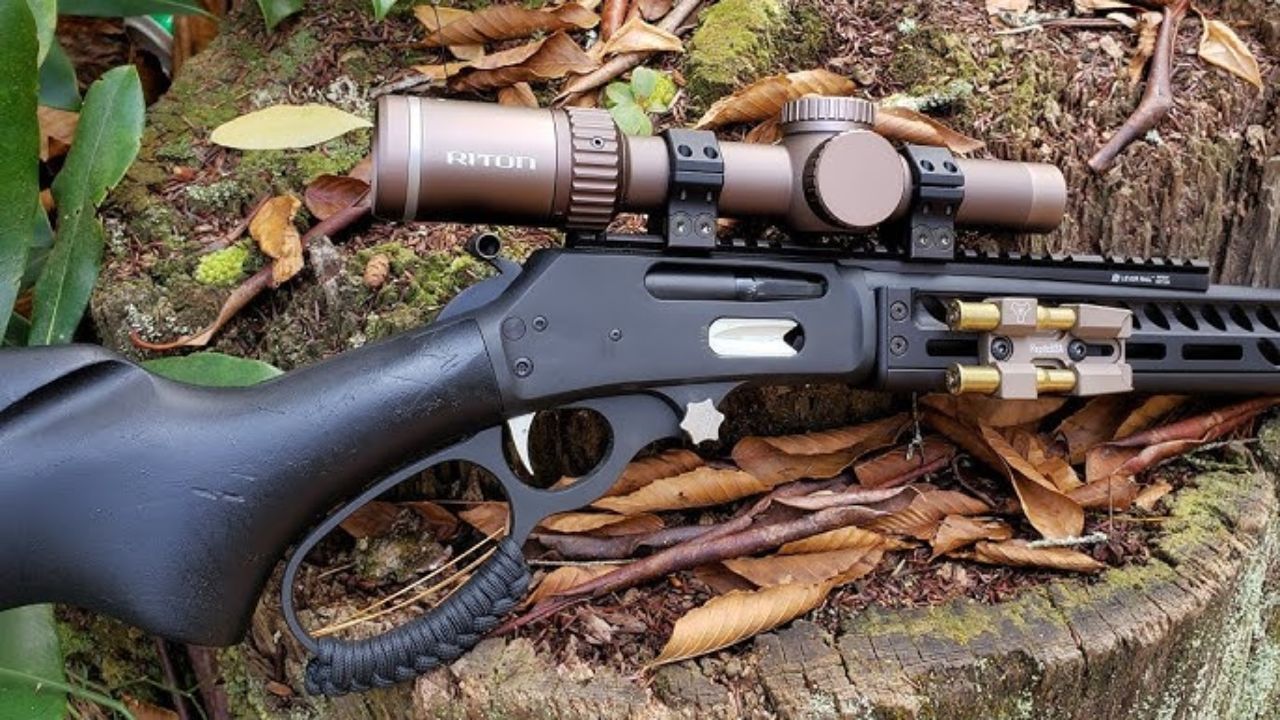
You don’t carry a lever gun to prove anything. You carry it because it reminds you of something. Maybe it’s your dad’s old Marlin. Maybe it’s the first deer you shot with a borrowed Winchester. Or maybe you just like the way it feels in your hand when the light’s fading.
Bolt guns can feel clinical—lever guns feel personal. That doesn’t make them better, but it does explain why so many folks keep coming back to them, even when other rifles might make more sense on paper.
Bolt actions dominate aftermarket upgrades

You can build a bolt gun into anything. New triggers, stocks, barrels, bottom metals, brakes—you name it. That makes them the tinkerer’s choice, especially if you’re looking to stretch your effective range or dial in the perfect load for a specific hunt.
Lever guns don’t offer that same sandbox. You might swap out sights or throw on a rail, but you’re not going to turn a Marlin 336 into a 1000-yard gun. And most folks don’t want to. Lever guns are what they are—and that’s part of the appeal.
Lever guns bring the fun back to hunting

There’s something about cycling a lever gun that makes you smile. Even if you don’t need a fast follow-up, even if you’re only taking one shot, it feels good to run that action. And for some of us, that’s enough.
You can hunt deer with a bolt gun all day, and it’ll work. But a lever gun makes the day feel different. Lighter somehow. More connected to where we started. And at the end of a long season, that still matters.
Like The Avid Outdoorsman’s content? Be sure to follow us.
Here’s more from us:
The worst deer rifles money can buy
Sidearms That Belong in the Safe — Not Your Belt
*This article was developed with AI-powered tools and has been carefully reviewed by our editors.