Photo credit: PHILIPIMAGE/shutterstock.com
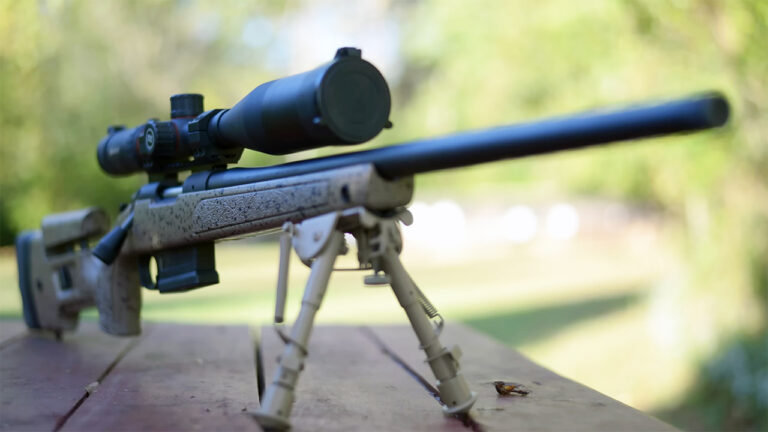
Once distance stretches and wind starts mattering, people stop caring so much about hype and start caring about what actually holds up downrange. That usually means a cartridge that can launch a sleek bullet with a strong ballistic coefficient fast enough to stay useful without beating the shooter up so badly that practice suffers. Hornady’s published materials on the 6.5 PRC and 7mm PRC lean hard into exactly those points, describing them as built around long, heavy, high-BC bullets for extended-range performance, while Nosler’s long-range bullet materials flatly say higher BC bullets are designed to cut wind drift and flatten trajectory.
6.5 Creedmoor still makes sense because it is easy to shoot well
A lot of shooters trust 6.5 Creedmoor at longer range for a simple reason: it is manageable. Federal’s Terminal Ascent 6.5 Creedmoor load is marketed for big game and long range, with a 130-grain bullet at 2,800 fps and a .532 BC, which helps explain why the cartridge keeps hanging around in serious conversations even when newer rounds get more buzz. It is not the fastest option here, but it gives many shooters a forgiving mix of recoil, accuracy, and readily available ammo.
That matters more than people admit. A rifle caliber for wind and distance is only as good as the shooter behind it, and 6.5 Creedmoor stays popular partly because a lot of hunters and riflemen can actually train with it without getting punished. It may not be the sexy answer anymore, but there is a reason it keeps earning trust instead of fading out.
6.5 PRC is the step up people take when they want more speed without abandoning the 6.5 lane
Hornady describes 6.5 PRC as offering a 200-plus fps advantage over 6.5 Creedmoor in a compact magnum cartridge, and Federal’s 6.5 PRC Terminal Ascent load lists a 130-grain bullet at 3,000 fps with the same .532 BC as its 6.5 Creedmoor counterpart. That is the appeal in plain language: similar sleek-bullet advantages, but more speed to help with wind and drop.
For a lot of shooters, 6.5 PRC lands in a sweet spot. It gives a real bump in velocity without jumping all the way into the heavier recoil and bigger-rifle feel of some older magnum options. That is why it keeps getting trusted by people who want a little more reach and wind performance than Creedmoor gives them, but still want a rifle they do not dread practicing with.
7mm PRC is winning people over because it checks a lot of long-range boxes at once
Hornady says the 7mm PRC was built to fit between the 6.5 PRC and 300 PRC and to launch long, heavy-for-caliber bullets with temperature-stable magnum propellants for consistent velocity. Federal’s 7mm PRC Terminal Ascent load puts a 155-grain bullet out at 3,100 fps with a .586 BC, and Federal explicitly tags it for big game and long range use. That is exactly the kind of profile people trust when they expect wind to become a real factor.
This is one reason 7mm PRC has caught on so fast with long-range-minded hunters. It gives you more bullet weight and BC than the 6.5s, but without automatically forcing you into the same old .30-caliber answers people have argued over for decades. It feels like a purpose-built modern option, and the published numbers help explain why shooters are taking it seriously.
7mm Remington Magnum still hangs around because proven stuff does not quit working
New cartridges get attention, but old workhorses stick around for a reason. Nosler calls 7mm Rem Mag a favorite among long-range hunters in its Trophy Grade Long-Range line, and that lines up with why the cartridge still keeps a foothold. It pushes sleek bullets fast, has decades of real-world credibility behind it, and still makes a strong case for hunters who want reach without going full .30-cal magnum.
That legacy matters because trust is not built from launch hype alone. A caliber people have used successfully for years, with broad ammo support and a long history of stretching distance, is always going to stay in the discussion. 7mm Rem Mag may not feel new, but that is not a weakness when the subject is confidence in wind and distance.
.300 Win Mag still has a place when shooters want heavier bullets and real authority downrange
Federal’s Terminal Ascent .300 Win Mag load pushes a 175-grain bullet at 3,030 fps and marks it for big game and long range use. That is the sort of spec sheet that keeps .300 Win Mag in the conversation, especially for shooters who want heavier bullets and more downrange authority than the mid-bore options provide.
The tradeoff, of course, is recoil. But that does not stop experienced shooters from trusting it. Plenty of hunters still want a caliber that handles distance well, bucks wind respectably, and carries enough bullet weight to feel versatile across bigger-bodied game. That is where .300 Win Mag keeps its grip. It may not be the easiest round to shoot a lot, but it is still one people trust when conditions get less forgiving.
What they usually trust most is the round they can shoot well in the wind
That is really the point. People trust long-range rifle calibers when the cartridge gives them a useful combination of BC, velocity, and enough shootability to make those advantages count. Hornady and Nosler both make the same basic case in different ways: high-BC bullets are there to reduce drag and wind drift, and the cartridges built around them are trying to hold onto that advantage as distance grows.
So the shortlist usually ends up looking a lot like this: 6.5 Creedmoor for easy shootability, 6.5 PRC for extra speed, 7mm PRC for a very modern long-range blend, 7mm Rem Mag for proven reach, and .300 Win Mag for heavier-bullet authority. The “best” one depends less on internet ranking and more on which one lets the shooter stay accurate when the wind starts making every bad habit obvious.
Like The Avid Outdoorsman’s content? Subscribe to our newsletter so you never miss an article.
Here’s more from us: