Photo credit: AI-generated image created using ChatGPT. Illustrative only
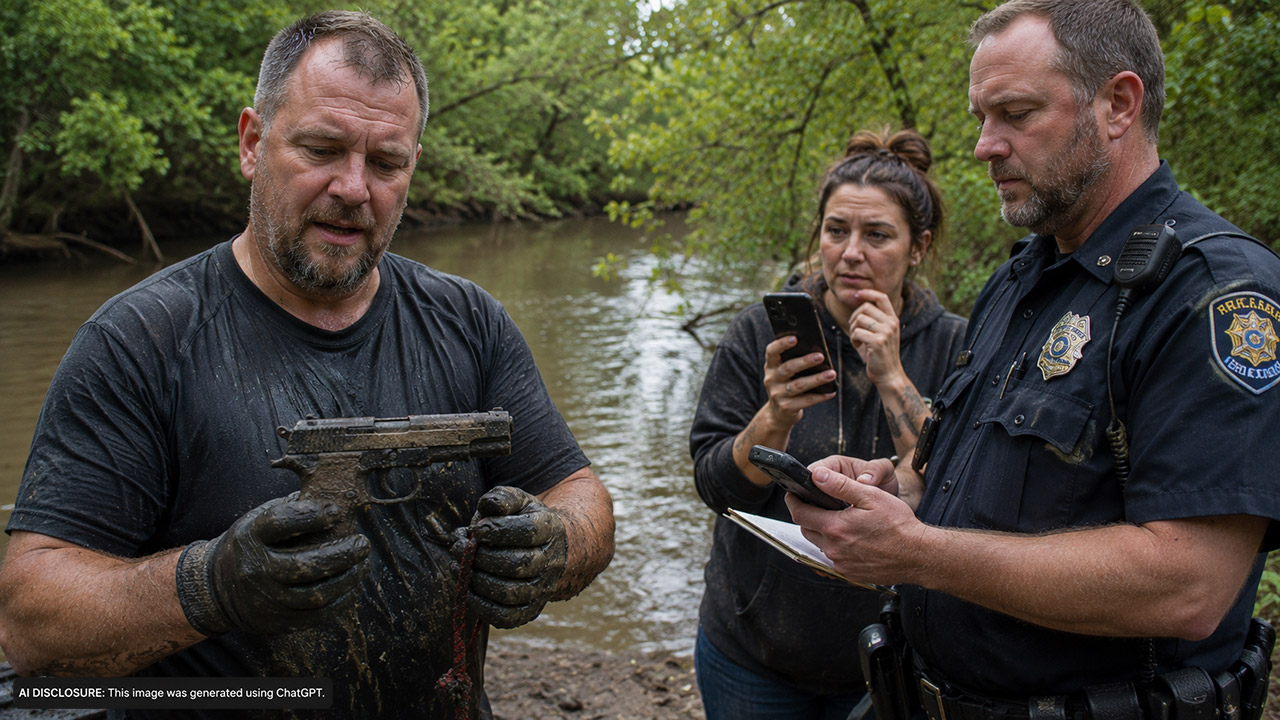
You never really know what’s under a public bridge until you drag a magnet through the water a few times. Most days it’s old rebar, hooks, and busted tools. But on one recent trip to a popular walking bridge, a magnet fisher hauled up something that changes the whole mood fast: a Taurus .38 Special revolver.
Instead of trying to make it a “finders keepers” moment, the magnet fisher did what gun owners and outdoorsmen ought to do when a wet firearm shows up in a place it doesn’t belong. They contacted police to collect it—and that’s where the story took a turn. When the serial number was checked, the revolver came back as stolen from a burglary case dating all the way back to 2004. The details were shared in the original post.
A routine magnet-fishing stop turned into a firearm recovery
The magnet fisher said it had been three years since they’d worked that particular bridge, which tells you something right there: even well-traveled spots can keep secrets for a long time. On this outing, their magnet grabbed a Taurus .38 Special revolver out of the creek.
Finding a gun in moving water isn’t like pulling up a knife or a baitcaster. It’s instantly a safety issue and, potentially, a crime scene issue. The poster said they called GRPD to collect the firearm, and described their interactions with responding officers as positive.
Running the serial revealed a theft report from 2004
Once the revolver was in police hands, they were able to check it. The magnet fisher said they learned on the spot that the gun was reported missing or stolen back in 2004.
That’s the part a lot of folks don’t think about when they daydream about “scoring” a creek gun. A firearm sitting in the mud can still be tied to a burglary, a stolen vehicle, or something worse—and if you decide to keep it, you can end up owning a problem you didn’t create.
The original owner was eventually located
One detail that stood out is that the old theft report wasn’t just a file number in a dusty cabinet. The poster said the original owner asked police to reach out, and the department contacted the magnet fisher to request permission to share contact info.
After that connection was made, the owner told them the revolver had been stolen out of his truck. It’s a reminder that these aren’t just “cool finds.” They’re property, often taken during somebody else’s bad day, and sometimes tied to a bigger chain of events.
Why “just keep it” can go sideways for outdoorsmen
The magnet fisher framed the whole thing as a warning: this is why it isn’t a good idea to keep guns you find in waterways. That’s not hand-wringing—it’s practical. Even if you’re a lawful gun owner, possession can become complicated fast if the firearm is stolen or associated with a serious case.
There’s also the safety side. A creek gun might be loaded. It might have a round under the hammer. It might be jammed up with grit in a way that makes its condition unpredictable. Treat it like it can fire, keep it pointed in a safe direction, and don’t start fiddling with it on the tailgate like it’s a range toy.
And from a common-sense perspective, think about the optics. A person walking away from a bridge with a muddy handgun is going to draw attention, and not the kind you want. Calling it in and letting law enforcement take possession is the cleanest way to keep yourself out of the story.
Not every recovered gun is just “lost,” and this one had a better outcome than some
The poster said they were thankful this revolver was not used in a homicide. That line hits harder when you read the next one: they also said they’ve found three guns in the past that were confirmed to be linked to homicides.
That’s a gut-check for anyone who spends time on public land and public water. We like to think of waterways as places where folks lose tackle, dump scrap, or toss a bike. But they’re also places where people try to get rid of evidence. If you’re magnet fishing, you’re not just cleaning up—you’re occasionally bumping into the underside of human behavior.
How they handled it, and a practical approach for anyone who finds one
In this case, the magnet fisher said they called police to collect the firearm, and they recommend turning in more modern guns or anything that looks recently dumped. They also mentioned they usually prefer bringing the firearm to the station rather than calling non-emergency.
That’s not a one-size-fits-all instruction—local policies and laws vary, and your best move may depend on where you are and what you found. But the general principle is solid: keep your hands clean, keep the gun secure and pointed safely, and get it into official custody quickly.
One more real-world note: even when a gun has an owner attached to it, it doesn’t just go back in their holster the next day. The poster said the original owner still hadn’t gotten the pistol back yet and wasn’t sure when it would be released from county. That’s normal when evidence or property has to be processed, documented, and cleared.
For outdoorsmen, hunters, and anglers who spend time around bridges and access points, this is a good reminder to keep your head on straight. If a firearm comes out of the water, it’s not a trophy—it’s a potential legal mess and a safety hazard. This magnet fisher made the smart call, and the 2004 theft report proved exactly why that choice matters.
Like The Avid Outdoorsman’s content? Subscribe to our newsletter so you never miss an article.
Here’s more from us: