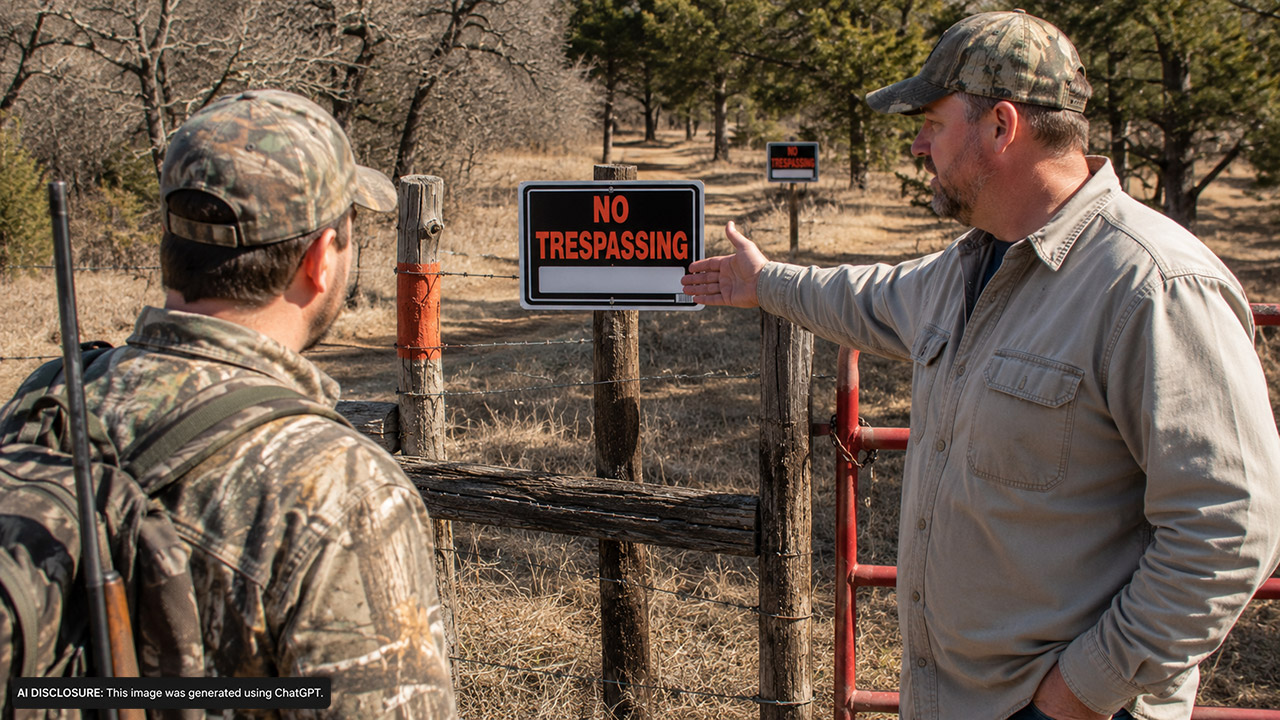
Photo credit: AI-generated image created using ChatGPT. Illustrative only
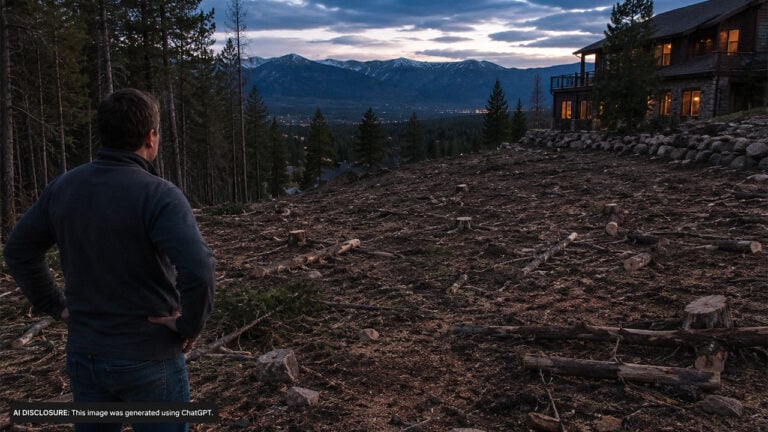
When you own a big piece of ground in the North Woods, you get used to being the “through” property for somebody else. Old woods roads, paper-company layouts, and deed language written decades ago have a way of turning into today’s headaches. One Maine landowner found himself right in the middle of that problem when a neighbor’s access route across his land started looking less like “access” and more like an open invitation to hunt.
In the original post, the landowner said he owns a large chunk of land in northern Maine. A neighbor he barely knows owns a landlocked parcel adjacent to his property. The neighbor has a deeded right-of-way trail that crosses the landowner’s property so he can reach his own land on the far side.
The landowner wasn’t upset about the neighbor using that path. The trouble started when the neighbor’s friend began coming up, not to travel through to the landlocked parcel, but to step off the right-of-way and hunt on the landowner’s side—complete with makeshift hunting structures.
The difference between “right-of-way” and “right-to-hunt” matters
A deeded right-of-way is usually just that: a right to pass over someone else’s land for a specific purpose, typically ingress and egress to a landlocked parcel. It’s not automatically a permission slip for anything else, and it’s definitely not the same thing as a blanket recreation easement.
That distinction is the heart of this situation. The landowner described a clear line: he’s fine with the neighbor traveling the path to get to his own property, but he doesn’t want someone using that travel corridor as a staging lane to hunt his land. In the real world, this is where confusion and “I thought it was okay” excuses show up—especially when guests and friends are involved.
If the deed language truly grants only passage, stepping off the corridor to build a stand or blind and hunt is typically outside the scope of that right. That’s when “access” turns into “trespass.”
Why posting signs everywhere might not do what you think
The landowner’s instinct—put up no-trespassing signs—is a good one, but it needs to be done with a clear understanding of what a right-of-way allows. If a neighbor has a lawful, deeded access route, signs can’t cancel that right. You can post all day long, but the easement is still there.
At the same time, signs can still be useful. They can make it crystal clear that the surrounding property is not open to hunting, scouting, or stand placement. They can also help establish that someone knew (or should have known) they were leaving the authorized route and entering private land without permission.
The practical move most landowners lean on is to post the property boundaries and also clearly mark the right-of-way itself—so there’s no honest argument about where travel ends and trespass begins. That’s not about being “anti-hunting.” It’s about control, safety, and keeping expectations straight.
When a “friend of the neighbor” turns into the real problem
Anybody who’s managed rural land has seen this movie. The neighbor might be reasonable. The neighbor’s buddy is the one who pushes it. In the post, the landowner said the friend comes up and goes hunting, doesn’t proceed to the neighbor’s property, and has makeshift hunting structures on the landowner’s land.
That’s an escalation. Hunting structures—whether it’s pallets, brush blinds, a nailed-up seat, or a thrown-together platform—signal ongoing use and a sense of entitlement. And when someone is comfortable building on your side of the line, it usually means they plan on coming back.
It also creates a safety issue. If you don’t know who’s hunting on your land, you don’t know where they’re shooting, what their backstop looks like, or whether they understand where the property lines actually are. In big timber, lines get fuzzy fast—until a bullet or broadhead makes things real.
The deed language is the steering wheel here
Everything turns on what the deed and easement actually say. Some easements are tight: a defined route, a defined purpose, maybe even seasonal limits or restrictions on widening and maintenance. Others are looser, written in a way that invites arguments about what’s “reasonable use.”
The landowner called it a “right of way path,” which strongly suggests travel access. But land documents can also include older language—sometimes informal-sounding—about “hunting rights,” “sporting rights,” or other reserved uses. In the North Woods, it isn’t unheard of for old deeds and timber-company arrangements to carve out rights that don’t match modern expectations.
That’s why the smartest first step is to read the recorded documents, not rely on what anyone thinks the arrangement is. If there’s truly an old hunting easement or sporting-rights reservation tied into that access, it could limit what the landowner can do with signs alone—at least as far as stopping whoever holds that specific right.
But even then, the question becomes: who holds the right, and does it extend to guests? A lot of disputes come down to whether a third party is acting under the authority of the easement holder or just freelancing.
What outdoorsmen tend to focus on: boundaries, documentation, and avoiding a bad encounter
Even without seeing a pile of back-and-forth commentary, the practical outdoorsman’s playbook on something like this is pretty consistent. First, document what you’re seeing—photos of structures, where they’re located, and how far off the right-of-way they are. Trail cameras can help too, especially when the issue is “it’s not the neighbor, it’s his friend.”
Second, define the line in a way that’s hard to ignore. Fresh paint, clear signage, and visible markers near the corridor reduce the “I didn’t know” defense. It also helps if you later need law enforcement or a warden to take a report seriously.
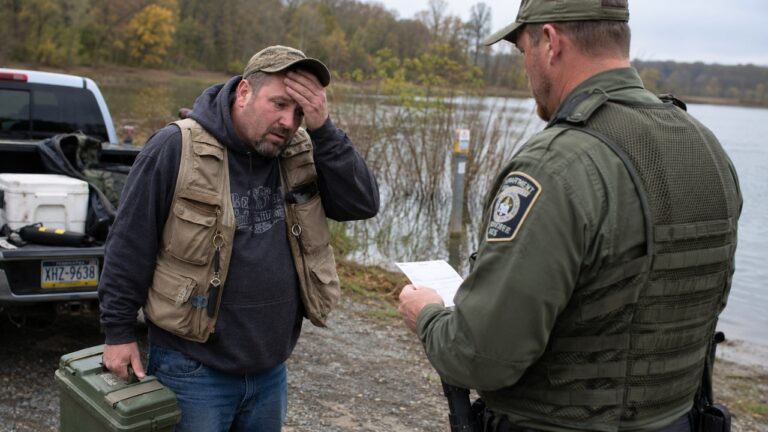
Third, don’t let it turn into a roadside confrontation in the middle of hunting season. Land disputes have a way of getting hot when firearms are involved. Handle it calmly and early, and lean on documentation and clear communication instead of a parking-lot argument.
And finally, if the easement is real and active, many landowners find it’s worth getting a local attorney to read the deed language and explain what can be enforced. That’s not about going nuclear—it’s about knowing what you can lawfully restrict and what you can’t.
Where this leaves the landowner with the signs and the stands
The landowner’s core question was simple: can he post no-trespassing signs if there’s a right-of-way? In practical terms, yes—he can still post his land. But those signs won’t erase a valid access right, and they won’t automatically stop someone who’s allowed to use the corridor from using the corridor.
The bigger issue is the off-trail hunting and the makeshift structures. If the easement is only for access, that’s the pressure point. If the easement includes older language about hunting rights, then it becomes a question of who holds those rights and whether a “friend” can legally claim them.
In the woods, clear lines and clear paperwork solve more problems than tough talk. The landowner who gets the deed language nailed down, marks the right-of-way cleanly, and documents the off-corridor use is the one most likely to get control of his property back—without turning deer season into a neighbor war.
Like The Avid Outdoorsman’s content? Subscribe to our newsletter so you never miss an article.
Here’s more from us: