Photo credit: AI-generated image created using ChatGPT. Illustrative only.
Most of us get comfortable when we fish the same stretch of bank week after week. Same pull-off, same trail down to the water, same casts, same routine. And after a while, it’s easy to start thinking, “Nobody’s ever checked me here.”
That’s why a recent story shared in the source post is a good reminder for anybody who spends a lot of time on the water: conservation officers don’t need a “special day” to show up. And when they do, the outcome depends a whole lot on whether you’re squared away before they ever step into view.
A summer of fishing with no checks can create bad habits
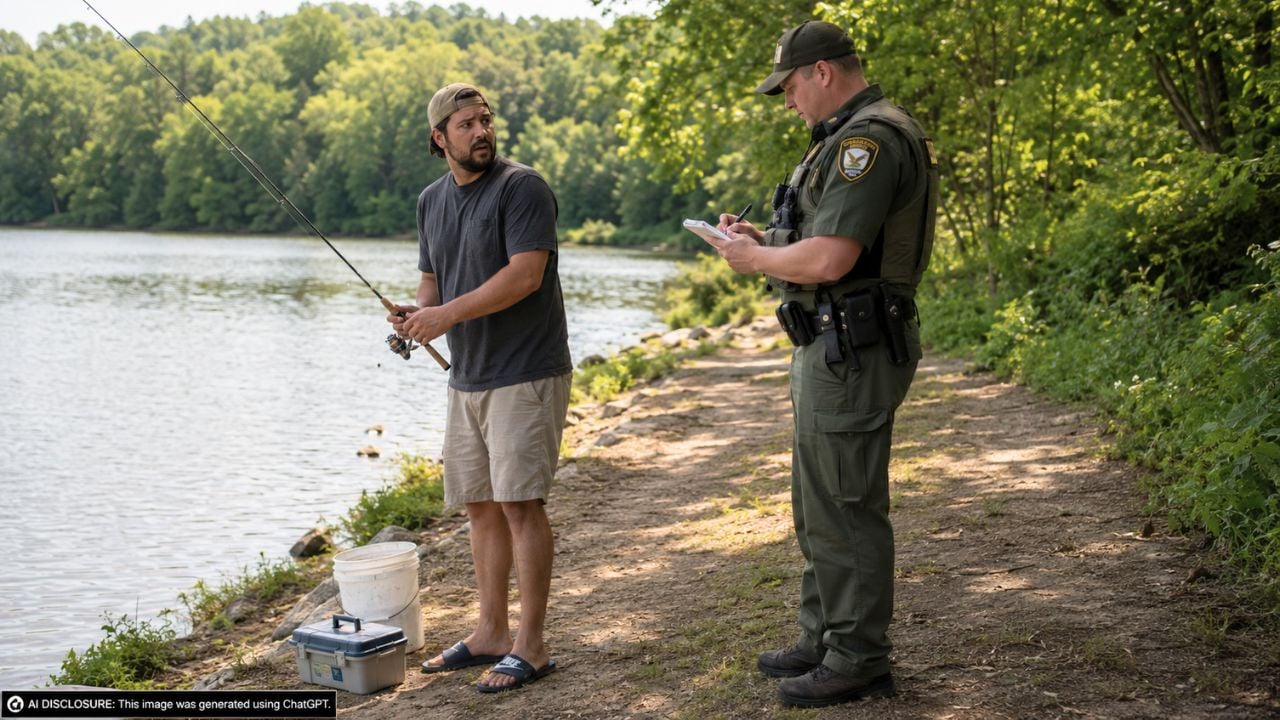
The angler said they’d been fishing all summer, and this was the first time a conservation officer asked to see licenses for their small group. That right there is how people get lulled into sloppy thinking—especially on public access spots where you see the same faces and the same gear all season long.
Folks start assuming enforcement is rare, or that checking only happens during holidays and opener weekends. The truth is, officers can show up whenever they feel like it, and many of them specifically watch places that see steady pressure all season.
The moment the officer asks for licenses, the day can go two ways
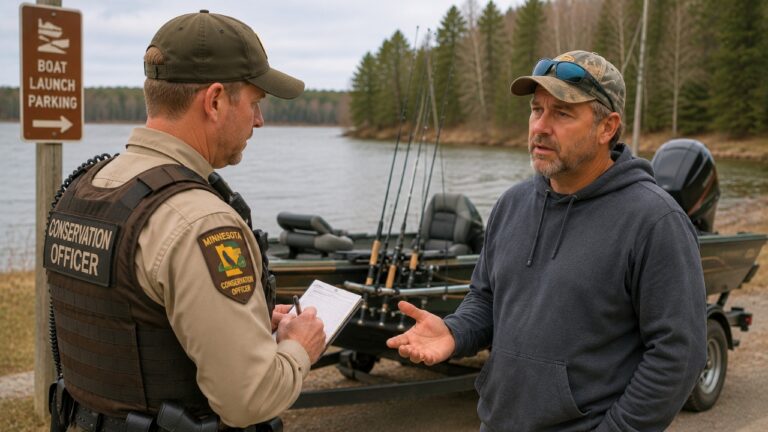
In this case, the officer was polite and opened with a simple check-in, asking how the day was going. Then came the request to see fishing licenses. That’s the whole ballgame in one minute: you either produce what you’re supposed to have, or you don’t.
The headline angle here is the citation side of it, and that’s the reality outdoorsmen have to keep in the front of their minds. License issues are some of the easiest citations for an officer to write because they’re black-and-white. If you’re required to have it and can’t show it, you may be done for the day before you ever tie on your next lure.
This wasn’t a “gotcha” encounter—just a professional check
Instead of turning into a tense scene, the angler described it as a 10/10 experience. The officer stayed courteous, listened to what they were doing, and even talked fishing. The angler mentioned they were trying out their first ultralight rod, and the officer offered pointers.
That’s a side of conservation work plenty of people don’t talk about. Yes, officers write tickets. But a lot of them are also solid outdoorsmen who know the local patterns and are willing to share a little knowledge—especially when the people they’re checking are respectful and prepared.
The fishing advice is a reminder: officers spend a lot of time watching water
One detail that stuck out was the officer giving some timing advice about when fish the angler was targeting are usually “slamming” that location during the year. That’s not something you get out of a handbook. That comes from time in the field and time talking to anglers.
It’s also worth remembering that when an officer shows up at your spot, they’re not just there to hassle people. They’re often doing routine work that keeps fisheries healthy—making sure folks are licensed, following regulations, and not taking shortcuts that hurt everybody else.
How to keep a license check from turning into an expensive lesson
This story ended on a positive note, but it still highlights what every angler should do if they want to avoid the “citation on the spot” outcome. First, know what’s required where you’re fishing—license, stamp, special permit, whatever applies in your state and on that specific water.
Second, have it ready to show. Some states allow digital display, some want the physical license, and some have rules about ID to go along with it. Don’t assume your buddy has you covered, either. If you’re the one holding the rod, you’re the one responsible.
And finally, keep the interaction simple. Be polite, answer what’s asked, and don’t make it a debate on the bank. Most checks are quick when your paperwork is clean, your gear is legal, and your attitude isn’t looking for a fight.
Spending a whole summer on the same water without a check can make anyone feel invisible. But enforcement doesn’t run on your schedule. The smart play is staying legal every trip, so when a conservation officer finally walks up, it’s just a quick conversation—and maybe you even pick up a tip that helps you catch more fish next time.