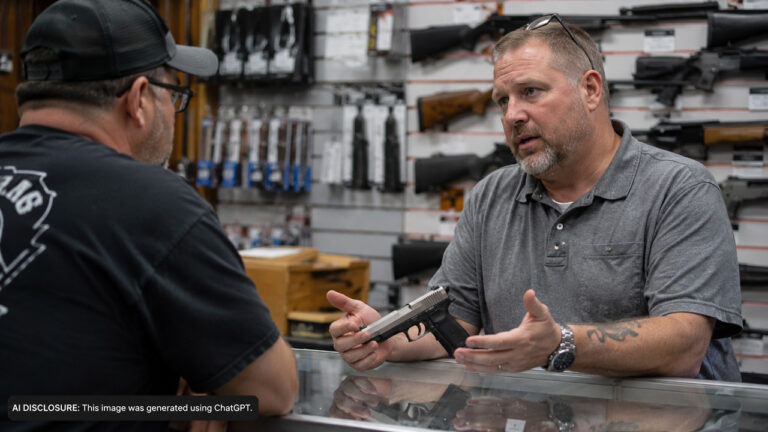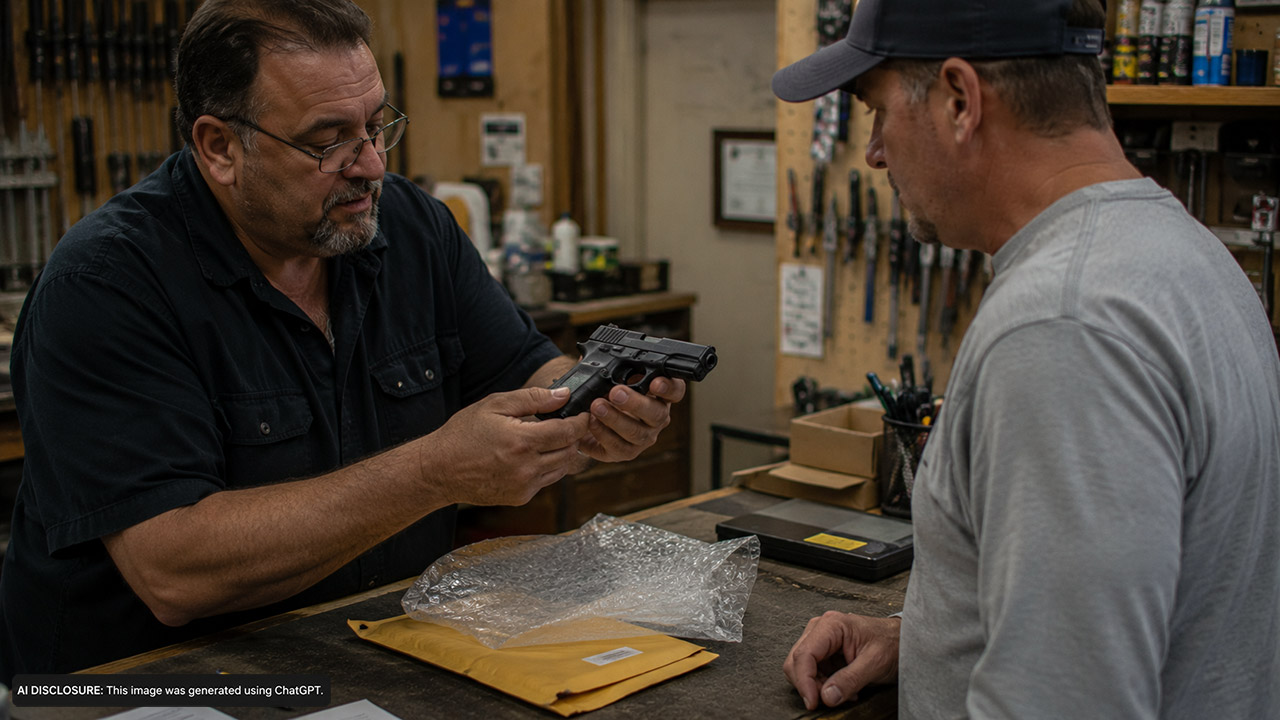
Photo credit: AI-generated image created using ChatGPT. Illustrative only
Any time you hand a firearm over a counter for work, you’re betting on someone else’s tools and judgment. Most of the time it’s fine. But when it goes sideways on an off-roster handgun in California, it’s not just a busted part—it can turn into a dead end you can’t legally walk around.
That’s the situation one gun owner laid out in the original post: a shop damaged his FN 509 Tactical during a trigger and firing pin install, cracking the polymer frame and effectively totaling the pistol.
A pricey off-roster FN 509 Tactical and a simple upgrade plan
The owner said he’d saved up and bought an off-roster FN509T in a private-party transfer the year before. He paid $2,150 for it—real money, but anyone who’s shopped off-roster in California knows the math isn’t based on MSRP. It’s based on scarcity and demand.
After owning it for a while, he decided to add an Apex trigger and an Apex “enhanced firing pin.” Nothing exotic—just the kind of reliability/feel upgrade plenty of folks do on pistols that pull range time, carry duty, or home-defense rotation.
Where it went wrong: a pin removal and a cracked polymer frame
Instead of the normal “your gun’s ready” call, the shop reportedly called with bad news. The gunsmith damaged the polymer frame while attempting to remove one of the pins on top of the frame. The result was a hairline fracture, and the owner was told the frame was no longer usable.
That detail matters. On a modern polymer pistol, a frame crack isn’t like a scratched slide or a dinged sight. It’s structural. It can be unsafe, unreliable, and—on a serialized frame—basically the whole gun from a legal standpoint.
FN could replace it, but California rules turn that “fix” into a trap
The gunsmith reportedly contacted FN support about warranty work. FN can replace the frame, but there’s a major catch: the replacement would come back with a new serial number.
In most states, that’s a straightforward repair path—new frame, new serial, paperwork handled through the right channels. But the owner’s concern was that a newly serialized replacement would effectively be a different handgun under California’s roster system, meaning he wouldn’t be able to receive it like-for-like as a simple return of his property.
That’s the cruel part of this kind of story: the manufacturer solution may exist, but the state compliance layer can make it functionally unavailable to the customer.
The money dispute: MSRP doesn’t touch off-roster replacement cost
Once the frame cracked, the discussion shifted to compensation. The owner said the gunsmith offered to pay only the pistol’s MSRP value—around half of what he paid.
From the shop’s perspective, MSRP is the easy number. It’s printed, it’s defensible, and it’s what an insurance adjuster might want to talk about. But from the owner’s perspective, MSRP is fantasy. He didn’t buy the gun at MSRP; he bought it at the real-world California price for a specific off-roster model that he could legally acquire only through a narrow pathway.
And because the gun is now reportedly unusable and may not be replaceable with the same model and serial status, “here’s MSRP” isn’t making him whole. It’s just a check that still leaves him short a working off-roster pistol.
What gun owners immediately recognize about this kind of mess
If you’ve spent time around gun shops and ranges, you already know where people’s minds go when they hear “gunsmith broke my gun.” It’s not just frustration—it’s the practical question of what counts as fair replacement when the item is hard to replace at any price.
Off-roster handguns amplify that problem. This isn’t a common Glock 19 where you can walk into ten stores and find another one. The owner paid a premium because access is restricted. When the shop damages the gun, the loss isn’t only the firearm’s manufacturer value—it’s the ability to own that specific configuration under the state’s rules.
There’s also a safety angle that doesn’t get enough attention until something like this happens. A cracked frame isn’t a “cosmetic whoops.” It’s the kind of damage that can take a dependable pistol and turn it into a liability. Nobody wants a stressed frame on a gun that might be used for defensive work, and most shooters won’t trust it again even if someone says it’s “probably fine.”
The practical takeaways before you drop off an off-roster pistol
This situation is a reminder to treat rare or hard-to-replace guns differently than everyday range beaters. If you’re handing a pistol to someone else for work—especially an off-roster handgun—get clear on what happens if something breaks. That means asking how they handle damage, whether they’re insured for customer property, and what “replacement value” means to them before the first pin gets pushed.
It’s also worth thinking hard about whether a modification is worth the risk on a gun that can’t be easily replaced. Aftermarket triggers and pins can be great, but the upside is usually incremental. The downside, as this owner found out, can be permanent.
At the end of the day, the owner in this story wasn’t just trying to dress up a safe queen. He was trying to improve a pistol he’d sacrificed to buy—then watched it come back with a frame crack and an offer that wouldn’t cover what it actually cost to own. In places where the law turns replacement into a paperwork wall, the cleanest “make it right” isn’t always obvious, but it needs to start with recognizing the real-world value of what was lost.
Like The Avid Outdoorsman’s content? Subscribe to our newsletter so you never miss an article.
Here’s more from us: