Photo credit: AI-generated image created using CHATGPT. Illustrative only.
Most folks who rent don’t think twice about their rights until somebody tries to take them away. That’s exactly where one tenant found himself when his landlord started pushing for guns to be removed from the property—even though the lease didn’t spell out any firearms restriction.
In an update shared in the original post, the renter laid out how he handled the pressure without turning it into a shouting match or a risky standoff. He didn’t just dig in his heels. He read the lease, looked for practical options, and worked toward a compromise that still kept home defense on the table.
The lease language mattered more than anyone’s opinion
The first big detail was simple: he checked his lease and didn’t find anything in it about guns. That matters, because when you’re renting, your rights and responsibilities usually start with what you agreed to in writing—plus whatever state and local laws apply.
Landlords can have personal feelings about firearms, but a lease is the rulebook for the property. If it’s silent on guns, that doesn’t automatically end the argument, but it does change the leverage. It means the conversation isn’t “you broke the lease,” it’s “the landlord wants a new rule,” and those aren’t the same thing.
He aimed for a workable agreement instead of a blowup
Even with the lease on his side, the tenant still wanted to stay put when the lease term ended. That’s a real-world problem a lot of gun owners run into: you can be “right” and still get squeezed when renewal time comes around.
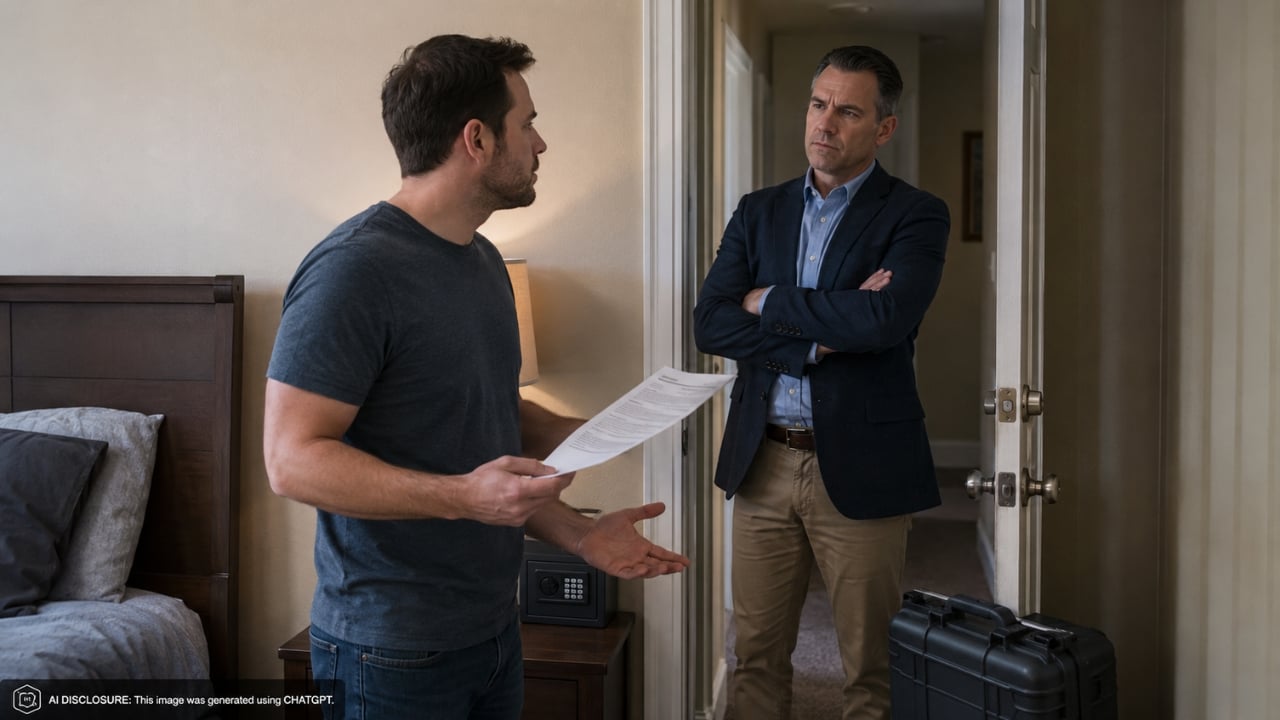
So he negotiated. According to his update, he reached an agreement with the landlord that allowed him to keep one handgun in the unit for home defense, as long as it was stored in a quick-access safe that was securely attached to his bedpost.
That detail is worth paying attention to. It shows what landlords often care about most—liability and perceived risk—while also keeping the tenant’s defensive option close at hand where it actually matters. A quick-access safe also keeps the gun protected from unauthorized handling, which is just plain good practice in any home.
Safe storage became the middle ground
The compromise wasn’t “no guns,” and it wasn’t “anything goes.” It was a clear condition: one handgun, stored in a specific way. Whether you like that setup or not, it’s the kind of concrete arrangement that can keep a situation from spiraling.
For renters, especially, safe storage can be the difference between keeping the peace and getting pushed out. A landlord may never be “pro-gun,” but many will respond better when you’re talking about locked storage, secured hardware, and limiting access—things they can picture and understand.
It also hints at something experienced gun owners already know: if you’re going to defend your home, you need access, but you also need control. A quick-access safe bolted or anchored to something solid is one way to strike that balance without leaving a firearm loose in a nightstand.
He moved the rest of his firearms off-site
The other part of the deal was what happened to his remaining guns. Instead of trying to jam every long gun and extra handgun into the argument, he found a storage facility that specializes in firearms—an option another person had suggested earlier.
That’s a practical workaround for a lot of renters who hunt, compete, or just own more than one or two guns. Not everyone has a buddy with a safe room, and not everyone can afford to buy a house just to avoid landlord drama. Purpose-built storage can be a legitimate pressure valve.
He also pointed out that the facility was right by the range he frequented most, and close to home. That matters in day-to-day life. If storage is an hour out of the way, you’ll stop training as much, and your hunting prep turns into a chore. Convenient storage keeps you in the routine—range time, maintenance, sight checks—without turning every trip into a logistical headache.
What others pushed him to do: read, document, and de-escalate
The update makes it clear he took advice from others and acted on it—especially the suggestion about specialized firearm storage. That’s the kind of feedback loop that helps in these situations: focus on what can be proven (the lease), what can be changed (storage and access), and what can be negotiated (terms for renewal).
When a landlord starts making threats, it’s easy for gun owners to take it personally. But the smarter move is usually to stay calm and get specific. What does the lease say? What exactly is being demanded? What safety measures can you put in writing? He took that approach and found a solution that didn’t require him to give up home defense entirely.
The real lesson for renters who own guns
In his final note, he said the situation was resolved and thanked the people who helped. It’s a tidy ending, but it also leaves a reminder for anyone renting with firearms: renewal time is leverage time. Even if your current lease doesn’t ban guns, a landlord can still make your life difficult when the term ends by refusing to renew or by insisting on new conditions.
The best defense is preparation. Read your lease before there’s a problem. Store firearms safely and in a way you can explain to someone who doesn’t understand them. And if you need to keep the peace to stay housed, remember that off-site firearm storage—especially near your range—can keep you shooting, training, and hunting without turning your living situation into a constant fight.