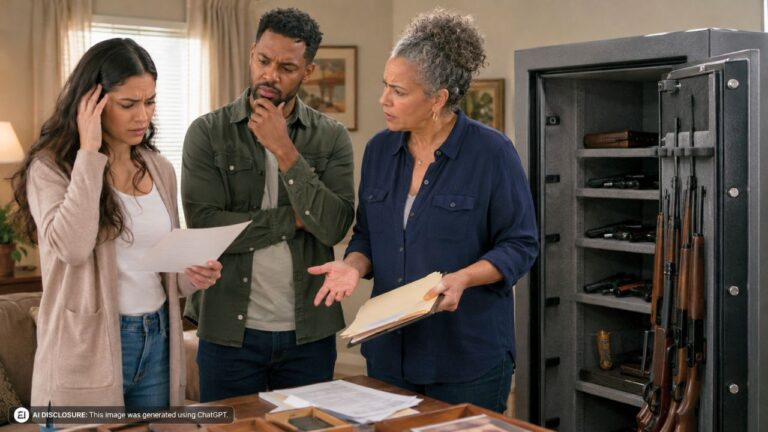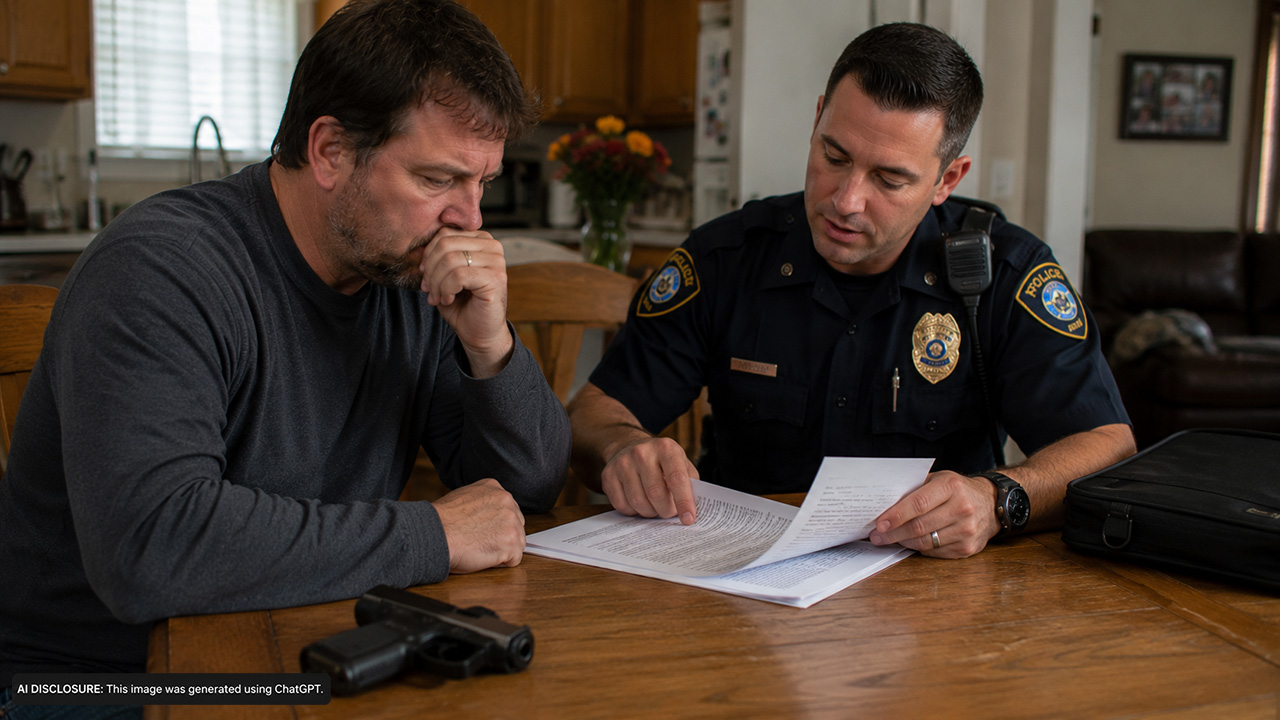
Photo credit: AI-generated image created using ChatGPT. Illustrative only
Paperwork has a way of turning a normal weekend routine into a real problem fast—especially when firearms are involved. One guy in New York found himself staring at that reality after he and an ex ended up with a mutual order of protection for a year, and he started wondering what that meant for his usual range trips while traveling.
In the original post, he laid it out plainly: the order is in New York State, and he understood that “obviously, we can’t own guns, or if we do, we had to turn them in.” The twist was that he doesn’t own a firearm in Florida—he just goes to a range there and rents whatever they’ve got behind the counter, and the range only checks his driver’s license.
A protective order can slam the door on more than just ownership
A lot of outdoorsmen think of gun restrictions in simple terms: “If I don’t own one, I’m fine.” But orders of protection and firearm restrictions often reach beyond what’s sitting in your safe. Depending on how the order is written and what laws apply, “possession” is the word that bites you—not just ownership.
At the range, renting a handgun and stepping into a lane means you’re handling and controlling a firearm. In plain English, that sure looks like possession, even if the gun never leaves the building and you never bought a box of ammo anywhere else.
The timeline can be a lot tighter than people expect
The headline angle here is the part many folks don’t learn until it’s too late: when a court order kicks in, the clock can start immediately. People assume they’ll have time to “figure it out,” talk to a buddy, or wait until the next court date. But protective orders can include firearm surrender or no-firearm conditions that don’t come with a comfortable grace period.
This is where guys get jammed up. They think the only risk is getting caught carrying a personal firearm. Meanwhile, the order may already bar them from having any gun in their hands, period—today, not next month.
“It’s a different state” isn’t the safety net it sounds like
The poster’s reasoning will sound familiar to anyone who’s traveled: Florida is far from New York, his ex is still in New York, and the range “doesn’t run anything except look at my license.” That leads to the question he asked: is it still okay to rent and shoot there?
The problem with leaning on geography is that legal restrictions don’t always stay politely inside state lines. A New York order can still create legal exposure based on what it prohibits you from doing, wherever you do it. And even if a Florida range never checks anything beyond an ID, that doesn’t magically make it lawful—especially if something goes sideways and law enforcement gets involved for any reason.
Range rentals can turn into “possession” in a hurry
From a practical gun-owner standpoint, renting at a range feels like the lowest-stakes way to shoot. No transport. No storage. No purchase. You show an ID, sign the clipboard, and spend an hour making holes in paper.
But if your court order (or the laws that apply because of it) bar you from possessing firearms, a range rental is exactly the kind of “technical” violation that isn’t technical at all once it’s written up in a report. It’s not about whether you owned the gun. It’s about the fact that you had it in your hands, under your control, loading mags, pressing triggers, and sending rounds downrange.
The smartest move is boring: read the order and get clear guidance
If you’ve ever dealt with hunting regs, you already know the rule: don’t rely on what “usually” happens at the counter. Go by what’s written. With an order of protection, that means reading every line of the order itself and looking for any firearm-related language—no possession, no purchase, surrender requirements, carve-outs, or anything that mentions weapons at all.
Then do the un-fun part: get clarity from a qualified attorney in New York who deals with these orders, or from the court process that issued it. Outdoorsmen are used to working around obstacles—weather, schedules, a busted part on a four-wheeler. This isn’t that kind of obstacle. This is the kind where guessing wrong can add a criminal problem on top of an already messy personal situation.
What other gun owners zero in on in situations like this
Even without a long comment thread included in the source material, you can predict what experienced gun owners tend to focus on when someone asks a question like this: “Don’t play games with a court order,” and “possession is possession.” Most folks who’ve been around the block will tell you the same thing they’d tell a buddy heading into a questionable tree-stand setup—if you’re having to talk yourself into it, it’s probably not worth it.
The other big point is consequences. A day at the range isn’t worth risking a violation that could affect your record, your future gun rights, and your ability to hunt and shoot down the road. There’s a big difference between missing a season and losing your rights for years because you tried to squeeze in some trigger time.
When a protective order is in play, the best habit is the same one that keeps people safe in the woods: slow down, read what you’re dealing with, and don’t take chances just because you think nobody’s watching.
Like The Avid Outdoorsman’s content? Subscribe to our newsletter so you never miss an article.
Here’s more from us: