Photo credit: The Avid Outdoorsman
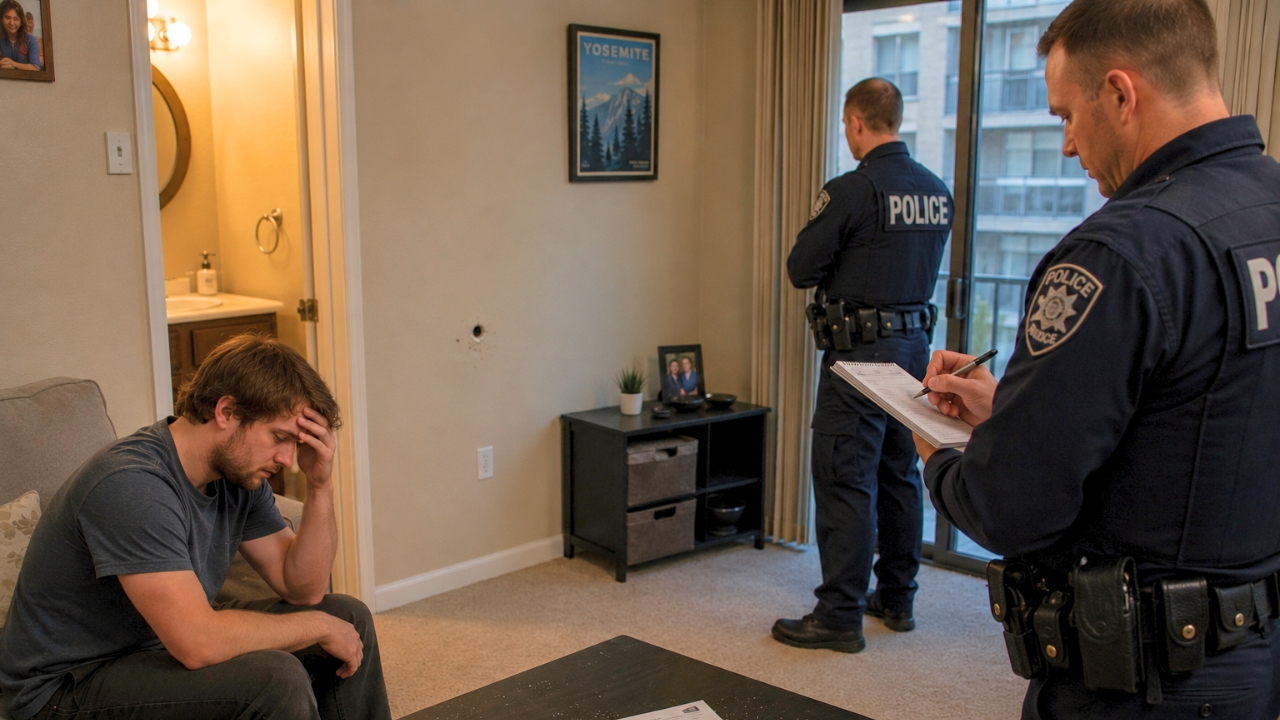
The man said the mistake happened inside his apartment, and once it happened, there was no easy way to undo it. According to the Reddit post, he had a negligent discharge in his Washington apartment. A gun went off where it never should have, and suddenly he was dealing with more than embarrassment.
The original Reddit post can be found here: https://www.reddit.com/r/legaladvice/comments/1qz5vkm/wa_i_had_a_negligent_discharge_in_my_apartment/
A negligent discharge in an apartment is serious because the walls are shared, the floors are shared, and there may be people on the other side of every direction. Even if nobody gets hurt, the round still has to go somewhere. It can hit a wall, ceiling, floor, neighbor’s unit, pipe, appliance, or anything else in the building.
The poster had to think about several problems at once. There was the immediate safety issue, the police response, the damage to the apartment, and the possibility that management could treat the discharge as a lease violation. What might have lasted one second with the trigger could turn into weeks or months of fallout.
The hardest part was that calling it an accident did not erase responsibility. Safe gun handling rules exist for exactly this reason. A firearm should be cleared, pointed in a safe direction, and handled as if a mistake could happen. In an apartment, there may not be many safe directions, which makes the responsibility even heavier.
The man seemed to understand that he had created a real problem. He was not dealing with a neighbor making a false complaint or a mystery bullet from another unit. This was his firearm, his apartment, and his mistake. That meant he needed to know what consequences he could face and how to handle them correctly.
Police questions were part of that. When a gun is fired inside an apartment, officers are going to want to know what happened, whether anyone was injured, whether the firearm was legally possessed, where the round went, and whether the discharge created danger for other tenants. Those questions are not surprising. They are part of sorting out a dangerous incident in a shared building.
Then came the housing side. Apartment complexes often have rules about firearm discharge, damage, disturbances, or conduct that endangers other residents. Even if the gun owner had no bad intent, management may still decide the incident crossed a line. The poster had to consider whether he could be evicted, charged for repairs, or held responsible for damage beyond his own unit.
The post was a reminder that one careless moment with a firearm can create consequences in every direction. Nobody has to be injured for it to become serious.
Commenters were direct that he needed to take the situation seriously and stop trying to treat it like a small mistake. Several said a negligent discharge in an apartment could lead to criminal charges, lease consequences, repair bills, and insurance issues depending on where the round went and what was damaged.
Others told him to be careful about making statements without understanding his legal position. They were not telling him to lie. They were telling him that when police are asking questions after a gun is fired indoors, it may be smart to speak with an attorney before giving detailed explanations beyond the basic facts.
Some commenters focused on the lease. If the apartment rules prohibited firearm discharge or dangerous conduct, management could have grounds to act. Even if the lease did not mention guns directly, damaging the building or endangering neighbors could still create trouble.
A few people also brought up renters insurance. If there was property damage, insurance might become involved, though coverage could depend on the facts and policy language. The landlord could also pursue the tenant for repairs if the round damaged the structure.
The strongest comments came from responsible gun owners who were frustrated by the safety failure. They made the same point in different ways: the gun did not “just go off.” A loaded firearm was mishandled inside an apartment, and the owner was lucky the result was paperwork and damage instead of someone getting hurt.
The post ended with the man facing a hard lesson. The shot was over instantly, but the consequences were not. Once a firearm discharges inside an apartment, the damage is no longer just a hole in a wall. It becomes a police matter, a lease problem, and a warning about how little room there is for mistakes around guns.
Like The Avid Outdoorsman’s content? Subscribe to our newsletter so you never miss an article.
Here’s more from us: