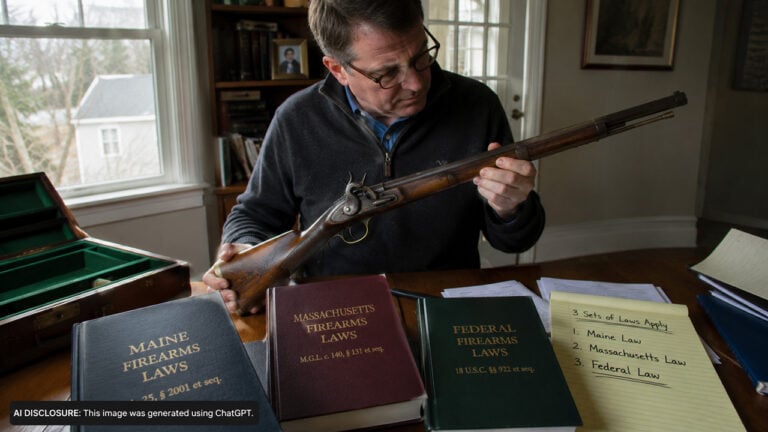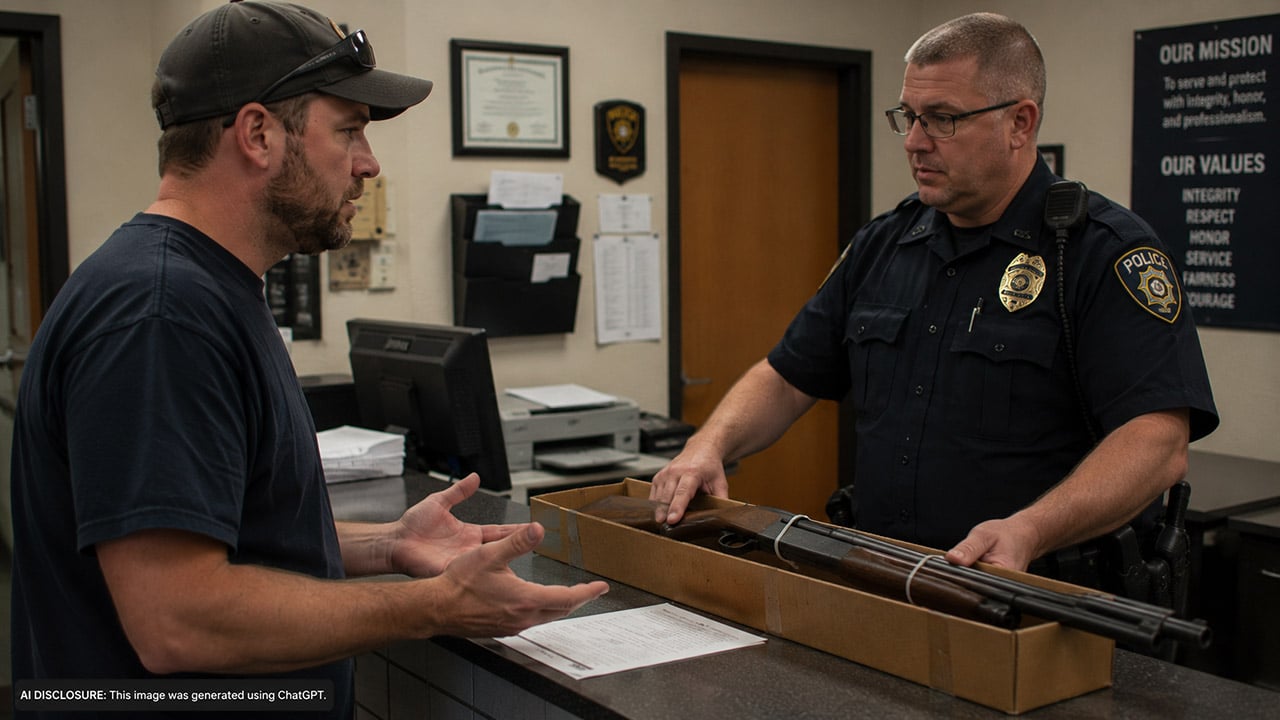
Photo credit: AI-generated image created using ChatGPT. Illustrative only
Most outdoorsmen I know don’t expect a pat on the back from the government. But they do expect one basic thing: if a case gets tossed, their property comes home. That’s why a recent situation laid out in the original post is the kind of mess that makes gun owners and rural folks pay attention.
In the account, a man says he spent 20 months fighting a state case that was dismissed a week before trial after a strong pre-trial hearing. The problem didn’t end with the dismissal. His seized property—he estimates around $10,000 worth of electronics—still wasn’t back in his hands months later, and the explanations he received started to sound like a shell game.
A long legal fight ended… then the real headache started
The man says his attorney battled the case for nearly two years, only for the state to dismiss it shortly before trial. That’s usually the part where you breathe again, go back to work, and try to put the whole thing behind you.
Instead, he and his lawyer had to immediately pivot to getting property returned. In his telling, that property included computers and electronics seized as evidence. (The headline angle on this kind of story hits home for shotgunners too, because the same seizure-and-stall playbook shows up with firearms all the time—especially after police calls where nobody ends up convicted.)
The state pointed to “federal review” and Rule 41
After the dismissal, the man says his lawyer filed a request with the court for return of the seized items under state law. The state responded about a week later with a filing claiming the case had been referred for “federal review,” and that “all evidence and case files including my seized property were no longer in the possession of the state pursuant to Federal Rule 41.”
If you’ve ever tried to get anything back from an evidence room—gun, bow, suppressor, even a trail cam—you know how fast the runaround can start. One desk says it’s not theirs. Another says it went “downtown.” Meanwhile you’re the guy without his stuff, paying storage on replacement gear or going without.
Rule 41 is a federal criminal procedure rule that deals with search and seizure, warrants, and motions for return of property in federal court. The man says he and his attorney reviewed it and couldn’t see how it covered the state handing property off to the federal level, especially when he wasn’t aware of any federal case being filed.
Then the story changed: “We do in fact still have your property”
According to the account, the attorney asked for a paper trail after being told the property was no longer in state possession. After that, the state backtracked and said they actually still had the property, but that “a list of all the seized property was sent off and put into their system.”
They added, “Seems strange but that is how they handle seized property when things are referred to them.” That’s a hard thing to hear when the case is dismissed and you’re simply asking for your belongings back. It also leaves a person in a bad spot: if the state has it, the state can return it. If the feds have it, there should be a federal case number, a federal point of contact, and some documented chain-of-custody showing where it went and why.
Instead, the man says there was no FBI case number, no investigator name, and no documentation provided to support the “federal review” explanation.
Why this kind of delay hits gun owners and outdoorsmen differently
Even though the property described here is electronics, this is familiar ground for hunters and gun owners because the same thing happens with firearms after a police call. A shotgun can be taken “for safekeeping,” or as evidence, or because of a complaint that never turns into a conviction. Then months go by.
In the real world, six months without your shotgun is a lost season. It’s lost range time. It’s money. And it’s the nagging fear that your property gets damaged, “misplaced,” or tied up in bureaucracy until you give up. With electronics it’s the same story—computers aren’t just expensive, they’re often how a person works, stores photos, keeps records, and manages daily life.
Another thing folks in the outdoor community understand is documentation. When you tag a deer, you keep the tag. When you register a boat, you keep the paperwork. When something moves hands legally, there’s a receipt, a case number, or at least a name and a phone number. When the government can’t—or won’t—produce that, it puts the citizen on defense.
What the man says he’s trying to figure out—and what usually matters
His main question is simple: can the state legally keep his property as evidence after dismissing the case, especially when there’s no sign the federal government has actually filed anything? He also asks whether the FBI could instruct the state to hold property and, if so, what paperwork should exist.
He notes his attorney doesn’t specialize in federal law, and that they believed a federal case would typically involve the feds obtaining their own warrant and seizing what they need, rather than the state holding everything indefinitely. The man also says his attorney doesn’t believe the FBI will ever pick up the case, because the state “even admitted in court that they could not prove anything.” In his view, the state is being “difficult and vindictive.”
From a practical standpoint, the make-or-break details in these situations tend to be: who has custody of the property right now, what written authority they’re relying on to hold it, and what court has jurisdiction to order it returned. If an agency says “federal review,” you’re usually looking for a concrete handoff—some actual receipt or transfer record, a contact person, and a reason the property is still needed.
Without that, it can feel like the citizen is stuck in limbo: the criminal case is dismissed, but the state still holds the leverage because they control the evidence room door.
The hard truth: dismissal doesn’t always flip the switch in the evidence room
A lot of people assume “case dismissed” means everything rewinds to normal automatically. On paper, it should move things in that direction. In practice, getting property returned can require additional motions, hearings, and follow-up—especially if the agency starts using vague language like “review” or “referral.”
The man says he’s gotten no meaningful documentation, no federal case number, and not even the name of an investigator. That’s the kind of detail that makes folks wonder whether the “federal” angle is real, or just a way to delay returning property that should have been released once the state walked away from its prosecution.
If there’s a lesson here that applies to gun owners, it’s this: when a firearm or other valuable property is seized, the fight isn’t always just the charge—it’s the long tail afterward. Keeping your own records, pushing for written answers, and working through the proper court process matters, because the system rarely rushes to fix itself once your stuff is on a shelf behind a locked door.
For this man, the legal battle may have ended in a dismissal, but the practical battle—getting his property back—sounds like it’s still very much underway.
Like The Avid Outdoorsman’s content? Subscribe to our newsletter so you never miss an article.
Here’s more from us: