Photo credit: AI-generated image created using ChatGPT. Illustrative only
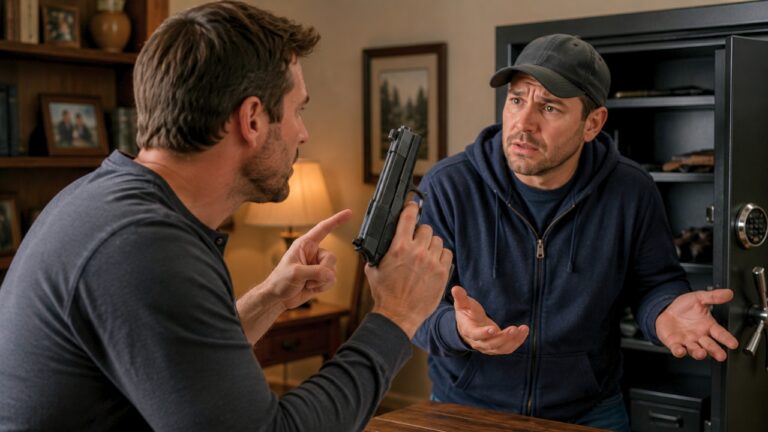
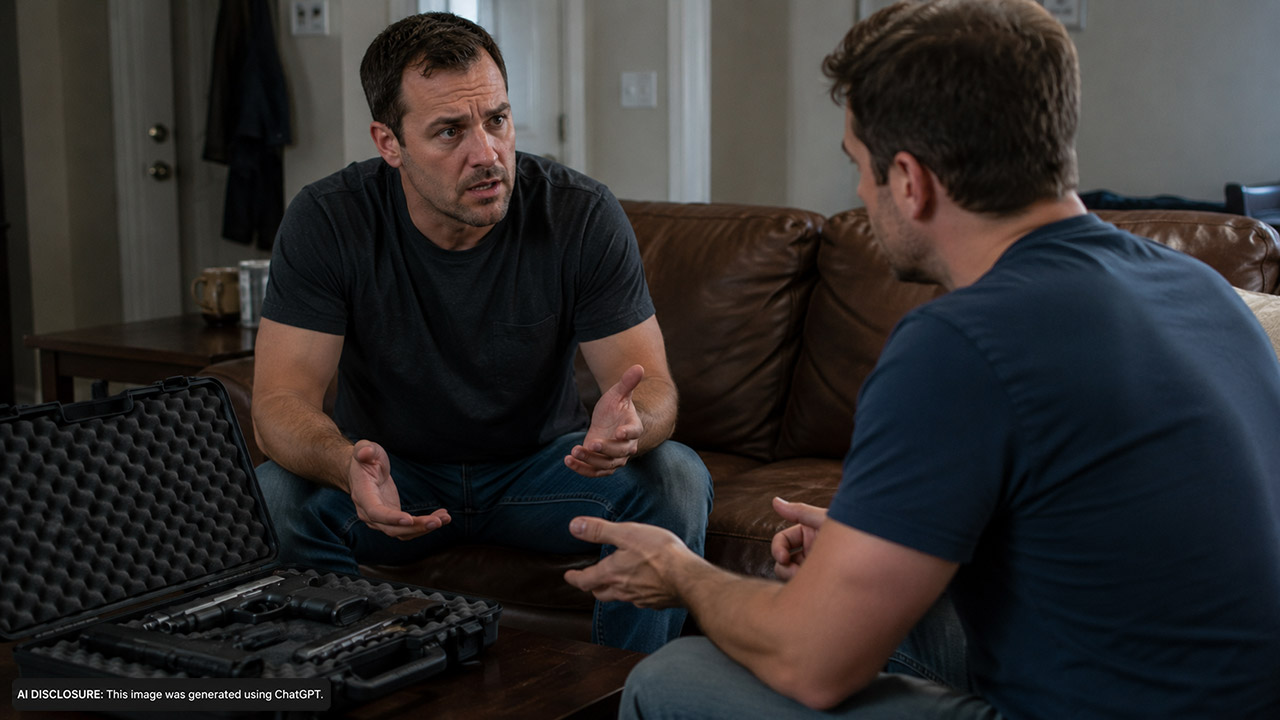
A buddy gets in trouble, and the first thing he thinks about isn’t his truck or his tools—it’s his gun safe. That was the setup in New Hampshire when one gun owner reached out for advice after a friend picked up a felony and asked him to take possession of a firearm collection and sell it off. The request sounded simple: “Hold these for me, sell them, and give me what’s left.”
But as laid out in the original post, that “simple favor” can turn into a mess fast, especially when the owner is now prohibited from possessing firearms. Even if you’ve done private sales before and know your local rules, taking custody of someone else’s guns—when they’re legally barred—can put a big spotlight on how the transfer is handled and who’s considered to be in “possession” at any given moment.
A felony changes everything about “just holding onto them”
Once someone becomes a prohibited person, the normal handshake understanding between friends doesn’t mean much. The friend with the felony can’t have guns, can’t control guns, and shouldn’t be around guns, period. That’s the whole point of the restriction.
The outdoor world is full of informal help—storing a buddy’s boat, watching his dog, checking his trail cameras while he’s out of town. Firearms aren’t like that. When the owner is barred, even temporary storage can look like an attempt to keep the guns available to him, especially if he can access them, tell you what to do with them, or pick and choose when and how they get sold.
“No registration” doesn’t mean “no risk”
One of the key comments pointed out that private gun transfers in New Hampshire don’t need to be registered, and that “in theory” the friend could take possession and sell them. That’s a common belief in states with looser paperwork: if there’s no registry, there’s no trail, so it must be fine.
But outdoorsmen know the difference between “nobody’s watching” and “it’s legal.” A lack of a state registration system doesn’t erase federal rules about prohibited persons, straw purchases, or unlawful transfers. It also doesn’t protect the person doing the favor if the guns later get traced, stolen, used in a crime, or simply questioned during an investigation tied to the felon.
The paper trail question is where this gets real
The gun owner asking for advice said he’d done private sales before and knew how to do them legally in New Hampshire. His main concern was whether this situation “complicates things,” and he specifically wanted a paper trail for receiving the guns—both to protect himself and to protect his friend.
That instinct is dead-on. If you accept a stack of firearms from someone who just became prohibited, you want documentation of what you received, when you received it, and what happened to each gun. Not because you’re trying to “create a registry,” but because in the real world you may need to prove you didn’t steal anything, didn’t transfer anything illegally, and didn’t let the prohibited owner keep control of the collection.
The problem is that many people try to solve “paper trail” by doing the most informal thing possible—handwritten notes, texts, a list of serial numbers—and then they keep doing private sales. If anything goes sideways, that homemade documentation can raise as many questions as it answers, depending on how it’s handled and whether the transfer itself was lawful.
Why commenters kept steering him toward a gun shop
The top response recommended selling to New Hampshire residents only, or better yet, using a local gun shop. The commenter also noted the tradeoff everyone hates: you won’t get as much money selling through a shop as you might in private sales, but the shop would record serial numbers.
That’s the practical outdoorsman answer. A shop that holds a federal firearms license is built for this. They’re used to logging guns, handling transfers, and creating proper records. And if the goal is to keep everyone out of hot water, “I got less money but did it clean” beats “I tried to maximize cash and now I’m explaining myself to investigators” every day of the week.
On top of that, if you’re the friend doing the favor, you want distance from the guns. The more you personally handle—transport, storage, advertising, meeting strangers in parking lots—the more exposure you take on. A storefront transfer changes the whole feel of the situation: controlled process, business hours, cameras, and professionals who do this for a living.
The quiet danger: you can end up looking like the middleman
When a prohibited person wants you to take his guns and sell them, you’re not just “helping.” You’re acting as a bridge between a barred owner and the firearms market. If you do it sloppily, you can start to look like the guy facilitating access, not the guy preventing it.
Even if nobody’s trying to do anything shady, details matter. Who transported the guns? Were they stored where the prohibited person could get to them? Was he present when you moved them? Was he directing the sales, choosing buyers, setting prices, telling you which ones to keep? Those little facts are the kind that get sorted out later, after something happens, when everyone’s memory suddenly gets fuzzy.
That’s also why the “take your cut and give him whatever is left” part should make any careful gun owner pause. Money changes hands, and now it’s a business arrangement. Maybe it’s harmless. Or maybe it looks like an unlicensed dealing arrangement if you’re moving a whole “collection” and taking a profit, especially if it’s not a one-off favor.
What a careful gun owner would do instead
If you’re ever in this position, the safest path usually isn’t “grab the safe and start listing stuff.” It’s slowing down and making sure the transfer is handled in a way that doesn’t leave you holding the bag. That often means involving an FFL from the start and having the guns go straight into their books as part of a lawful surrender/consignment/transfer process, rather than into your closet.
The guy asking the question was already thinking in the right direction: protect both parties with documentation. In the firearms world, documentation and proper process aren’t paranoia—they’re how you keep a favor from turning into a life problem.
A felony can wipe out a lifetime of gun ownership in one court date. If you’re the friend getting asked to “help,” treat it like you’d treat a loaded rifle in a cramped truck cab: slow, deliberate, and with a clear plan that keeps everyone safe and on the right side of the law.
Like The Avid Outdoorsman’s content? Subscribe to our newsletter so you never miss an article.
Here’s more from us: