Photo credit: AI-generated image created using ChatGPT. Illustrative only
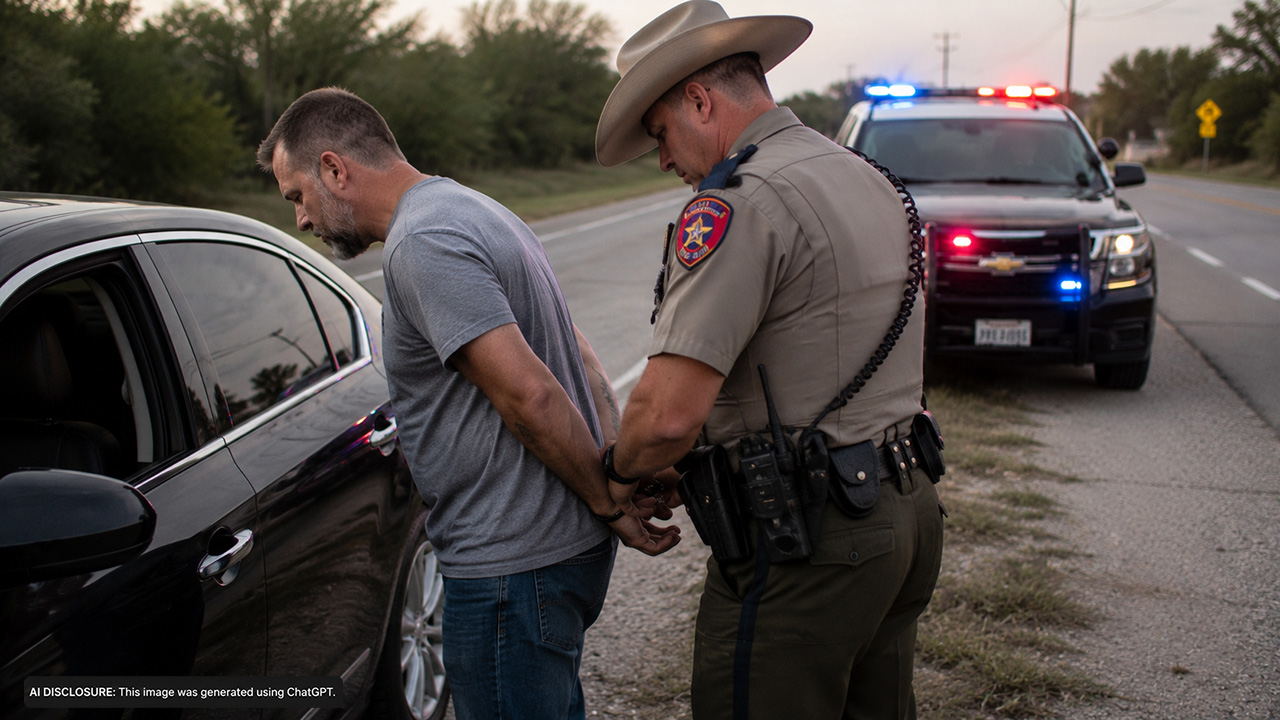
A traffic stop in Texas can go from routine to life-changing in a hurry, especially when a firearm is in the mix. One driver said that’s exactly what happened to him when he was taken to jail for unlawful carry—even though he says he had a valid license and the officer never asked to see it.
In the original post, the man kept his description short but added another wrinkle: he also walked into the jail with marijuana on him. He said the officer told him he’d “give me a break” by not charging him for it and would just dispose of it, and the man wanted to know if that could come back to bite him later if he fought the carry case.
A traffic stop turned into an unlawful-carry arrest
The key detail from the driver’s perspective is simple: he says he was arrested for unlawful carry in Texas despite having a valid license. He also says the officer never asked to see it, which is the kind of thing that makes gun owners shake their heads because it feels avoidable.
Texas carry law has changed a lot in recent years, but the basics for regular folks haven’t: if you’re carrying, your job is to stay calm, follow instructions, and be ready to clearly show you’re legal when asked. The problem is, on the side of the road, the process doesn’t always go in a straight line—and once cuffs go on, “I’m licensed” becomes a courthouse argument, not a roadside fix.
The weed in his pocket complicated everything
The man also admitted he had marijuana on him when he entered the jail. That matters because gun cases are already serious business, and mixing in a drug issue—no matter how small—can change the whole tone of how a stop is handled.
He said the officer told him he would not charge him for it and would instead dispose of it. If you’ve spent time around rural law enforcement or game wardens, you’ve probably heard versions of that line before: a warning, a “don’t do it again,” or an informal deal meant to keep the situation from getting bigger. The catch is that informal isn’t the same as final.
Can an officer “dispose of it” and then charge later?
The man’s main question was whether the marijuana could be charged later if he decided to fight the unlawful-carry case. He’s basically asking, “If I push back, can they hit me with the other thing?” That’s a fair worry, and it’s one a lot of outdoorsmen think about when a stop goes sideways.
In plain language, a promise on the roadside isn’t the same as a signed agreement from a prosecutor. An officer might choose not to cite you that day, but that doesn’t automatically mean the conduct never happened or can’t be addressed later—especially if it was documented, bagged, or logged in some way. And even if it isn’t charged as its own case, it can still create headaches: it can affect how you’re viewed, how negotiations go, and what kind of “benefit of the doubt” you get.
What people tend to focus on in situations like this
Even without a long back-and-forth included in the source material, the pressure points are the same ones that come up every time a carry arrest doesn’t pass the smell test. First is proof: do you actually have a valid license, and was it valid on the date of the stop? Second is process: what exactly did the officer ask, what did the driver disclose, and what shows up in the report?
The other thing experienced folks focus on is that marijuana detail. Whether you agree with the laws or not, mixing controlled substances and firearms is a fast way to lose any clean narrative you might have had. A lot of gun owners can relate to the frustration of feeling like the carry issue should stand alone, but real life doesn’t separate things neatly when you’re dealing with an arrest.
The practical options when you’re sure you were legal
If you’re licensed and still get booked, it’s tempting to think the fix is as simple as showing your card. Sometimes it is. Sometimes it isn’t, because the charge may hinge on details you don’t fully understand in the moment—where the firearm was, how it was carried, what was said, what the officer believed, and what was written down.
For most working folks, the practical play is straightforward: get representation, gather your documents (license status, dates, any paperwork that proves you were legal), and don’t try to “talk your way out” after the fact. If marijuana or any other contraband got wrapped into the same event, assume it matters, because it can. And if an officer told you something would be handled informally, treat that like a maybe, not a guarantee.
Out on the road, the best protection is boring preparation: know the current carry rules, keep your paperwork squared away, don’t mix guns and drugs, and keep your vehicle carry setup clean and consistent with the law. Because once you’re sitting in a holding cell, you’re not debating carry statutes anymore—you’re paying for lawyers, missing work, and trying to unwind a mess that started with flashing lights in the mirror.
Like The Avid Outdoorsman’s content? Subscribe to our newsletter so you never miss an article.
Here’s more from us: