Photo credit: AI-generated image created using ChatGPT. Illustrative only.
A late-night stop in rural Kentucky turned into a worst-case scenario for one driver: a flashlight in his face, a stranger screaming threats, and gunfire close enough to make him think he wasn’t going to make it out. The account comes from the original post, where the man laid out a confusing chain of events that ended with him in handcuffs while the shooter walked away.
If you spend time on back roads—hunting trips, fishing runs, long drives between small towns—this story hits close to home. It’s the kind of midnight “pull-off for a quick break” that plenty of outdoorsmen have done, and it’s also a reminder that not every problem in the dark is an animal or a flat tire.
The late-night stop that set everything off
The driver said he was headed north to Ohio around midnight to pick up a friend. Needing a bathroom break, he pulled near a closed auto garage with a downhill parking lot and woods nearby. No open gas stations, no lights, basically the middle of nowhere.
He stepped out, stretched, and called his friend to say he was about 30 minutes away and taking a short break. Five minutes into that phone call, he said a bright flashlight hit him—and the situation went from ordinary to dangerous in a heartbeat.
A stranger with a flashlight, threats, and shots fired
According to the driver, the man holding the flashlight started yelling, “Get on the ground, im a veitnam veteran and ill kill you!” Then he fired a shot into the air. The driver said he complied and got on the ground, with his friend still on the phone hearing the chaos unfold.
When the armed man turned around, the driver said he called 911, dropped to the ground, and kicked his phone under his car. He claims a second shot was fired, close enough that he described it as landing about a foot from hitting him into his car door. In his telling, the armed man kept him at gunpoint and told him he was going to kill him.
Police arrive fast, and the driver says he’s the one detained
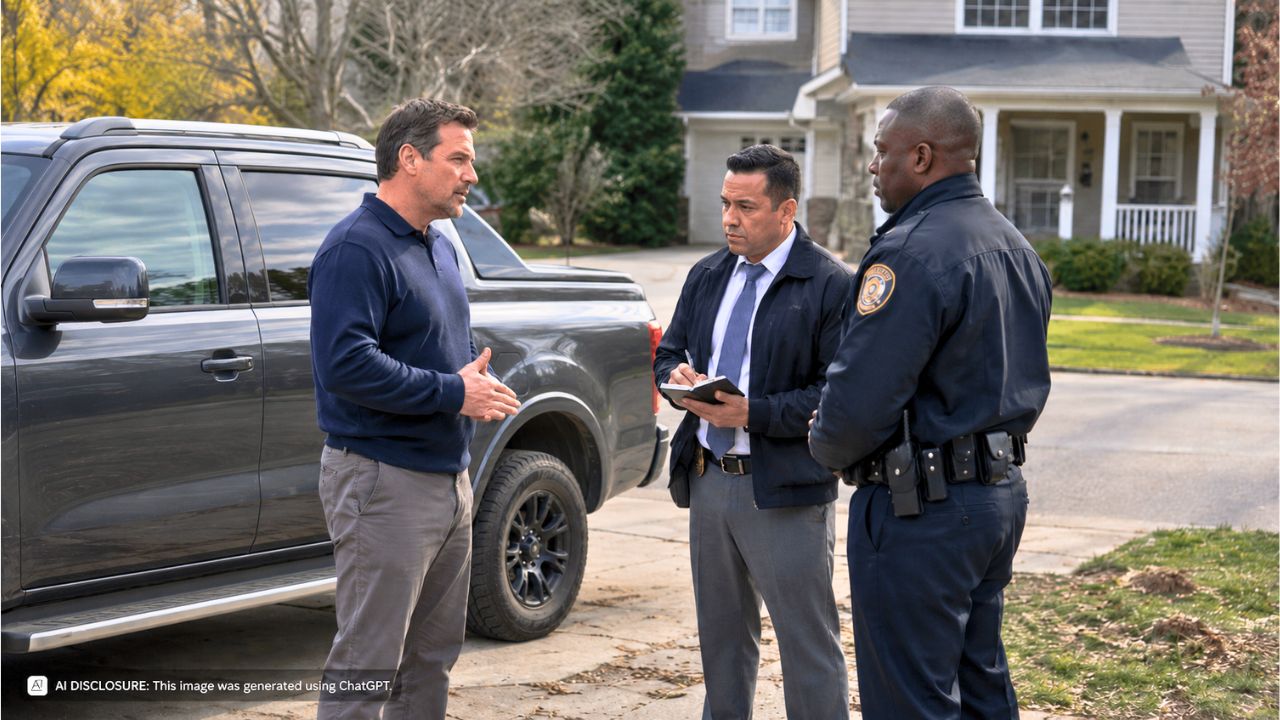
The driver said police tracked the 911 call and arrived quickly—he estimated about 30 seconds. But instead of the shooter being taken into custody, he says officers detained him, placed him in a police car, and put his phone in the front seat where he could hear it ringing as his friend tried to call repeatedly.
That’s the part that will make any law-abiding gun owner’s stomach tighten: you call for help, you comply, and you still end up treated like the bad guy. In rural areas, plenty of folks assume the first priority will be sorting out who’s the threat. In this case, the driver believes the opposite happened.
The search of the vehicle and the gift card theft accusation
While he was detained, the driver said officers searched his car without his consent. During that search, he claims they found two gift cards that had been in the vehicle for months, possibly slipped between the seats. He said they were DoorDash cards bought at Kroger.
He also says that discovery led to a theft charge involving gift cards valued at $1,000 or more—something he argues doesn’t make sense based on the cards he had. Whether the issue is the card values, how they were coded, whether they were reported stolen, or something else entirely, he felt like a routine stop turned into a serious criminal allegation overnight.
“Was I trespassing?” and the messy reality of property lines at night
The driver said he asked officers about the shooter’s justification and was told the other man was protecting private property. But the driver also said a cop told him he wasn’t trespassing and that he was on public property.
If you’ve spent time around farms, small-town businesses, and back-lot access roads, you know how quickly “public” and “private” can get muddy after midnight—especially around closed shops with wide lots and no clear signage. That confusion doesn’t excuse someone firing rounds, though. Even in places with strong self-defense protections, randomly ordering someone to the ground and shooting near them is a fast way to turn a misunderstanding into a deadly-force situation.
The bigger point for outdoorsmen is simple: don’t assume a pull-off is safe just because it looks empty. Well-lit areas, open businesses, and clearly public spaces aren’t just convenient—they reduce the odds that a nervous property owner (or someone pretending to be one) decides you’re a threat.
What the man wanted: accountability for the shooter and a way out of the charges
In the post, the driver’s main question was whether what happened counts as self-defense—though, based on his version of events, he wasn’t the one using force. He wanted to know how to “get this dude for something,” because he felt he was nearly killed for doing nothing more than standing by his car on a break.
He also mentioned bond was simply signing himself out, and he believed the court could already tell the case was “BS.” That may be his read on the situation, but anyone who’s been around the legal system knows early impressions don’t necessarily predict how things shake out once reports, evidence, and charging decisions fully land.
From a practical standpoint, two things matter immediately in a situation like this: (1) preserving every scrap of evidence and (2) getting competent legal counsel fast, especially with a theft allegation attached. The phone call with the friend—who heard shots and threats—could be important, and 911 recordings, dispatch notes, body camera footage, and any nearby cameras could make or break how the incident is understood later.
For folks who carry a gun or keep one in the truck, this is also a reminder: even if you never fire, you can still end up in the system. And once you’re in it, every detail—where you parked, what you said, what the other party claims—starts to matter a lot.
Out on the road at odd hours, the best “outdoorsman move” is usually the boring one: stop where you’re clearly allowed to be, keep your head on a swivel, and don’t let pride turn a confusing encounter into a confrontation. Because once the lights show up—whether it’s a flashlight or a patrol car—you may not get to control the narrative anymore.
Like The Avid Outdoorsman’s content? Subscribe to our newsletter so you never miss an article.
Here’s more from us: