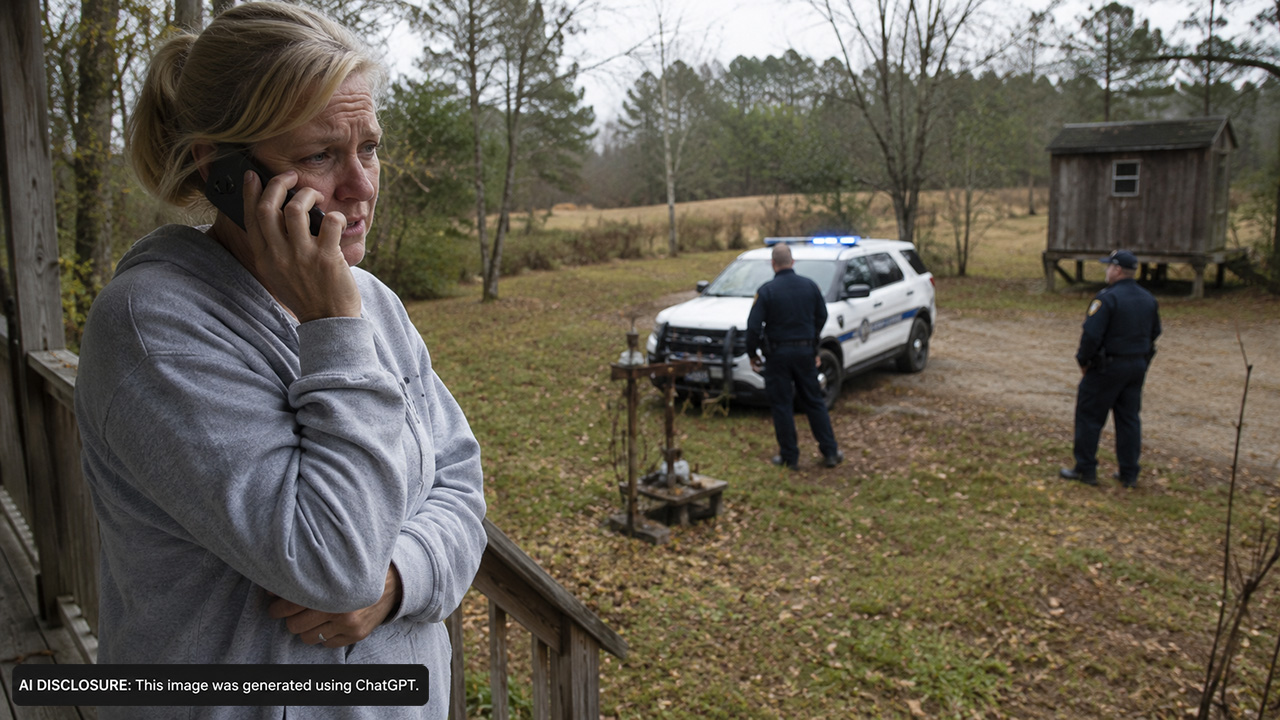
Photo credit: AI-generated image created using ChatGPT. Illustrative only
A small patch of timber behind a retired couple’s house is the kind of place most hunters dream about—just enough ground to hold deer, a creek cutting through it, and plenty of wildlife moving through. It’s also the kind of place that can turn into a headache when someone nearby decides they’re entitled to hunt it.
That’s what one family says happened when a neighbor, after being told “no” more than once, watched a legal hunt unfold and tried to turn it into a poaching case. The story was shared in the original post, and it’ll sound familiar to anyone who’s dealt with property-line drama, unwanted stands, and “I know a guy at the county” types.
A “no” should have been the end of it
The property in question is about seven acres, with roughly six acres of woods and a creek. It’s close to town but still private enough that deer, turkeys, foxes, coyotes, and other critters pass through regularly—good habitat, and exactly why the owners had set out trail cameras in the first place.
Even so, the family says they’ve kept it simple: they don’t let people hunt it. The land is “just barely big enough” to hunt legally, and they don’t want a revolving door of hunters, vehicles, and pressure on the ground. The one exception is their son-in-law, who hunts occasionally and only with permission.
The first red flag was a stand that didn’t belong there
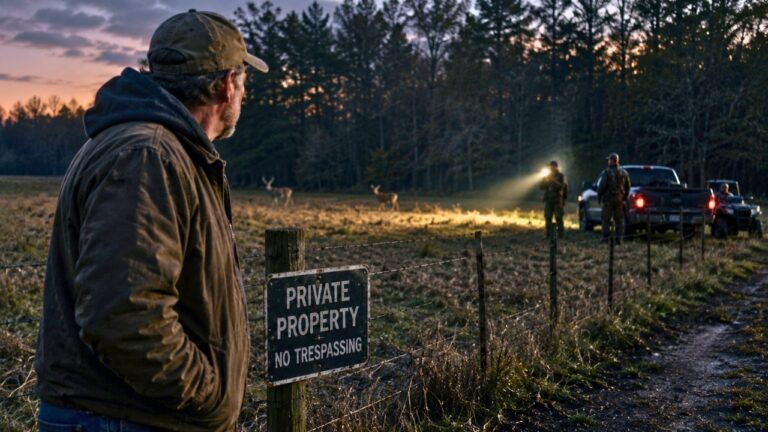
Long before the deputies showed up, there was already reason for suspicion. The family says a neighbor down the road had repeatedly asked to hunt the land and had been turned down each time.
Then, last season, the son-in-law found a treestand set up in the woods that wasn’t his. When they checked their trail cameras, the SD cards had been removed—meaning no easy proof of who’d been sneaking in. They couldn’t pin it on anyone for certain, but they had a pretty good idea who wanted that spot badly enough to help himself.
The treestand came down, and the family reportedly upgraded their camera setup to models that don’t rely on removable SD cards. That’s a lesson a lot of landowners learn the hard way: if someone can walk off with your evidence, they will.
Opening day was short, clean, and legal
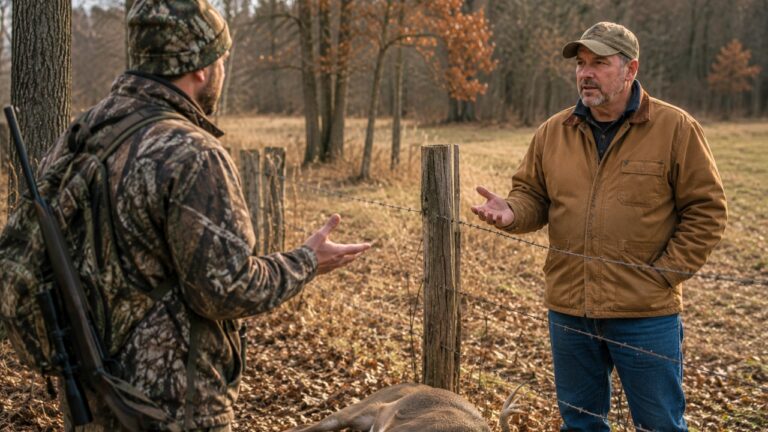
Before deer season started again, the same neighbor allegedly asked one more time and got the same answer—no hunting allowed, except for the son-in-law. So when opening day rolled around, the son-in-law did it the right way: he bought a deer permit and went out to hunt.
It didn’t take long. According to the account, he shot a “decent sized buck” within about 10 minutes of getting into the woods. The father-in-law heard the shotgun blast, came out to check on him, and then helped with the recovery using a tractor—loading the deer into the bucket and setting it in the bed of the son-in-law’s black pickup.
In other words, a normal hunt on private ground: tag in pocket, permission granted, deer recovered quickly, and everyone home early.
The neighbor made it sound like poaching—and knew exactly what to say
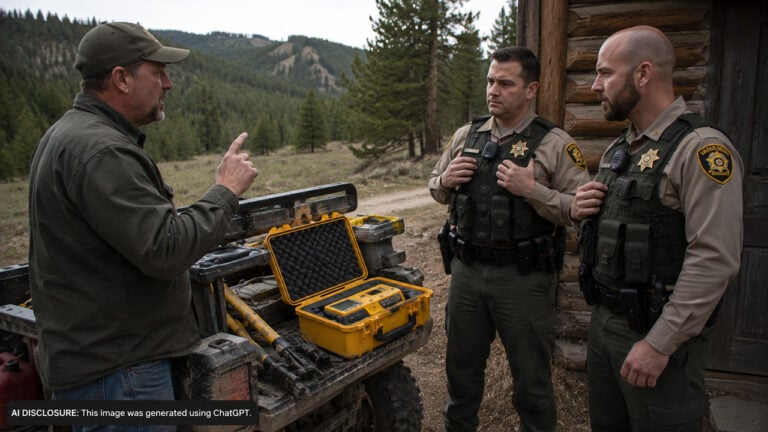
About an hour later, a county sheriff’s deputy and a game warden arrived at the parents’ home. They said they’d received a complaint about unauthorized hunting and deer poaching.
What’s interesting is how detailed the complaint was. The caller reportedly told law enforcement they’d been told repeatedly that no hunting was allowed on that property. They described seeing someone enter the woods with a shotgun, hearing the shot, and watching someone on an orange tractor retrieve the deer and load it into a black pickup truck.
That level of play-by-play doesn’t happen by accident. The family believes the neighbor had to have been watching the woods closely—close enough to track equipment colors and vehicle description. And it also shows the caller understood the stakes, because in many states, a true poaching case can mean seized firearms, seized gear, and even vehicles used during the violation.
The family’s take was simple: the neighbor wasn’t just trying to “check legality.” He was hoping the son-in-law’s gun and truck—and the father-in-law’s tractor—would get hauled away.
Paperwork and permission ended the visit
This is where doing things right matters. When confronted, the father-in-law made it clear whose place it was and whose equipment was being described: his land, his tractor, and his son-in-law had permission to be there.
The son-in-law produced valid deer tags, and that was that. Once the warden could confirm the hunter was properly licensed and had landowner permission, the complaint didn’t have anywhere to go.
There’s a good reminder here for anyone hunting family ground or a buddy’s acreage: even when you’re 100% legal, a bad-faith complaint can still burn your morning. The best defense is being calm, being respectful, and having your paperwork squared away before anyone ever steps out of a truck.
Why this kind of situation keeps happening on small acreage
Seven acres is a funny size. It can be enough to hold deer and enough to hunt safely in the right setup, but it’s also small enough that neighbors notice everything—truck in the drive, a shot at daylight, a tractor moving across the back.
And in shotgun-only states, hearing a boom in the timber is common during deer season. The poster even addressed that point directly: in their state, deer hunting with a rifle is illegal, so hunters use shotgun slugs. That rule exists in a lot of flatter, more populated areas for a reason—slug range is limited compared to centerfire rifle bullets, and it can be a better fit around smaller properties and tighter neighborhoods.
But the biggest driver here wasn’t confusion over a shotgun. It was entitlement. The family says the neighbor wanted access, got denied, and then tried to use law enforcement and wildlife officials as leverage.
For landowners, the practical takeaway is boring but effective: lock gates, post boundaries if your state requires it or it helps your case, and run cameras that don’t make it easy for someone to erase your proof. If you find an unknown stand on your property, treat it like a serious trespass issue—not a misunderstanding—and document what you can before you move it.
For hunters, especially on private land, keep your license and tags on you, follow season and method-of-take rules to the letter, and don’t get drawn into a shouting match with a neighbor. Let the game warden do his job, and make sure you give him nothing to “figure out.” In this case, the family did the basics right—and that’s why the complaint didn’t stick.
Like The Avid Outdoorsman’s content? Be sure to follow us.
Here’s more from us: