Photo credit: Armadillo Armament/YouTube
Metal-framed pistols never stopped being serious tools. They just got crowded out by lighter polymer guns that are cheaper to build and easier to carry all day. The funny part is that a lot of metal guns still behave like duty pistols in the ways that matter—consistent triggers, predictable recoil, and a frame that doesn’t feel like it’s trying to squirm out of your hands when you start pushing speed.
The difference between a “collectible” and a working gun usually comes down to mindset. If the pistol has proven magazines available, parts support, and a design that tolerates hard use, you can run it like you mean it. These are metal-framed pistols you can actually train with, carry, and trust—without treating them like safe-queen trophies.
Beretta 92FS

The Beretta 92FS is still one of the easiest metal guns to shoot well at speed. The slide cycles smooth, the recoil impulse stays flat, and the grip fills your hand in a way that makes fast follow-ups feel natural. When you’re running drills, you’ll notice how forgiving it is if your support hand pressure isn’t perfect.
It also holds up to real round counts when you keep an eye on springs and use quality magazines. Parts and mags are everywhere, and the gun’s track record is as “duty” as it gets. The 92FS isn’t trendy, but it’s consistent, accurate, and dependable—exactly what you want when you’re training like it’s more than a hobby.
Beretta M9A4
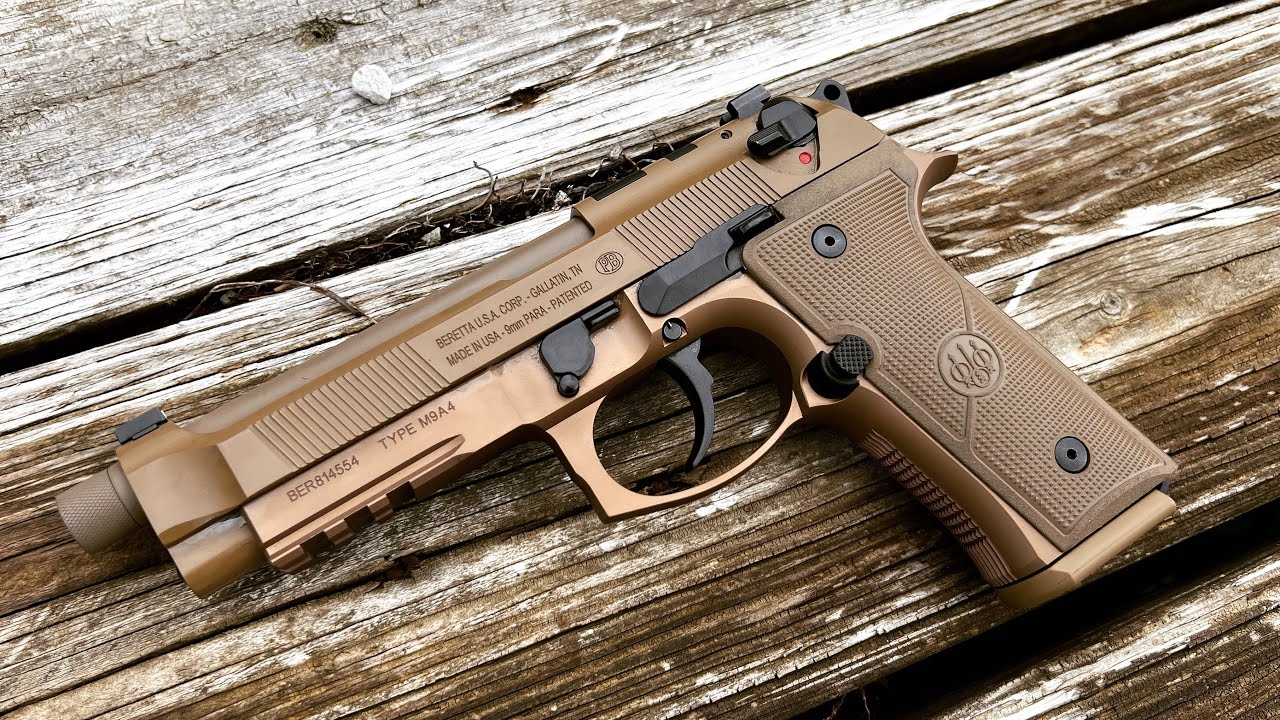
The M9A4 takes the familiar 92 pattern and drags it into the modern era without losing what made it work. You get the same smooth cycling and stability of an aluminum-framed Beretta, but with features that make it easier to set up for real use. It still points naturally, and it still runs fast when you’re shooting on the move.
Where it earns its keep is support and logistics. Mags, holsters, parts, and proven carry ammo are easy to find, which matters when you’re treating it like a working pistol. Keep it lubricated, keep springs fresh, and it’ll keep doing what Berettas do—run long, shoot flat, and stay predictable through high round counts.
SIG Sauer P226

The SIG P226 is the metal gun that feels boring in the best way. The lockup is consistent, the trigger system is familiar to anyone who’s spent time around duty pistols, and the weight helps you track the sights without fighting the gun. When you press the pace, it doesn’t get twitchy.
It’s also a pistol with a long service history, which shows up in parts support and institutional knowledge. You can find magazines that work, replacement springs, and holsters without digging through obscure corners of the internet. Run quality ammo, keep your recoil spring schedule reasonable, and the P226 will take training volume without needing constant attention. It’s built to be used, not admired.
SIG Sauer P229

The P229 brings the same SIG durability into a slightly more compact footprint, which makes it easier to carry while still feeling like a duty pistol. You get a solid metal frame, a slide that runs with authority, and a gun that doesn’t feel fragile when you’re doing one-handed work or shooting from awkward positions.
It also tends to handle high-pressure defensive loads without feeling harsh. That matters because some compact pistols get snappy fast, and then your practice falls off. With the P229, you can keep training without dreading the next magazine. The pistol’s reputation comes from real use, not internet lore. If you want a metal gun that carries well and still runs hard, this one belongs on the shortlist.
CZ 75B

The CZ 75B is one of those pistols that makes you wonder why people ever decided metal guns were “outdated.” The grip shape locks into your hand, the weight settles recoil, and the gun rewards a clean trigger press with tight groups. It’s a steel-framed pistol that feels planted when you start shooting faster than your comfort zone.
It also has the kind of durability you want in a training pistol. Keep it maintained, use good magazines, and it will run long. The CZ aftermarket is deep, but you don’t need to turn it into a custom project to make it work. As a duty-style shooter, the 75B gives you controllability, real accuracy, and the kind of consistency that makes practice translate.
CZ 75 SP-01 Tactical

The SP-01 Tactical is a heavier, rail-equipped CZ that behaves like a duty gun the moment you start shooting strings. The extra weight and dust cover help the gun stay flat, and the ergonomics make it easy to keep a hard support-hand grip without feeling cramped. If you like to shoot fast and stay honest with your hits, the SP-01 makes that easier.
It also fits the “working pistol” role well because it’s built for volume. Parts support is strong, magazines are common, and the platform has been proven in hard use. Add a light if you want, leave it stock if you don’t, and it still does the job. This is the kind of metal pistol you can run weekly without treating it delicately.
CZ P-01

The CZ P-01 is one of the best examples of an alloy-framed pistol that still feels duty-ready. It carries easier than a full steel gun, but it doesn’t feel whippy or underbuilt. The grip and controls stay familiar, and the gun points naturally when you’re coming out of a holster under time.
Where it shines is balance. You can shoot it all day without getting beat up, and you can carry it without feeling like you strapped a brick to your belt. With quality magazines and a sane maintenance schedule, it runs with the kind of consistency you want in a serious defensive pistol. If you like the CZ feel but want something that’s more carry-friendly, the P-01 earns the reputation it has.
CZ 75D PCR Compact

The PCR Compact is another alloy-framed CZ that feels like it was designed by someone who actually carries a pistol. It’s compact enough to live on your belt, but it still shoots like a larger gun because the grip geometry and slide-in-frame design keep things stable. You don’t have to fight it to get clean hits.
It also has a practical simplicity that matters for daily carry. The profile is smooth, the gun isn’t overly chunky, and it balances well with defensive ammo. Like other CZs, it rewards decent magazines and routine spring maintenance. If you want a metal-framed carry gun that behaves like a service pistol during training, the PCR is one of the easiest answers that doesn’t require special treatment.
Ruger P89

The Ruger P89 is not elegant, but it’s a working gun in the purest sense. The frame is beefy, the slide feels overbuilt, and the pistol tends to shrug off abuse that would make lighter guns start acting strange. When you shoot it, you feel that “tank” character immediately.
It’s also a pistol that can be kept running without drama if you use good magazines and don’t ignore worn springs. The trigger won’t win beauty contests, but it’s consistent enough to train with, and the gun’s reliability reputation exists for a reason. If you want a metal pistol you can toss in a truck, shoot a lot, and not worry about babying, the P89 still does that job well.
Ruger P90

The Ruger P90 is another Ruger built with durability as the main priority. It’s a .45 ACP pistol that tends to run even when it’s dirty, and it has the kind of slide mass and frame strength that makes you trust it as a working tool. It’s not small, but it’s steady.
The cost of that durability is carry comfort and refinement. You’re not choosing a P90 because it disappears under a t-shirt. You’re choosing it because it’s hard to kill and easy to keep going. With decent magazines and routine recoil spring swaps, it keeps running through training volume that would frustrate a lot of bargain pistols. If you want an old-school metal gun that behaves like a duty pistol, the P90 fits.
Smith & Wesson 5906

The S&W 5906 is a stainless, third-generation auto that still feels like a real service pistol. The weight helps recoil control, the slide cycles smoothly, and the gun has the kind of mechanical steadiness you notice when you start shooting timed standards. It feels composed, not frantic.
The big advantage is that it was built for duty use, and it shows. When you find a good example and feed it solid magazines, it can run for a long time. You’ll want to pay attention to springs and general wear because many of these pistols have real miles on them. But if you’re willing to maintain it like a working gun, the 5906 still performs like one—accurate, controllable, and reliable with proven ammo.
Smith & Wesson 4506

The 4506 is a stainless .45 that was built for hard use and doesn’t pretend otherwise. It’s large, heavy, and steady, which makes it easier to shoot well than many lightweight .45s. When you’re running controlled pairs, the gun stays stable and the sights return where you expect.
It also tends to run with a wide range of .45 ACP loads, which matters if you actually practice instead of firing a box a year. Like other third-gen Smiths, condition matters because these are often older duty guns now. But parts and magazines are still out there, and the platform is well understood. If you want a metal .45 that feels like it belongs on a duty belt, the 4506 is one of the clearest examples.
Smith & Wesson 3913

The 3913 is a slimmer, carry-friendly third-gen Smith that still behaves like a serious pistol. It’s compact enough to carry daily, but it doesn’t feel like a “micro” gun that requires perfect technique. The alloy frame keeps weight reasonable, and the pistol stays controllable with defensive ammo.
What makes it stand out is how practical it is. The design has been carried and used by people who expected it to work, and it has a reputation for reliability when maintained. You do need to pay attention to magazine condition and springs, especially on older examples. But once it’s sorted, it’s the kind of metal carry gun that trains well and carries well—without demanding you treat it like a museum piece.
IWI Jericho 941 F9

The Jericho 941 F9 is a steel-framed pistol that feels solid in the hand and stays flat when you shoot it. The weight helps, but so does the design’s overall balance. When you’re pushing speed, it tends to track predictably and reward a firm grip with fast, repeatable sight return.
It’s also a pistol that benefits from being based on a proven operating system. With good magazines and routine maintenance, it can run like a working gun, not a nostalgic range toy. The Jericho’s size and weight make it less ideal for deep concealment, but that’s not really the point. If you want a metal pistol you can train hard with and trust to function with common defensive loads, the Jericho earns its place.
Springfield Armory TRP Operator

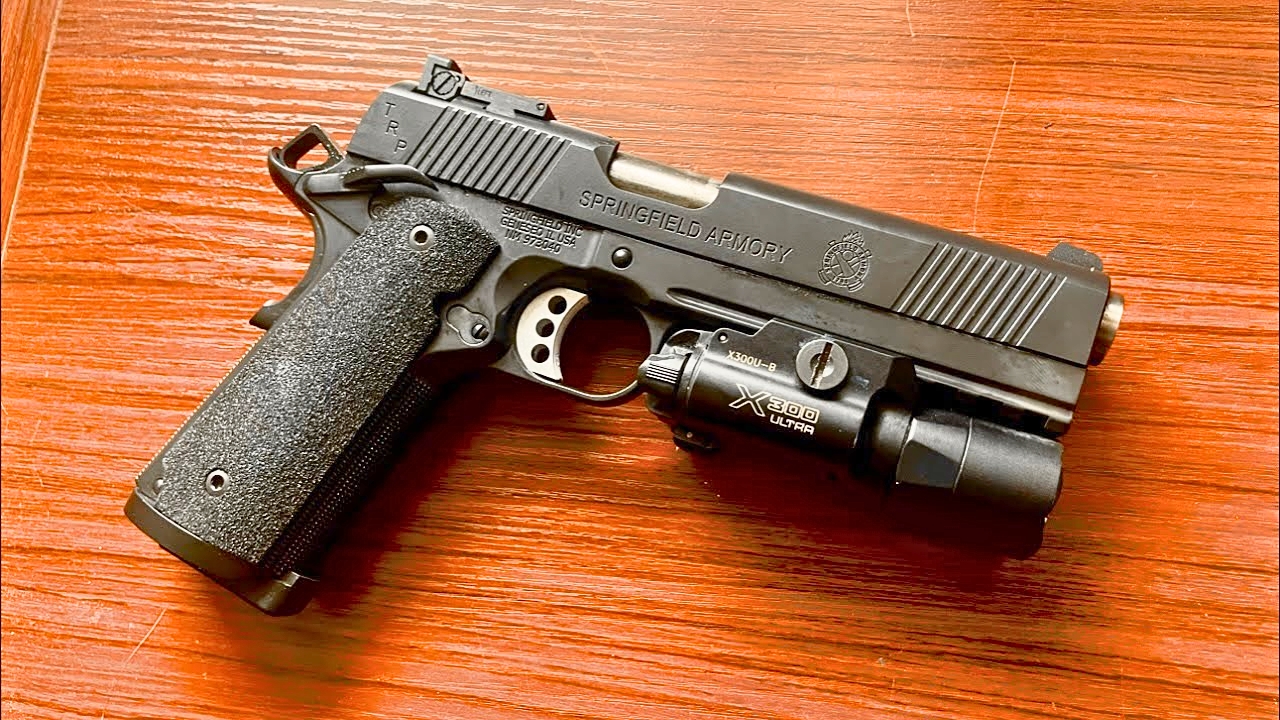
A well-built 1911 can still be a serious duty-style pistol, and the TRP Operator is one of the models that’s actually meant to be run hard. The steel frame and rail add weight up front, which helps the gun track flatter than many lighter 1911s. When you’re shooting quickly, you feel how stable it stays.
The honest part with any 1911 is that you don’t get to be casual about magazines and maintenance. If you run proven mags, keep it lubricated, and confirm your carry load, the TRP Operator can be extremely reliable. The trigger quality also makes practical accuracy easier under stress, which is why people still stick with the platform. It’s not a collectible if you treat it like a working pistol—train with it, maintain it, and let it earn its keep.
Like The Avid Outdoorsman’s content? Be sure to follow us.
Here’s more from us: