Photo credit: Bill Drill/YouTube
We may earn revenue from products featured on this page through affiliate links.
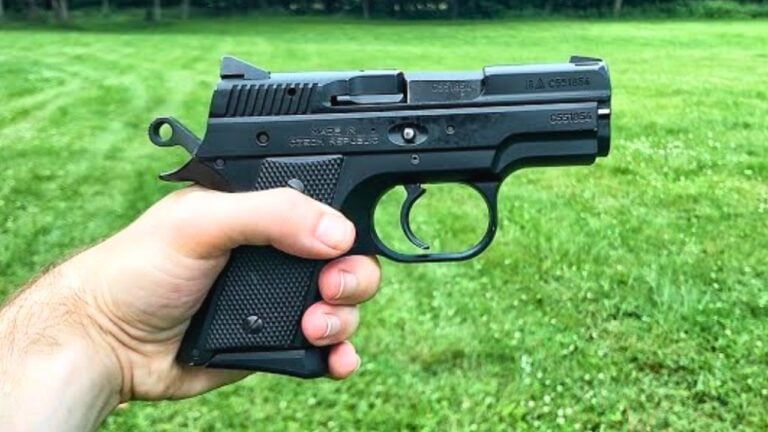
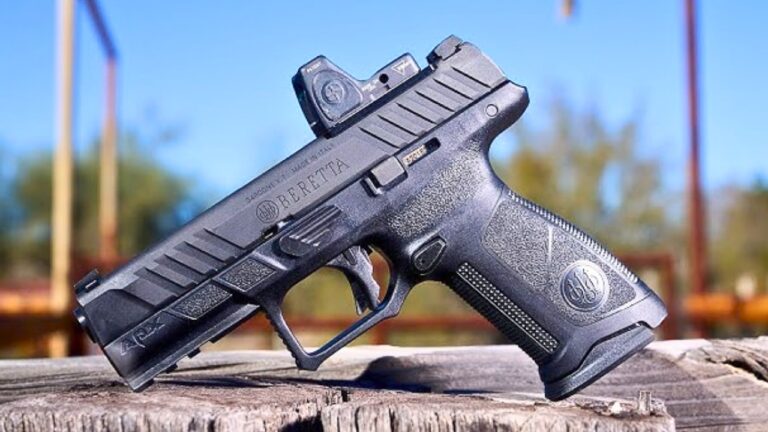
Grip texture is one of those details people either ignore completely or obsess over like it’s magic. The truth sits in the middle: grip texture won’t fix bad fundamentals, but under stress it can be the difference between a gun staying planted and a gun slowly walking out of your hands as you shoot. When adrenaline hits, hands get sweaty, grip pressure gets inconsistent, and fine motor control drops. That’s when texture stops being a comfort preference and becomes a performance factor.
A lot of shooters don’t notice this because they only shoot slow fire on a calm day. Then they shoot faster, under time, in heat, or with gloves, and suddenly the gun feels like it’s moving around. That’s grip texture showing up. Not on paper. In your hands.
Stress changes your hands, and that’s why texture matters more than you think
Under stress, your body dumps adrenaline, and your hands do weird things. You get sweaty, you grip too hard, then you relax without realizing it, then you re-grip mid-string because the gun shifted. None of that happens as much when you’re calm. Texture matters because it helps the gun stay where you placed it even when your grip pressure isn’t perfect. A slick grip forces you to work harder to keep the gun stable, which increases fatigue and makes you more likely to crush the gun with the firing hand instead of letting the support hand do the controlling. Under stress, that turns into poor trigger control and slower follow-up shots. A good texture gives you traction so you can grip firmly without death-gripping, and it helps keep the gun from rotating or sliding when recoil stacks up.
Too little texture creates “micro slippage” that ruins consistency
The biggest problem with slick grips isn’t that the gun falls out of your hand. It’s that it slips a little every shot, and that little slip changes everything. Your hand position shifts, your trigger finger angle changes, your sight alignment changes, and your grip becomes a moving target. Even a tiny rotation in the gun can make your dot or sights return differently, and now you’re chasing the gun instead of shooting it. This is why some people feel like they can’t shoot fast with certain pistols even though they can shoot slow groups just fine. Slow fire hides slippage because you’re constantly resetting your grip between shots. Faster shooting exposes it because you’re relying on the gun to return to the same place. Texture that gives you traction reduces that movement and keeps your grip repeatable across a string, which is exactly what you want when stress makes everything else less precise.
Too much texture can create its own problems if it tears you up or makes concealment miserable
Aggressive texture isn’t automatically better. If it chews up your hands, you’ll shoot less, and less shooting means less competence. If it rubs your skin raw during daily carry, you’ll start leaving the gun at home or constantly adjusting it, which creates other problems. This is why a lot of experienced carriers end up in the middle ground: enough texture to keep control when sweaty or rushed, but not so much that the gun becomes a torture device on the belt. Some shooters solve this with grip tape on specific contact zones rather than full-frame sandpaper texture, which is a smart approach if you understand what you’re trying to accomplish. The goal is traction where your support hand clamps, not misery everywhere the gun touches your body.
Grip texture affects recoil control because it changes how much the support hand can do
Most recoil control comes from the support hand, not the firing hand. Texture matters because it determines how confidently the support hand can clamp and steer the gun. If the grip is slick, the support hand has less traction, and the firing hand ends up doing more work than it should. That usually leads to trigger control issues because the firing hand gets tense and starts pulling the gun during the press. With good texture, the support hand can lock in and keep the gun tracking flatter, which helps sights return faster and helps the trigger press stay cleaner. Under stress, that support-hand advantage becomes even more important because you’re fighting adrenaline, time pressure, and imperfect stance. Texture doesn’t replace technique, but it supports it by making the gun easier to control with correct mechanics.
Gloves and cold weather change the texture equation completely
In cold weather or when you’re wearing gloves, a grip that feels fine barehanded can feel slick and vague. Gloves reduce tactile feedback and reduce friction, especially if the glove material is smooth. This is one reason some hunters and outdoors carriers prefer more aggressive texture or grip tape. If you carry in the cold, you should test your grip with your actual gloves, because stress plus cold plus gloves is a completely different shooting experience than a warm range day. The point isn’t to obsess over gear. The point is to avoid being surprised by your own setup when conditions are harsh. Texture that’s “comfortable” in July can be “useless” in January if it doesn’t provide traction through glove material.
Simple upgrades can help, but they need to be applied intelligently
You don’t have to buy a new gun to improve grip traction. Grip tape and wrap systems can make a big difference if applied correctly. A quality option commonly used by shooters is Talon Grips, which Bass Pro carries for many popular handgun models, and the reason they’re popular is simple: they add traction in a controlled way without permanently altering the frame. The key is applying it where it matters—mainly where the support hand contacts and clamps. You don’t need traction everywhere. You need traction where the gun tries to move. Done right, this can tighten control and reduce the “micro slippage” problem without turning the gun into sandpaper against your skin during carry.
The biggest mistake is ignoring grip texture until you’re under pressure
A lot of shooters don’t realize grip texture matters until they’re shooting fast, sweating, or trying to make hits under time. That’s when they discover the gun shifts, the sights return inconsistently, and the trigger press starts pulling shots. The fix is simple: test your setup the way you’ll actually use it. Shoot faster strings. Shoot when you’re warm. Shoot with gloves if you carry with gloves. If the gun moves, you either need better technique, better texture, or both. Grip texture isn’t a gimmick, but it’s also not a substitute for fundamentals. It’s a friction tool that helps your mechanics hold up when stress makes your body less precise.
Like The Avid Outdoorsman’s content? Be sure to follow us.
Here’s more from us: