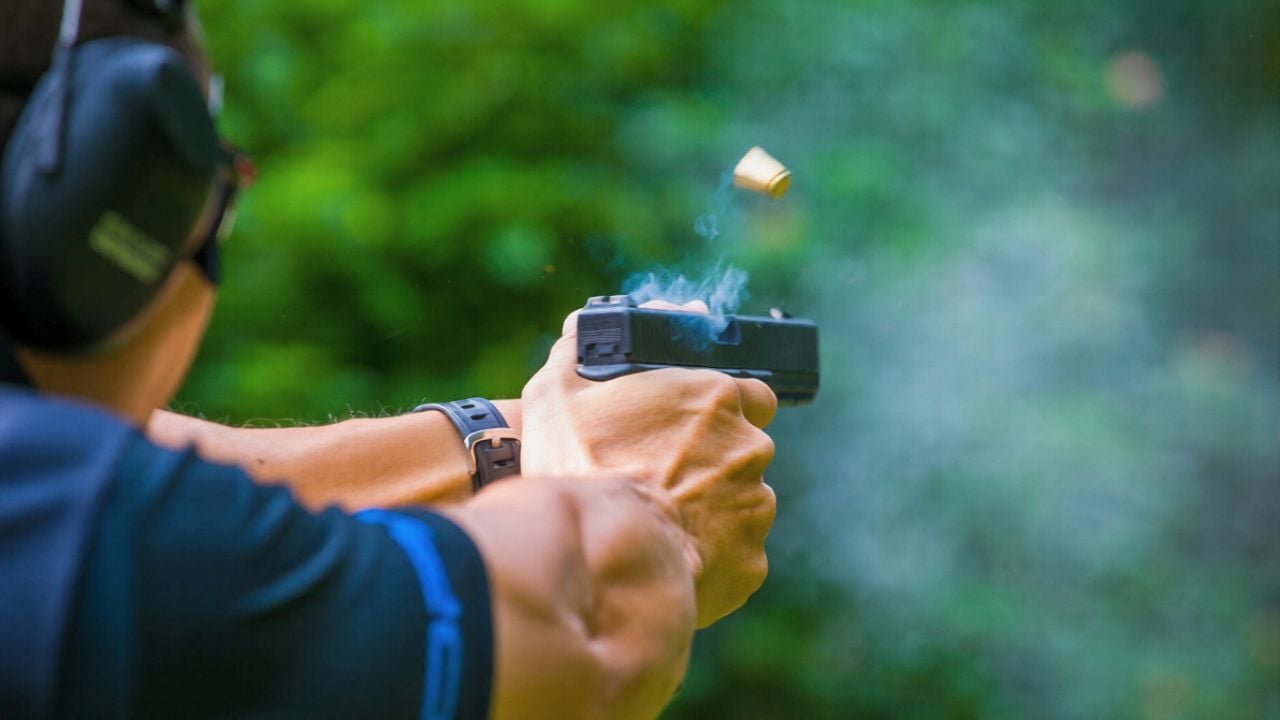
Photo credit: BigPixel Photo/Shutterstock.com
For a while, I was convinced the lightest carry gun was the smartest choice a person could make. It made sense in a practical, everyday kind of way. A lighter gun is easier to carry all day, easier to conceal without constantly adjusting your clothes, and less likely to feel like a burden when you’re moving around. When I picked one up, it felt like I had solved a problem a lot of people struggle with. It disappeared on me in a way heavier guns never quite did, and I figured I had finally found the right balance between comfort and consistency. That confidence held up until I actually started putting in real range time with it.
The moment I started practicing regularly, the tradeoffs showed up fast. The same lightweight design that made the gun easy to carry made it noticeably harder to control once I started shooting it at a realistic pace. Recoil felt sharper, the gun moved more in my hands, and getting back on target took more effort than I expected. It wasn’t just a small difference either. Over the course of a range session, it became clear that I was working harder to get the same results I could achieve more easily with a slightly heavier handgun. That’s when it started to sink in that carry comfort and shooting performance don’t always line up the way people hope they will.
Lightweight guns push more recoil straight into your hands
The biggest difference I noticed right away was how the recoil felt. When you remove weight from a handgun, you also remove the mass that helps absorb some of the energy when the gun fires. That means more of that recoil gets transferred directly into your hands. Even with the same caliber, the gun felt more aggressive and less forgiving than what I was used to. The muzzle rose faster, and the recoil impulse felt sharper instead of controlled. That made every shot require a little more effort to manage, especially as I started shooting multiple rounds instead of slow, single shots.
Over time, that extra effort started to affect consistency. The gun didn’t settle as naturally after each shot, and I found myself having to actively correct my grip more often than I should have. That may not sound like a big issue on paper, but in practice, it adds up quickly and makes it harder to maintain control during longer sessions.
Faster shooting makes the problem impossible to ignore
At first, I could convince myself it wasn’t a big deal when I was shooting slowly and taking my time between shots. But the moment I started picking up the pace, the limitations became obvious. The gun didn’t track smoothly, and the time it took to get back on target increased more than I expected. Instead of focusing on clean transitions and consistent shot placement, I was focused on regaining control of the gun after each shot.
That kind of interruption breaks your rhythm and makes it harder to build confidence. Shooting should feel controlled and repeatable, but with that lightweight gun, it felt like I was constantly reacting instead of staying ahead of the gun.
Smaller and lighter means less forgiveness for mistakes
Another thing that became clear over time was how unforgiving the gun felt compared to slightly heavier options. With more weight, a handgun tends to smooth out small mistakes in grip or trigger control. With the lightweight gun, those same small mistakes showed up immediately on target. Groups opened up faster, and even minor inconsistencies in how I handled the gun translated into noticeable differences downrange.
That kind of feedback isn’t always a bad thing, but it does make the gun harder to shoot well consistently. Instead of helping me improve, it felt like the gun was amplifying every small error.
It made me want to practice less, not more
One of the more surprising downsides was how it affected my willingness to train. Shooting the gun wasn’t unbearable, but it wasn’t something I looked forward to either. The sharper recoil and extra effort made longer range sessions feel more tiring than they should have been. That matters more than people think, because if you don’t enjoy training with a gun, you’re less likely to put in the time needed to get comfortable with it.
A carry gun should be something you’re confident with, and confidence comes from repetition. If the gun discourages that repetition, it becomes harder to justify relying on it.
A little more weight made a big difference
After spending enough time with that lightweight setup, I went back to a slightly heavier handgun just to compare. The difference was immediate. The recoil felt more controlled, the gun stayed flatter, and my shooting improved without me having to consciously adjust anything. That extra weight didn’t make the gun difficult to carry, but it made it significantly easier to shoot.
That was the moment everything clicked. The goal isn’t to carry the lightest gun possible. The goal is to carry something you can actually run well.
Carry comfort isn’t the only thing that matters
It’s easy to focus on how a gun feels when you’re wearing it, but that’s only half the equation. How it performs when you actually use it matters just as much, if not more. A gun that’s comfortable to carry but difficult to control creates a different kind of problem. You may carry it more often, but your performance may suffer when it counts.
That tradeoff isn’t always obvious until you spend real time practicing with the gun, which is exactly what happened to me.
Balance matters more than going to extremes
What this experience taught me is that balance matters more than chasing extremes. The lightest option isn’t automatically the best option, just like the smallest or most powerful option isn’t always the right choice. There’s a point where reducing weight starts to hurt performance more than it helps comfort.
Finding that balance is what actually makes a carry setup work long term.
The right carry gun needs to be usable, not just comfortable
The lightweight gun did one job very well. It was easy to carry, easy to conceal, and never felt like a burden. But once I started practicing with it, it became clear that I had prioritized the wrong thing. A carry gun needs to do more than sit comfortably on your belt. It needs to be something you can shoot confidently, consistently, and without fighting it every step of the way.
I thought I wanted the lightest carry gun possible, but after spending enough time with it, I realized what I actually needed was something I could carry comfortably and still shoot well when it mattered.
Like The Avid Outdoorsman’s content? Subscribe to our newsletter so you never miss an article.
Here’s more from us: