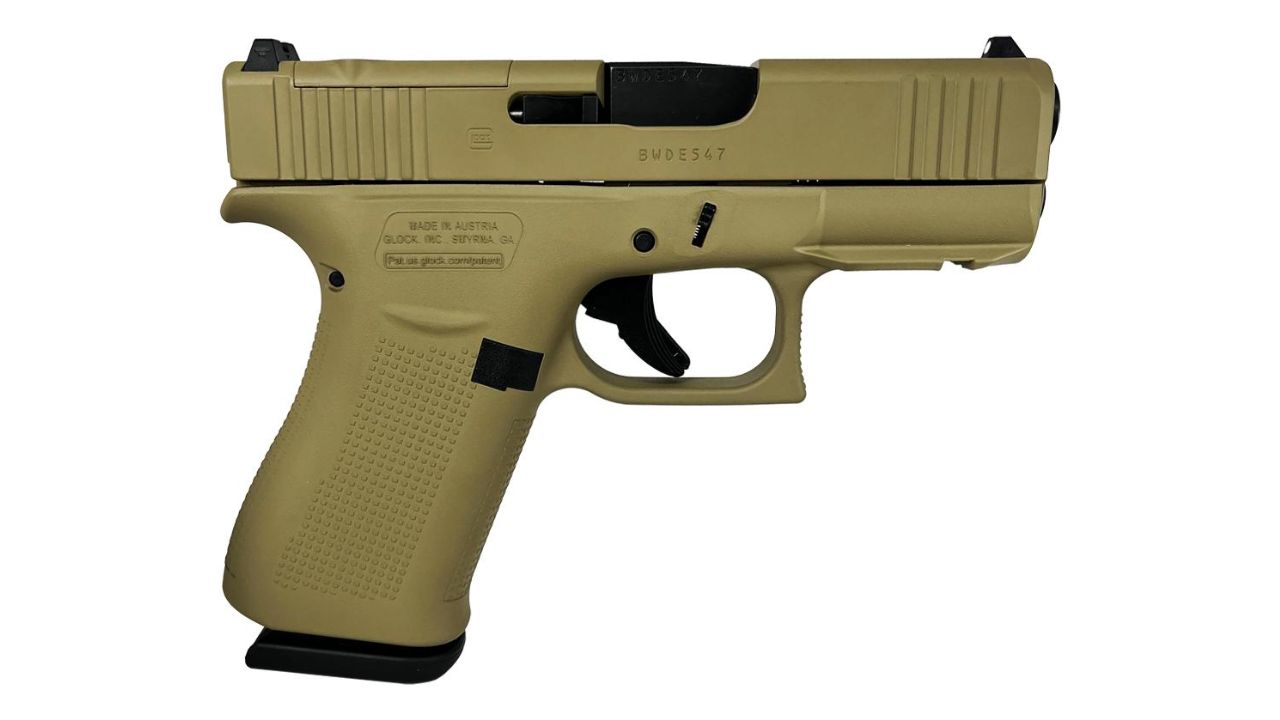
Photo credit: Range USA
The Glock 43X is one of Glock’s most popular slimline carry pistols, and it makes sense why. It gives you a thinner frame than a Glock 19, a longer grip than the original Glock 43, and a 10-round factory magazine in a pistol that is still easy to carry. For a lot of people, it hits the sweet spot between shootability and concealment.
But the Glock 43X is still a small, slim carry gun. It does not have the same slide mass, grip width, or recoil feel as a Glock 19. That means it can be a little less forgiving when the shooter uses weak ammo, has a loose grip, rides the controls, or starts swapping factory parts for aftermarket upgrades. Most Glock 43X malfunctions are not mysterious. They usually come down to magazines, feeding, ejection, grip, ammo, recoil spring issues, or aftermarket parts.
Failure to Feed
Failure to feed is one of the more common Glock 43X malfunctions. The slide moves forward, but the next round does not chamber cleanly. The bullet may nose-dive into the feed ramp, stop halfway into the chamber, or leave the slide sitting slightly out of battery. That can happen with any semi-auto pistol, but slim carry guns tend to show these issues faster than larger pistols.
The first place to look is the magazine. The Glock 43X uses a slim 10-round magazine, and if the spring is weak, the feed lips are damaged, or the follower is not moving smoothly, feeding problems can show up fast. Ammo can also play a part. Some hollow points have a wider or flatter profile than basic ball ammo, and a pistol that runs range ammo well may still need to prove itself with defensive loads. A Glock 43X carried for protection should be tested with the exact magazines and ammo you plan to use.
Magazine-Related Problems
Magazines are one of the biggest trouble spots with the Glock 43X, especially because so many owners experiment with higher-capacity aftermarket mags. The factory Glock 43X magazine holds 10 rounds and is generally dependable. A lot of complaints start when people switch to metal-body aftermarket magazines that promise more capacity in the same grip length.
Some of those magazines work well for certain shooters. Others create feeding issues, slide-lock problems, or random stoppages. The problem is not always the pistol itself. It can be the magazine spring, follower geometry, feed lips, mag catch, or the way the magazine sits in the frame. If a Glock 43X runs perfectly with factory magazines and starts choking with aftermarket mags, the answer is sitting right there. More capacity is nice, but reliability matters more in a carry gun.
Failure to Eject
Failure to eject happens when the pistol fires but the empty case does not clear the ejection port. It may stovepipe, get trapped under the slide, or bounce around in a way that stops the next round from feeding. With the Glock 43X, this usually comes back to slide speed, ammo strength, extractor condition, or shooter grip.
The Glock 43X is small and light enough that grip matters. If the shooter lets the pistol move too much under recoil, the slide may not travel rearward with enough force to complete the ejection cycle. Weak practice ammo can make that worse. This is one of those malfunctions that may show up with one shooter and disappear with another. If the pistol ejects cleanly for someone with a firmer grip, the gun may not be the main problem.
Stovepipes
A stovepipe is a specific kind of ejection failure where the empty case gets caught upright in the ejection port. It is usually easy to clear, but it still means the pistol did not cycle completely. Glock 43X stovepipes are commonly tied to weak ammo, limp-wristing, dirty internals, or extractor and ejector issues.
This is more likely with small carry pistols than full-size pistols because there is less weight and less grip area working in the shooter’s favor. The 43X is easier to shoot than many tiny pistols, but it still needs a solid hold. If stovepipes only happen with soft 115-grain range ammo, the load may be part of the problem. If they happen with multiple loads, multiple magazines, and multiple shooters, the extractor, ejector, recoil spring, and chamber should be checked.
Failure to Return Fully to Battery
A Glock 43X can also fail to return fully to battery. The round is almost chambered, and the slide is almost forward, but the pistol is not completely locked up. Sometimes a quick tap on the back of the slide finishes the job. Other times the round has to be cleared.
This can happen when the chamber is dirty, the recoil spring is weak, the ammo is rough or out of spec, or an aftermarket barrel or slide part is dragging. Carry guns also collect lint, dust, sweat, and debris, even when they are not being fired often. That buildup can slow down the slide or make chambering less smooth. A Glock 43X that gets carried every day still needs regular cleaning and inspection, especially if it rides close to the body.
Slide Failing to Lock Back
The slide failing to lock back after the last round is another common Glock 43X complaint. Sometimes it is caused by the magazine. A weak spring or worn follower may not push the slide stop up correctly. But with slim pistols, the shooter’s grip is often the issue.
The 43X gives you a full-feeling grip compared to the tiny Glock 43, but it is still narrow. A high thumbs-forward grip can easily ride the slide stop lever and keep it from engaging. The shooter may not even realize it is happening. If the slide locks back for one person but not another, grip is probably the answer. If it only fails with one magazine, that magazine needs to be marked and pulled from carry use.
Failure to Extract
Failure to extract is less common than simple ejection trouble, but it can happen. The fired case stays in the chamber instead of being pulled out by the extractor. The slide may stop, or it may try to feed the next round into a chamber that is still occupied by the empty case. That creates a more serious stoppage than a basic stovepipe.
The causes are usually a dirty chamber, bad ammo, weak slide movement, or an extractor that is worn, dirty, or damaged. If the problem only happens with one type of cheap range ammo, start there. If the pistol leaves brass in the chamber with several loads and several magazines, it needs a closer look. A Glock 43X used for daily carry should not be trusted if it repeatedly fails to extract.
Light Primer Strikes
Light primer strikes are not the most common Glock 43X issue, but they are worth watching for. The trigger breaks, the striker hits the primer, and the round does not fire. When the round is cleared, the primer may show a shallow mark. That can be caused by hard primers, cheap ammo, a dirty striker channel, or changes to the trigger system.
This matters because a lot of people like modifying small Glocks to make the trigger feel lighter or smoother. Aftermarket trigger parts, changed springs, or non-factory striker parts can reduce ignition reliability if the setup is not right. A range pistol can afford to be picky. A carry pistol cannot. If a Glock 43X starts giving light strikes, the striker channel should be cleaned, the ammo should be checked, and any trigger changes should be questioned.
Aftermarket Parts Causing Reliability Problems
The Glock 43X has become a huge aftermarket pistol. People add metal magazines, upgraded mag catches, triggers, barrels, slides, optics, comps, recoil springs, and extended controls. Some of those upgrades are useful. Some create reliability problems that the stock pistol did not have.
The most common trouble comes from mixing parts that change how the pistol feeds, cycles, or locks up. Metal aftermarket magazines may require a different mag catch. A compensator may need a different recoil spring. A tight aftermarket barrel may not like certain ammo. A lighter trigger setup may cause ignition problems. None of that means upgrades are automatically bad, but every change needs to be tested hard. A stock Glock 43X is usually dependable. A heavily modified one has to prove itself from scratch.
Like The Avid Outdoorsman’s content? Be sure to follow us.
Here’s more from us: