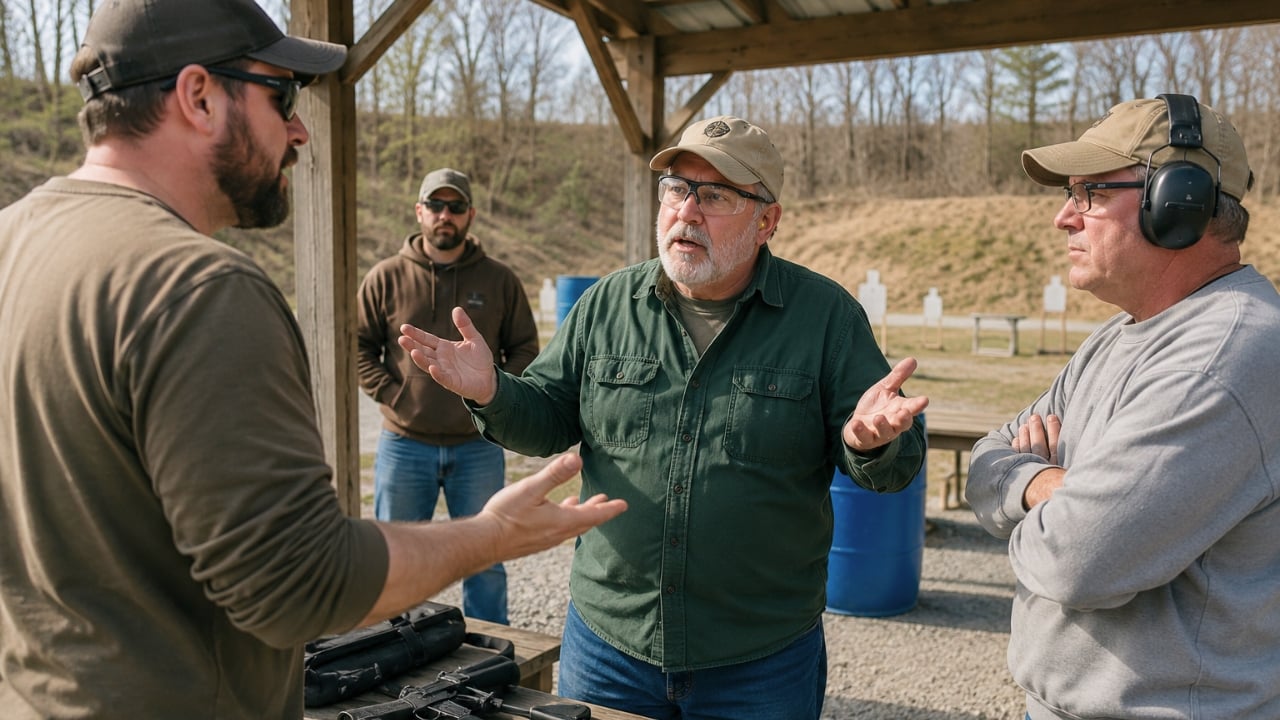
Photo credit: The Avid Outdoorsman
A shooter at an outdoor range noticed people carrying firearms with the muzzle pointed upward and wondered whether that was safe practice or bad muzzle discipline. What sounded like a simple range-etiquette question quickly turned into a larger debate about context, terrain, backstops, and the rules every shooter should follow around other people.
The question came from a post on r/guns titled “Muzzle up at an outdoor range–bad muzzle discipline?”. The poster was not describing a dramatic negligent discharge or someone waving a loaded rifle across the firing line. He was asking about a specific habit: carrying a gun with the muzzle pointed up at an outdoor range and whether that should be considered unsafe.
That kind of question gets shooters talking because muzzle discipline is one of the foundational rules of gun safety. Where the muzzle points matters every second a firearm is handled. But the answer is not always as simple as “up is bad” or “down is better.” The safest direction depends on the range setup, whether the firearm is loaded, where other people are standing, what the ground is made of, and what sits above or beyond the shooter.
At an indoor range, the expectation is usually more controlled. Firearms stay pointed downrange. At an outdoor range, especially one with benches, racks, gravel, dirt, grass, trucks, and people moving between positions, the conversation can get more complicated.
The poster’s question hit that exact gray area. Everyone agreed that muzzles should never cover people. The argument was over whether “muzzle up” is automatically a problem or whether it can be acceptable when done carefully.
The Safety Rule Is Simple, But the Direction Isn’t Always Obvious
The basic rule is not complicated: never point a firearm at anything you are not willing to destroy.
That rule does not change because someone is at a range, in the woods, in a gun shop, or at home. If the muzzle crosses a person, the shooter has already made a serious mistake.
But choosing the safest direction can depend on the setting. At some outdoor ranges, muzzle down may point at concrete, gravel, rocks, or hard-packed ground where a discharge could ricochet. At others, muzzle up may point into open sky with nothing overhead. In a covered firing line, muzzle up may point at the roof, lights, baffles, or structural material. In a crowded area, muzzle down may be safer if the ground is soft and clear.
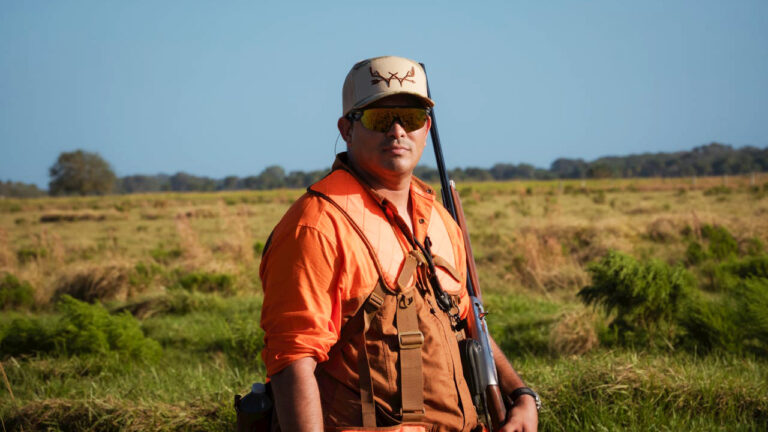
That is why the thread turned into a debate. Some shooters believe muzzle up is a standard way to carry long guns safely, especially when walking outdoors. Others dislike it at ranges because it can feel sloppy if the shooter is not paying close attention to where the barrel is actually angled.
The real issue is not the phrase “muzzle up.” It is whether the gun is pointed in a safe direction under the conditions at that moment.
A person carrying muzzle up while walking behind the line may be doing it correctly. A person swinging the gun around while “muzzle up” and briefly covering people with the barrel is not.
Commenters Focused on Range Rules First
One of the clearest pieces of advice in the discussion was that the range’s rules matter.
Some ranges require muzzle up when moving with firearms. Others require actions open, chambers flagged, and firearms carried muzzle down or in a case. Some ranges do not allow uncased firearms anywhere except the bench. Others have specific cold-range procedures that require all guns to be grounded before anyone goes forward.
That means a habit that is acceptable at one range may get someone corrected at another.
Commenters made clear that the safest move is to follow the rules of the range you are actually using. If the range officer says rifles are carried muzzle up with actions open, then that is the rule. If the range says all uncased guns stay pointed downrange, then that is the rule. If a shooter is unsure, asking the range officer is better than guessing.
That may sound obvious, but range culture varies a lot. A public outdoor range with no range officer can feel very different from a private club with strict procedures. A competition match may have different movement rules than a casual sight-in day. A trap field, rifle range, pistol bay, and hunting club may each treat muzzle direction a little differently because the layout is different.
The poster’s question was useful because it pushed people to separate personal preference from local safety procedure.
“Up” Can Still Be Unsafe If the Shooter Gets Lazy
Several commenters were likely less concerned about a perfectly vertical muzzle and more concerned about what happens when people get casual.
A firearm carried muzzle up can drift. The shooter turns to talk. The barrel angles behind him. Someone steps close. The gun comes off the shoulder. Suddenly, “up” is not really up anymore. It is pointed over someone’s head, toward a roofline, or across part of the range.
That is why experienced shooters watch not only the intended direction but the actual direction. The muzzle does not get credit for what the carrier meant. It only matters where it is pointing.
This is especially important with long guns because the barrel extends farther than the shooter may realize. A person can turn his body slightly and sweep a muzzle across people standing nearby without noticing. That is one reason range officers get sharp about it.
The same applies to muzzle down. A shooter can claim he is pointing down safely, but if the barrel is angled toward someone’s feet, another bench, or a hard surface that could deflect a round, that is not safe either.
The good comments in threads like this usually come back to awareness. Muzzle up, muzzle down, or muzzle downrange only works when the shooter is deliberate and consistent. The moment the muzzle starts wandering, the chosen method stops mattering.
Outdoor Ranges Add Terrain and Backstop Questions
An outdoor range introduces details that indoor shooters may not think about as much.
What is the ground made of? Is it dirt, grass, gravel, concrete, rock, or steel fragments? Is there a covered firing line overhead? Are there baffles? Are people walking behind the line? Are there homes, roads, or trails beyond the berm? Are shooters moving between bays or only standing at benches?
Those details affect what counts as the safest direction.
Some shooters argue that muzzle up is safer than muzzle down in places where the ground could cause a ricochet. Others argue that muzzle down is safer in places where the sky is not actually clear because of roofs, structures, or nearby buildings. Still others say the only truly safe direction at a range is downrange or into a berm, and all gun handling should be organized around that.
The right answer depends on the range.
That is why blanket statements can get people in trouble. “Always up” is not universally correct. “Always down” is not universally correct either. “Never point it at people and follow the range’s safe direction” is the rule that actually travels.
The poster’s outdoor range question exposed exactly why shooters argue about this. Everyone wants a simple answer. Real-world range layouts do not always give one.
The Bigger Issue Was Confidence Without Carelessness
There is a difference between being comfortable around guns and being careless around guns.
A safe shooter can move confidently with a firearm because he is paying attention to the muzzle, action, chamber, safety status, and people around him. A careless shooter may look relaxed but is actually letting the gun drift, relying on the safety, assuming it is unloaded, or treating range rules like suggestions.
That distinction mattered in the thread. A person carrying muzzle up is not automatically unsafe. A person carrying muzzle up without awareness is.
The same goes for unloaded guns. Many range rules are built around the idea that every firearm should still be treated with respect even when cleared. An open action and empty chamber are good. A chamber flag is good. But those things do not give the muzzle permission to cover people.
That is why shooters who ask questions like the poster’s are usually better off than shooters who assume they already know everything. If something looks questionable at the range, it is fair to ask whether it is normal, whether it is safe, and what rule applies.
That kind of caution is not being overly picky. It is how range culture stays safe.
What Commenters Said
Commenters generally treated the question as a matter of context rather than a simple yes or no.
Some said muzzle up is normal and acceptable at certain outdoor ranges, especially when carrying long guns with actions open and nobody is being covered. Others said they prefer muzzle down or downrange because upward carry can get sloppy fast if a shooter is not paying attention.
Several focused on the range rules. If a range has a posted safe direction or a range officer giving instructions, that settles the issue for that facility. Shooters do not get to pick their favorite method if the range has already chosen one.
Others pointed out that both muzzle up and muzzle down can be unsafe if done carelessly. A muzzle angled over people’s heads is not safe just because it is “up.” A muzzle pointed at someone’s feet or at hard ground that could ricochet is not safe just because it is “down.”
The strongest advice was to keep the action open when required, follow all range procedures, and stay aware of every person nearby. If the range has a designated safe direction, use it. If the rule is unclear, ask before handling the firearm.
For the shooter asking the question, the answer was not that muzzle up is always wrong. It was that muzzle discipline is not a slogan. It is a constant habit. The safest direction depends on where you are standing, what is around you, and whether the muzzle is truly staying away from people the entire time.