Photo credit: AI-generated image created using ChatGPT. Illustrative only
Most folks who carry a gun for work treat it the same way they treat a truck gun on the ranch: you want it to be safe, reliable, and legal before it ever leaves the safe. That’s why one armed guard’s story—shared in the original post—hits like a cold splash of creek water.
He says his employer issued him a company firearm, had him sign transfer paperwork when it was handed over, and expected him to carry it on the job. Then a traffic stop turned into a hard lesson when police “ran the gun,” found it wasn’t registered to him or the company, and took it.
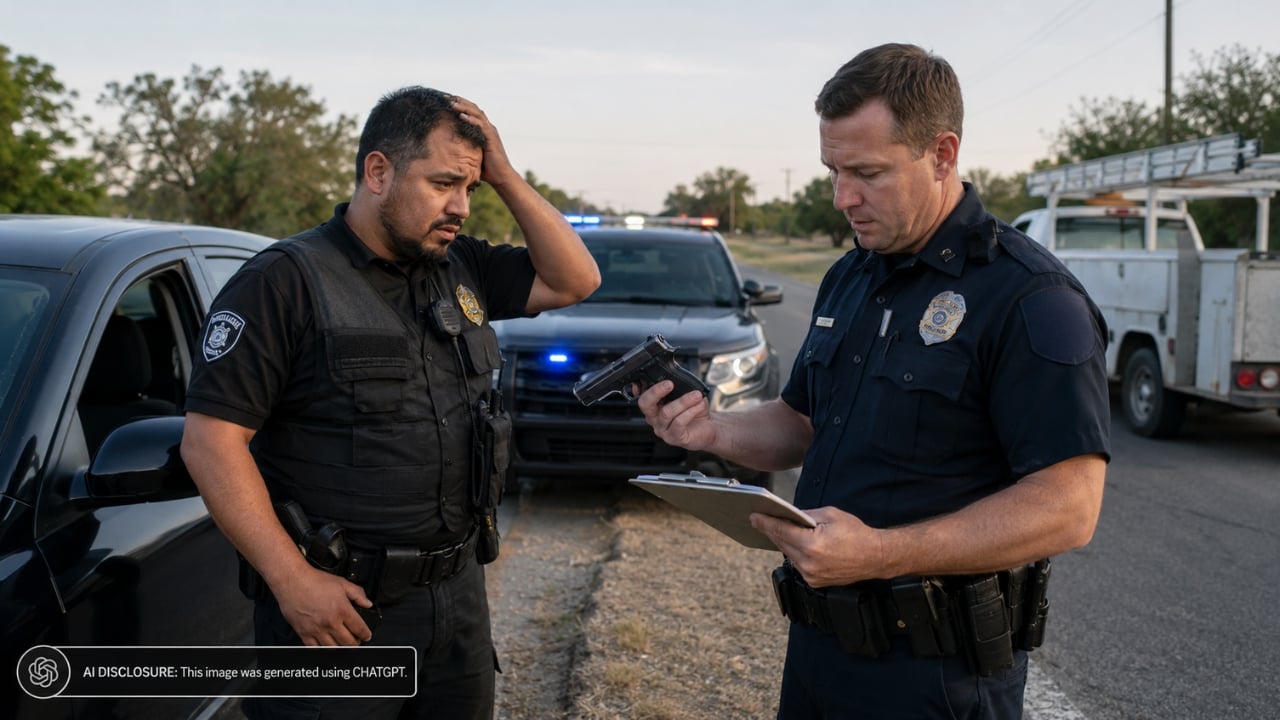
A routine police stop turned into a gun seizure
According to the account, the guard was stopped by police while carrying the company-issued firearm. When officers asked to run the gun, he complied. That’s the moment the wheels came off.
He says police told him the firearm wasn’t registered to him or his employer, and they took it because, in their view, he couldn’t possess an unregistered gun. Whether the gun was truly “unregistered,” improperly transferred, or simply not tied to the right entity in whatever system the officer checked, the end result was the same: he walked away without the weapon he’d been required to carry.
Signing “transfer paperwork” didn’t protect him in the real world
This is the part that’ll make any gun owner’s stomach tighten. The guard says he signed transfer paperwork when the firearm was issued. To a regular working guy, that sounds like the employer did things by the book and the paperwork should cover him if questions come up.
But paperwork only helps if it’s valid, complete, and matches what the law requires in that state. If the company never actually completed a lawful transfer, or if the firearm was never properly recorded the way their jurisdiction requires, a signature on a form doesn’t stop an officer from taking the gun during an encounter. Out on the roadside, it’s not a court hearing—it’s a quick decision based on what the officer sees, what the databases show, and what the local law says.
The job consequence: pulled off the schedule and left hanging
After the firearm was taken, the guard says his employer removed him from the schedule “until further notice” for what the company called a violation. Then the silence started. He claims it’s been about two months with no returned calls or emails.
That kind of limbo is brutal in rural America where paychecks are tied to hours, not titles. If you’re an armed guard and the company says you violated policy, they can effectively bench you without firing you outright—at least for a while—leaving you stuck in the middle without steady work and without clarity on your employment status.
Unemployment became another fight
The guard also says the employer contested his unemployment claim. That’s common in disputes where the company wants the separation characterized as misconduct or a policy violation, because that can affect eligibility.
But a contested claim doesn’t automatically mean the worker is out of luck. Unemployment systems are built for disagreements. The important thing is documentation: dates, messages, scheduling records, and any written policy the company is leaning on. If you’re ever in a similar spot, don’t rely on phone calls alone—save emails, take screenshots of schedules, and keep a simple timeline in a notebook like you’d keep notes on trail cam photos.
Why “company gun” setups can go sideways fast
A lot of outdoorsmen understand private firearm ownership down to serial numbers, bills of sale, and safe storage. The workplace angle is different. When a company issues a gun, there are extra layers: policies, licensing requirements for armed security, and whatever local rules apply to possession, transport, and transfers.
This case shows how quickly the risk can land on the employee. The company may have “issued” a gun in the everyday sense, but if the legal ownership trail isn’t clean, the person holding it is the one standing on the shoulder of the road explaining it. And when the officer decides to seize the gun, that can trigger a chain reaction: loss of work, internal discipline, and the headache of sorting out who actually owns the firearm.
Even if the guard did everything he was told, being ordered to carry a firearm doesn’t guarantee he’s insulated from consequences if the company’s back-end compliance is sloppy. In the field, the person with the holster is the person in the spotlight.
Practical options when you’re the one left holding the bag
From the guard’s perspective, there are two separate problems: the firearm situation and the employment situation. On the gun side, it’s important to get records in order—anything signed at issuance, any company policy documents, and any property/transfer paperwork he was given. If police took the gun, there will also be a record of that seizure and whatever receipt or case number they provided. Those documents matter because they show what was taken, when, and under what authority.
On the job side, the silence from the employer matters. Being taken off the schedule for months can look a lot like being effectively terminated, even if the company won’t say the words. For unemployment, the most useful approach is usually to keep pushing the claim process forward: respond promptly, provide the timeline, and submit what proof exists that the employee was willing to work and the company stopped scheduling him. If the company alleges a “violation,” the details and any written rules become important.
And if there’s a bigger concern—like being directed to carry a firearm that may not have been lawfully transferred—this is where talking with an employment attorney or a lawyer familiar with firearm law in that state can help separate fear from facts. The guard asked, “What are my options?” and in real life that often starts with getting paperwork, getting the unemployment appeal moving, and getting a clear answer on the firearm’s legal status rather than relying on verbal assurances from an employer who won’t return calls.
Outdoorsmen are used to personal responsibility: you check your zero, you check your tags, you check your backstop. This story is a reminder to bring that same mindset to any job that involves a gun. If a company hands you a firearm and says, “Carry this,” it’s worth making sure you’ve got more than a handshake and a holster between you and a bad day on the side of the road.
Like The Avid Outdoorsman’s content? Be sure to follow us.
Here’s more from us: