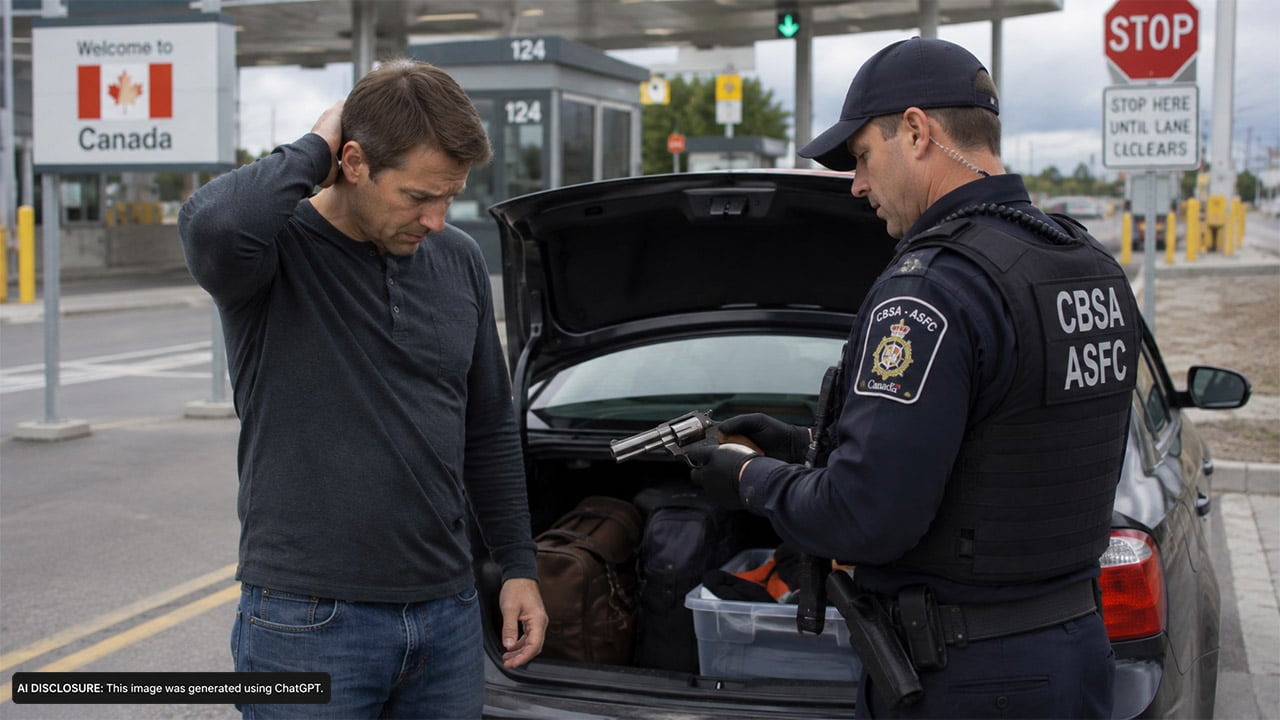
Photo credit: AI-generated image created using ChatGPT. Illustrative only
When you’re packing a life into boxes and trying to beat the clock on a long haul, it’s easy to lose track of what ended up where. One Alaska driver found that out the hard way when a handgun he legally owned turned up during a border search—after he’d already rolled up to a crossing without declaring it.
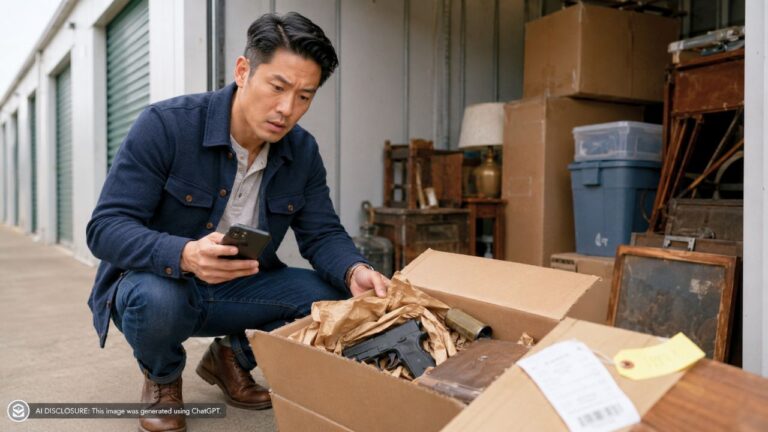
The details came from the original post, written by a worried family member. The man—described as a U.S. citizen with no criminal history—had bought the handgun legally for bear defense, then forgot it was buried in the bottom of a box as he moved from Alaska toward the Lower 48. That single oversight turned a routine drive into a serious headache.
A long drive south, a packed truck, and one forgotten box
The setup is familiar to anyone who’s ever moved households with a pickup: you load the heavy stuff first, keep stacking, and by the end you’re just trying to get the tailgate closed. In this case, the brother-in-law packed his truck with belongings and started the drive from Alaska toward Washington, cutting through Canada like most folks do.
Somewhere in that load was his handgun, purchased legally but not used since buying it. He didn’t “forget to pack it correctly.” He forgot it was there at all—down in the bottom of a box with other household items. That matters, because border crossings aren’t the place for surprises, even innocent ones.
The moment border inspections stop feeling routine
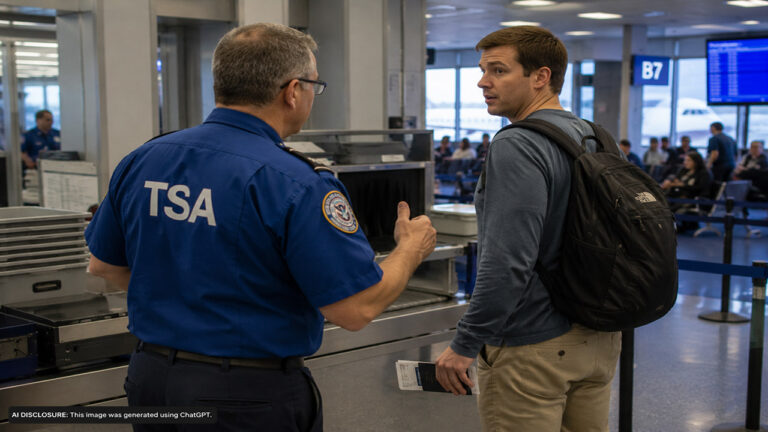
At the border, he was stopped and searched, and inspectors found the handgun. Because he didn’t realize it was in the truck, he didn’t declare it and didn’t have paperwork ready to present. The post describes him as cooperating fully, but being held in jail and not being allowed to continue into the U.S. at that point.
That’s the part a lot of outdoorsmen underestimate: “I’m legal back home” doesn’t carry you through a border crossing. The border is its own world, and the second a firearm enters the picture—especially one that wasn’t declared—the tone changes fast.
It wasn’t even the crossing they first thought
In an update, the writer added a key correction: the stop happened while exiting Alaska into Canada at the Alaska Highway border station. That meant the man was likely being held by Canadian authorities, not U.S. officials.
For practical purposes, that’s a major shift. Crossing into Canada with a handgun isn’t the same as driving state to state. Different rules, different expectations, and a much smaller margin for “I didn’t know.” Even if you’re a lawful gun owner and mean well, you’re still responsible for what’s in your vehicle.
What the family worried about: jail time, impound, and charges
The questions from the family member were straightforward and the same ones most of us would ask: Will the truck and belongings be impounded? How long can they keep him? Will this turn into criminal charges?
Those are real-world fears, especially with a pregnant spouse back in Alaska and a move already in motion. When your rig is loaded with everything you own, losing access to your truck isn’t just inconvenient—it can derail the whole plan in one afternoon.
The post didn’t provide final details on whether property was seized, what fines were assessed, or whether any charges were filed. But it did show how quickly “just moving” can become a situation where you’re dealing with detention and the possibility of major consequences.
The one part that did break their way
In the second update, the writer reported that authorities released him and that he was back in Anchorage. That’s good news, and it suggests the situation didn’t escalate into a worst-case outcome—at least not immediately.
Even then, being released doesn’t necessarily mean it was painless. Travelers can still face fines, restrictions on future crossings, and long delays—even when the gun is legally owned and the person isn’t trying to do anything shady. The big lesson is that “I forgot” may explain what happened, but it doesn’t undo it at the border.
What this should remind every gun owner who travels
If you hunt, fish, or live rural, odds are you’ve got firearms around for legitimate reasons—bear protection, dispatching a wounded animal, camp security, or just being prepared. That’s normal. The problem is that normal habits don’t always translate when you’re crossing international lines with a vehicle full of gear.
Before any border crossing, especially into Canada, it pays to do a hard check of your vehicle and your load. Not a quick glance. An actual inventory: glovebox, console, door pockets, under seats, and the bottom of boxes that haven’t been opened since last season. If you legally own firearms, assume one can end up where you least expect it—because moves and road trips are exactly when that happens.
This story ended with the man being released and returning to Anchorage. But it’s a clean reminder that “still legally owning” something isn’t the same as “being legally ready” to transport it across a border. When you’re rolling up to a checkpoint, the only good surprise is no surprise at all.
Like The Avid Outdoorsman’s content? Be sure to follow us.
Here’s more from us: