Photo credit: Antranias/Pixabay.com
The landowner was not trying to start a fight over nothing.
He could live with the idea of neighbors hunting their own side. He could even live with them bowhunting deer close to the line if they stayed legal and respectful. The problem was not simply that the stands existed.
The problem was where they were pointed.
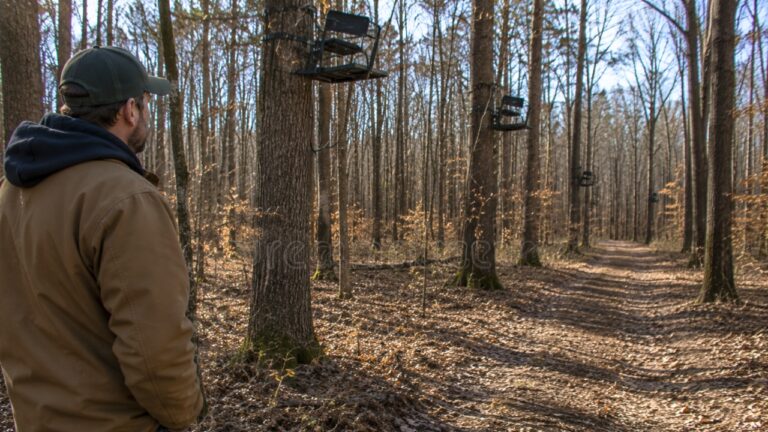
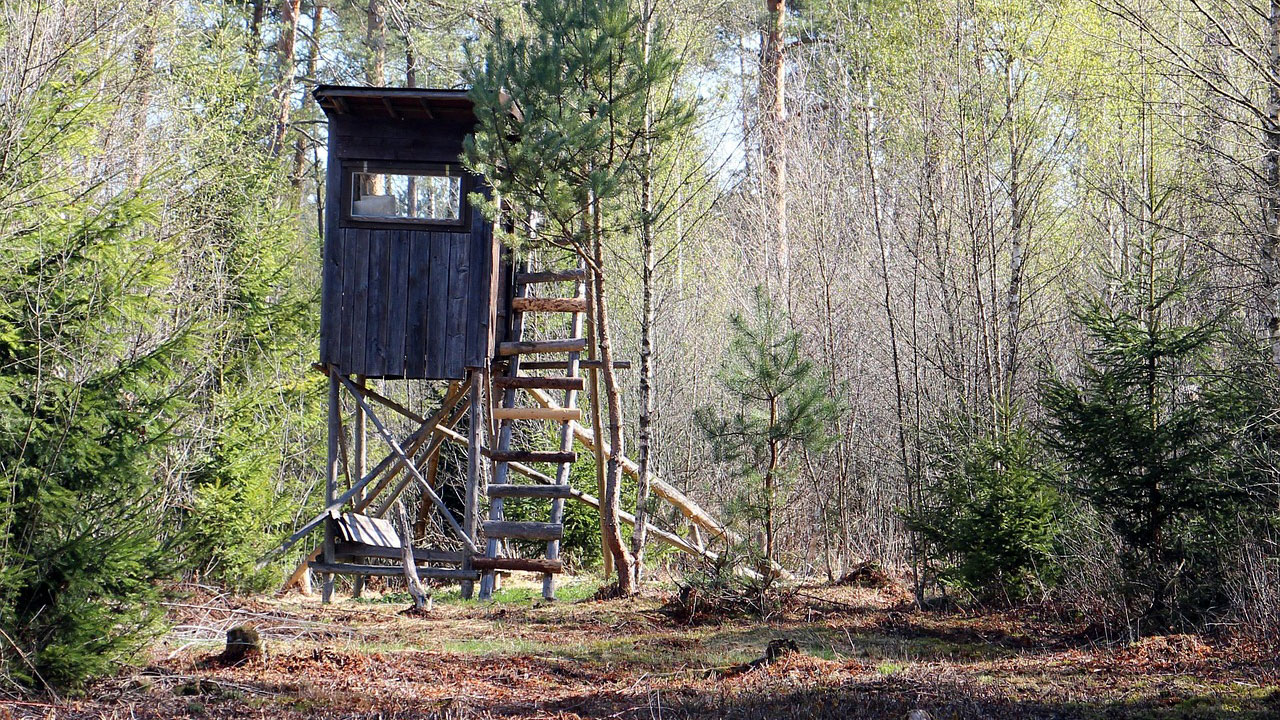
In a Reddit post, the landowner said his neighbors had stands set slightly back from the property line, but the shooting lanes faced directly into his property. He said the only clear lanes appeared to be toward his land, and that is what worried him most heading into rifle season.
That is a different concern than ordinary neighbor irritation.
A stand near a boundary can be poor etiquette, but a stand facing into someone else’s land raises bigger questions. Where are they expecting deer to be? Where are they expecting their arrows or bullets to go? If the only opening points across the line, is the neighbor actually hunting his own property, or waiting for game on land he has no right to shoot onto?
During bow season, the landowner sounded less worried about the deer and more annoyed by the principle. But rifle season changes the whole conversation. A bullet does not care about a property line. It does not stop because a survey map says the neighbor’s land ended 10 feet behind the stand. If someone is aiming into another person’s property without a safe backstop, the danger is real.
That was the fear at the center of his post.
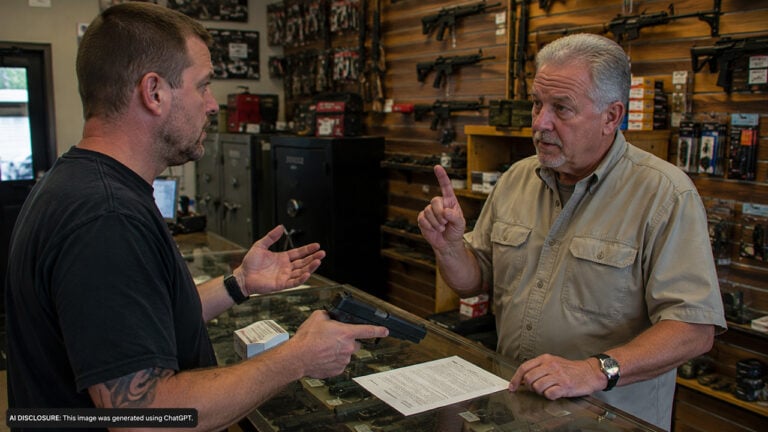
He had already tried talking to the neighbors, and it did not go well. According to the landowner, they got defensive, argued about the property lines, and told him to get a survey if he thought they were shooting onto his land. He said he had been quoted $8,000 for a survey line, which made the whole thing even more frustrating.
That kind of answer can feel like a dare.
Instead of working through the concern like neighbors, they pushed the cost and proof back onto him. And this was not the first problem. The landowner said that years earlier, the same neighbors had set up stands directly on his property and refused to take them down. So he did it himself.
That context matters. If this had been one awkward stand near a fuzzy boundary, maybe it could have been handled with a calm conversation. But from his side, this was part of a bigger pattern: neighbors who believed that because their family had hunted the area before, they were entitled to keep doing it.
That is where land disputes get ugly.
Old habits do not create current permission. A neighbor’s grandfather hunting a place years ago does not give the next generation a forever pass to set stands wherever they want. Land changes hands. Boundaries matter. Permission matters. And “we’ve always done it this way” is not a defense when someone else owns the ground now.
The missing survey stake made the landowner even more suspicious. He later added that the property still had three of the original survey stakes, but the one closest to one of the stands was missing. He did not outright prove the neighbors did anything to it, but he said it gave context for the kind of situation he felt he was dealing with.
That is the sort of detail that makes a person stop thinking of the issue as a misunderstanding.
Once trust is gone, every stand, lane, and missing marker looks intentional. Every shot during rifle season carries more weight. Every deer that runs across the line becomes a potential argument. The landowner is no longer just watching his woods. He is watching the people next door.
Commenters offered a lot of ideas, but most came back to the same point: the boundary had to be documented somehow. A map app like OnX could help get close, but it would not replace a real survey if things went legal. Cameras along the property line could help show whether the neighbors were crossing over, shooting into the land, or retrieving deer without permission. Posting no-trespassing signs along the line could also make the landowner’s position clear.
Some suggested putting brush piles, hinge-cut trees, or even a visible blind in front of their shooting lanes from his side of the property. That is petty enough to make a person grin, but it also speaks to how stuck the landowner felt. If the neighbors would not move the stands and a survey cost thousands, he was looking for any legal way to make shooting into his property harder.
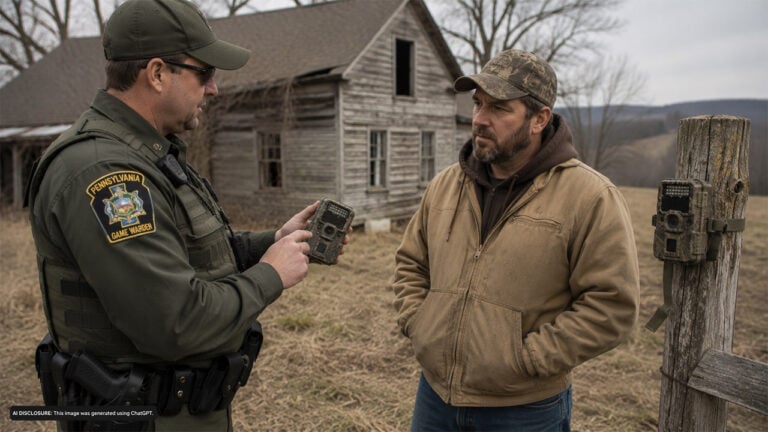
The cleaner advice was to call the game warden.
If the neighbors were harvesting deer off his land or firing into it, that could become more than bad manners. And if they crossed over to retrieve animals without permission, that could be trespass depending on the state. A game warden would know what actually applied in that area and what kind of evidence the landowner needed.
The whole situation shows why property-line stands create so much bad blood. Even if a hunter swears he is only shooting his side, the setup can still send the wrong message. When the shooting lanes face the neighbor’s property, the neighbor has every reason to ask what exactly is supposed to happen when a deer steps out over there.
The landowner was not demanding that nobody hunt nearby. He was asking a fair question: if your stand is on your land, why does it look like your shot is aimed at mine?
Commenters mostly agreed that the setup looked bad, but they also warned that proving it would be the hard part.
Several people said they had never heard of a rule that automatically bans a stand from facing a neighbor’s property, but many agreed it was poor etiquette and likely meant the neighbors were planning to shoot across the line. One commenter said the landowner should block the lanes with brush piles or hinge-cut trees on his own side and consider putting up a camera or fake blind. Another said a simple conversation is usually the first step, though the landowner replied that they had already tried and the neighbors got defensive.
A lot of advice centered on surveys and proof. Commenters said map apps could help approximate the line, but if the dispute became serious, an actual survey would be the strongest evidence. Others suggested finding existing corner pins with legal descriptions and a metal detector if the markers were still there. =
Several commenters told him to call the game warden and document everything. They recommended cameras facing the stands and shooting lanes, including visible cameras as a deterrent and hidden cellular cameras watching the visible ones in case the neighbors tried to tamper with them.
The main message was practical: do not let the neighbors define the boundary through attitude. Mark the line, post it, record what happens, and get a warden involved if they shoot, retrieve game, or cross onto the property.