Photo credit: Brett_Hondow/Youtube
The gun owner had been around firearms before.
That is what makes the story hit a little harder. He was not describing himself as someone who had never touched a gun, never learned the basics, or had no idea what he was doing. He said he was raised around firearms, had been taught safe handling, and already owned guns he used regularly.
Then he brought home his first carry pistol.
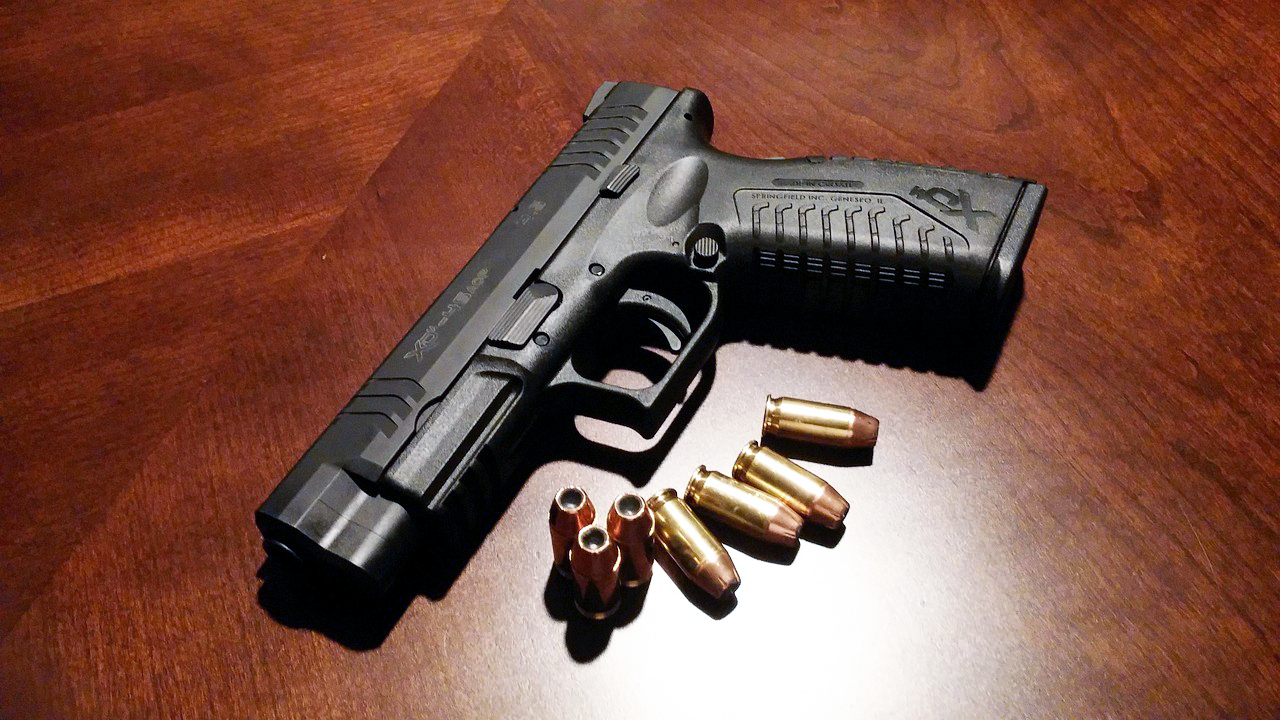
In a Reddit thread, people were talking about accidental, negligent, and malfunction-related discharges when one commenter shared what happened the same day he brought home his first carry gun. He had bought a Smith & Wesson M&P 40 1.0 from a relative and was sitting at the kitchen table getting used to it.
That is where a lot of people get comfortable too fast.
A new gun is interesting. You want to feel the grip, work the slide, take it apart, put it back together, check the magazines, try the backstraps, and understand how it works. That part is normal. The problem is that he had loaded magazines nearby on the same table.
That is where the first warning sign was sitting in plain sight.
He said he was fiddling with the pistol, disassembling it, reassembling it, and changing the backstraps. Everything probably felt controlled because he was at home, seated, and not rushing around a range or parking lot. But home is exactly where a lot of negligent discharges happen because the environment feels safe even when the handling is not.
After he finished messing with it, he put the gun back in its case. He had three magazines. The case had cutouts for two, and one magazine stored in the gun. Then, as he was getting up, his wife called on her way home from work.
That phone call changed the rhythm.
He sat back down, started talking, and began fiddling with the gun again while distracted. That is the point in the story where every experienced gun owner already knows the danger. A firearm, loaded magazines, a takedown process, and a phone conversation do not belong together.
He tried to take the pistol apart again.
This time, there was a loaded magazine in it.
He locked the slide back, flipped the takedown lever, sent the slide forward, pointed the gun down and toward the wall, and pulled the trigger. The gun fired.
That one shot probably changed the entire room.
A negligent discharge indoors is not like a range shot. It is violent, shocking, and wrong in every way. The sound hits the walls. Your ears ring. Your body spikes with adrenaline. Then comes the awful quiet afterward, where your brain catches up and starts asking the only question that matters: where did the round go?
In this case, no one was hurt.
The commenter said the round went into the wall at an angle and was likely caught by the third stud it hit. He never found an exit hole. That is lucky in a way that should make a person feel sick. A few inches of angle, a different wall, another person in the wrong spot, or a thinner barrier could have turned the story into something much worse.
He knew that.
He said the consequences were minimal, but the lesson was not. The incident forced him to regain the respect for firearms that he said had been drowned out by youthful cockiness. That line is important because it gets at the real failure. He knew the rules. He had been taught the rules. He had handled guns before. But familiarity had made him casual.
That is where negligent discharges live.
They do not always happen because someone is clueless. Sometimes they happen because someone knows just enough to get comfortable, then starts multitasking. The gun becomes an object to fiddle with instead of a loaded tool that needs full attention. The process becomes familiar enough that the person stops treating each step like it matters.
Then one step gets skipped.
The loaded magazine should not have been on the table while he was taking the gun apart. The phone call should have stopped the handling completely. The gun should have been checked again after he picked it back up. The trigger should not have been pressed until he had confirmed the chamber and magazine well. The muzzle direction helped prevent injury, but it should never have gotten that far.
That is the hard thing about a story like this. More than one safety layer failed, but one layer still saved him from worse consequences: the gun was pointed down and toward the wall, not at himself, his wife, or anyone else.
The wall took the lesson.
A lot of gun owners have a quiet fear of the same thing happening to them, which is why stories like this get attention. Nobody wants to admit they could make that mistake. But the truth is, distraction is powerful. Fatigue is powerful. New-gun excitement is powerful. A phone conversation is enough to split attention at the exact wrong time.
The fix is simple, but it has to be strict.
No live ammo on the table during disassembly or dry practice. No handling while on the phone. No “I already checked it” when the gun leaves your hand and comes back. No taking down a pistol without going through the clearing process from the beginning. And if your mind is anywhere else, the gun stays in the case.
The commenter ended his story with the basics: remember the four rules and avoid multitasking.
That may sound plain, but after a round goes into a wall on the day you bring home your first carry pistol, plain is exactly what matters.
Commenters treated the story like a serious reminder that experience does not make anyone immune to sloppy handling.
Several people in the thread pushed back on calling these moments “accidental.” Their point was that most guns do not simply fire on their own. If the trigger is pressed after a bad clearing process, that is negligent, and using the stronger word keeps responsibility where it belongs.
Others focused on multitasking. The phone call was a major part of the mistake because it split his attention while he was handling a firearm. A lot of commenters said guns should not be handled casually while talking, tired, distracted, or doing anything else.
Several people shared their own near-misses or negligent discharges, and the pattern was familiar: a loaded magazine nearby, a bad clearing process, dry-fire after reloading, or assuming the chamber was empty because the magazine was out. The details changed, but the lesson stayed the same.
The practical advice was simple: remove ammunition from the work area, check the chamber and magazine well every time, stop handling guns when distracted, and never let familiarity replace the basic safety routine. A wall can be patched. A bad habit has to be broken.