Photo credit: AI-generated image created using ChatGPT. Illustrative only.
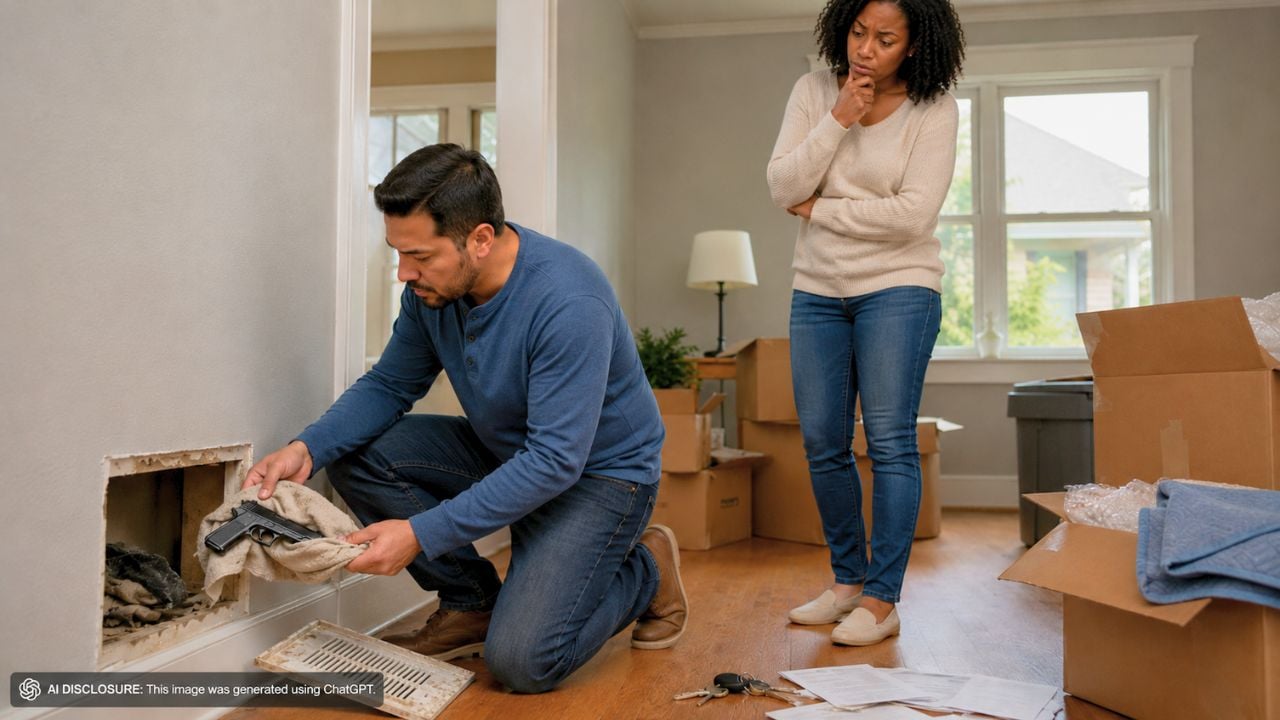
Moving into a new place usually means chasing down the little stuff the last owner forgot—spare paint cans, a random key, maybe a few old screws in the garage. But in one case shared in the original post, a new homeowner’s “left behind” item was a whole different category: a gun.
The question was simple and practical: a brother bought a house, later discovered the previous homeowner had left a firearm behind, and the family wanted to know if that meant the gun now belonged to the brother—or if keeping it could land him in trouble. When the paperwork is signed and the moving truck is gone, it’s easy to assume anything still inside is yours. Firearms don’t always work like a forgotten ladder.
Finding a gun in a new house changes the whole tone
The core of the situation was straightforward: a firearm was left inside the home after the sale. It wasn’t something handed over in the open as part of the deal; it was apparently discovered afterward. And that’s where the stress kicks in, especially for folks who grew up around guns and know how quickly “no big deal” can become “big problem” depending on the state, the gun, and who it’s registered to—if registration is even a thing where you live.
The post also framed it as a “loaded pistol” in the headline angle, which is a serious safety concern all by itself. A loaded handgun tucked away in a drawer, closet, attic access, or behind something in a cabinet is the kind of surprise that can get someone hurt—especially during the chaos of moving, when kids, friends, and contractors are in and out.
“Is it his now?” sounds simple, but ownership isn’t always that clean
The big question—whether the brother automatically owned the gun because it was left in the house—comes up more than you’d think. In normal property situations, leftover items can be treated as abandoned property or part of what conveys with the home, depending on the contract and state law. But a firearm isn’t just another item of personal property when it comes to legal risk and transfer rules.
Even if the gun could be considered “abandoned” in a basic sense, that doesn’t automatically make the transfer clean under firearm laws. Some states have requirements around transfers, background checks, permits, waiting periods, or involvement of an FFL dealer. And if the new homeowner isn’t legally allowed to possess a firearm for any reason, “it was left here” doesn’t protect him.
The immediate practical move is about safety and control, not possession
When a gun shows up unexpectedly—especially if it’s loaded—the first priority is safe handling and preventing access. That means treating it as if it’s ready to fire, keeping it pointed in a safe direction, and securing it so nobody else stumbles into it. In a real move-in scenario, that could mean kids running room to room, buddies helping carry boxes, or a cleaner working while you’re not even home.
After it’s safe and secured, the next step is figuring out what it is and what situation you’re actually dealing with. Is it a common handgun? Is it something regulated more tightly in your state? Is the new homeowner even a gun owner? Those details matter because the “right” answer ranges from “contact the seller and arrange pickup” to “have a dealer handle the transfer” to “get law enforcement involved,” depending on the facts on the ground.
Why this can get messy fast: transfer rules and unwanted liability
In the hunting and gun-owning world, most folks are used to buying and selling firearms the right way. But this scenario isn’t a normal sale, and that’s what makes people nervous. If the handgun is tied to a crime, reported stolen, or simply belongs to someone else who can prove it, the new homeowner doesn’t want to be the guy who “found it and kept it” with no paper trail.
There’s also the question of intent. A forgotten firearm could be a genuine mistake—people stash things in odd spots and later can’t remember where they put them. Or it could be a deliberate dump, where someone didn’t want to move it through normal channels. The new homeowner can’t know that just by looking at it, and guessing wrong is how you inherit a headache you didn’t ask for.
What people tend to focus on in situations like this
Even with the short source material, the way the question was phrased tells you what’s front-of-mind for most responsible homeowners: “Is it his now?” isn’t about scoring a free pistol—it’s about not stepping into a legal bear trap. Outdoorsmen tend to be pretty black-and-white on gun responsibility, and a surprise gun in a newly purchased home is the opposite of clean and clear.
When folks talk through scenarios like this, they usually circle the same points: don’t carry it around like it’s yours until you know the rules, don’t sell it, and don’t “just toss it in the safe” and forget it existed. Instead, document what you found, keep it secured, and take the path that leaves the cleanest record—whether that’s contacting the seller, going through an FFL if needed, or getting guidance from someone who actually knows your state’s process.
A grounded way to think about it if it happens to you
If you buy rural property or an older home, surprises come with the territory. Hidden compartments, attic caches, old ammo cans, and Grandpa’s forgotten gear aren’t unheard of. But firearms are in their own lane. Treat the discovery like a safety issue first and a property question second.
The safest mindset is this: until you’ve confirmed how your state handles found firearms and transfers, assume it’s not “yours” in the practical sense. That doesn’t mean you’re in trouble for finding it in a house you bought. It means you should handle it like a responsible gun owner would—secure it, avoid unnecessary handling, and take steps that keep you on the right side of the law and common sense.
A house purchase should come with keys and a clean start, not a legal guessing game. But if a previous owner leaves a gun behind, the smartest move is to slow down, keep everyone safe, and make sure the way you handle it won’t cause bigger problems than the firearm itself.