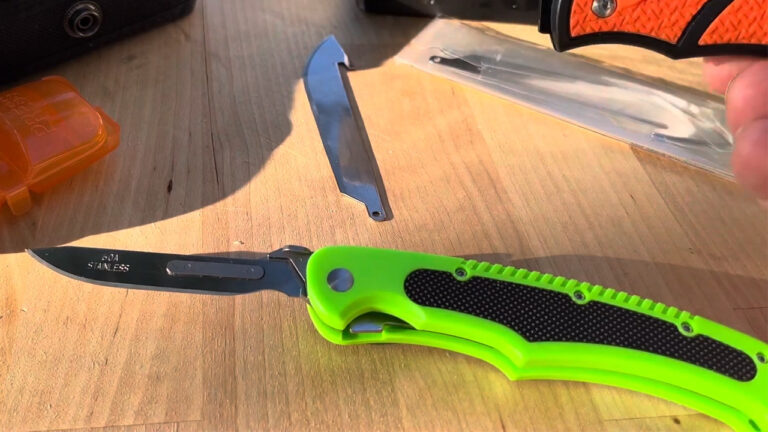
Photo credit: Edgeworks Knife & Supply Co
Knife law is shifting quickly, and if you carry a blade for work, sport, or self‑defense, you cannot afford to treat last year’s rules as current reality. A wave of state reforms, paired with a few new restrictions, is redrawing where you can buy, own, and carry everything from automatic knives to machetes. If you want to know which states are most likely to move next, you need to understand the pattern that is already on the map.
Across the country, lawmakers are testing very different answers to the same question: how to balance public safety with the everyday tools you rely on. Some states are tearing out old switchblade bans, others are tightening youth access, and a parallel push in Congress aims to protect you when you cross state lines. The result is a patchwork that rewards anyone who tracks the details and punishes anyone who assumes the law is the same everywhere.
From fringe issue to fast‑moving front: why knife bills are suddenly everywhere
You are watching knife policy move from a niche concern to a recurring feature of state legislative calendars. What used to be a quiet corner of weapons law is now a place where governors sign high‑profile repeal bills, advocacy groups tout “Year End Review” victories, and manufacturers worry about liability exposure. The shift is not accidental, it reflects years of organizing by groups that treat knife ownership as a core civil liberty rather than a hobbyist’s complaint.
One of the clearest signals of that maturation is the detailed tracking of state reforms in recurring Legislative Updates that now sit alongside appeals, court decisions, and even a Dec “2025 Year in Review & Last Chance for Tax Deductible Donation This Year” pitch to supporters. When an organization can point to multiple statutory changes in a single season and fold them into a polished Dec recap, you are no longer looking at a fringe fight. You are looking at a policy front that is organized, funded, and ready to push the next round of bills as soon as sessions gavel in.
Vermont’s automatic knife pivot and what it signals for other legislatures
If you want a preview of where other states might head, start in Vermont. Earlier this year, Vermont Governor Phil Scott signed a miscellaneous judiciary bill that did more than clean up technical language, it struck the state’s long‑standing restrictions on automatic knives. With that signature, automatic knives became legal to carry across Vermont, regardless of blade length, putting the Green Mountain State at the leading edge of liberalized carry rules.
That statutory change did not appear in a vacuum. It followed a focused campaign to secure a Vermont Switchblade Ban Repeal Passed entry in the same Legislative Updates that now catalog wins and pending appeals. Industry advocates highlighted how the new law lets you carry an automatic knife anywhere in Vermont, while national trade groups stressed that Vermont Governor Phil Scott had effectively aligned his state with a modern view of automatic knives as tools rather than contraband, as detailed when Vermont drops automatic knife restrictions. When one small, rural state can move this decisively, it gives lawmakers elsewhere a concrete model to copy.
Delaware’s repeal and the quiet momentum behind switchblade reform
Vermont is not alone. Delaware has already shown that a state with a very different political profile can still unwind old prohibitions on automatic knives. Lawmakers there approved a package that combined a Delaware Switchblade Ban Repeal with broader Knife Law Reform Signed, signaling that even historically cautious jurisdictions are willing to revisit statutes that treat switchblades as uniquely dangerous.
For you, the key takeaway is that these reforms are not isolated one‑offs, they are part of a pattern that advocacy groups now highlight in their Legislative Updates August entries and year‑end recaps. When a state like Delaware can move from blanket bans to a more nuanced framework in a single bill, it sends a message to neighboring legislatures that the political risk of repeal is lower than it once seemed. That quiet momentum is exactly what makes other states, especially those with aging switchblade statutes still on the books, more likely to take up similar bills in their next sessions.
Tennessee’s liability shield and the rise of manufacturer‑focused bills
Not every knife bill is about what you can carry in your pocket. In Tennessee, lawmakers have turned their attention to who can be sued when a knife is misused. Governor Bill Lee signed SB1360, a measure that extends existing liability protections for firearms manufacturers to cover knives, saps, and other defensive tools. For you, that means knife manufacturers, sellers, and distributors in Tennessee now enjoy a shield from lawsuits that try to blame them for criminal misuse of their products.
Advocates describe this as the third major win in Tennessee, following earlier victories on local preemption and the removal of both a switchblade ban and a 4‑inch carry limit. In their telling, the new law is part of a broader push VIA KNIFE LAW PREEMPTION to normalize knives alongside firearms in state liability codes, a trend you can see in the celebratory language around Knife Rights Tennessee. Because this kind of bill does not directly loosen carry rules, it can be an easier political lift, which makes similar liability‑focused proposals a strong candidate to surface in other legislatures that are not yet ready to touch bans or blade‑length limits.
New York’s machete bill and the counter‑trend on youth access
While some states peel back restrictions, others are tightening specific corners of the market, especially where minors are involved. In New York, Assembly Bill 2025‑A1169 is ACTIVE and framed as a youth safety measure rather than a broad weapons crackdown. The bill’s Summary Prohibits the sale or promotional distribution of machetes to minors, defining a machete as a large, heavy knife used for cutting brush or vegetation, and would bar retailers from handing them out as marketing swag to anyone under eighteen.
If you sell outdoor tools or run a sporting goods shop, a law like this would change how you handle a common product category without touching adult buyers at all. It also shows how lawmakers can respond to high‑profile incidents involving large blades by targeting specific age groups instead of rewriting general weapons codes. The precise definition of machete in New York’s A1169 is a reminder that even narrow bills can have wide practical effects if your business or hobby depends on selling or gifting those tools to younger users.
North Carolina, local patchworks, and the preemption push
In states that have not yet modernized their knife codes, you are often dealing with a confusing mix of state and local rules. North Carolina is a prime example. The state offers no knife‑law pre‑emption, which means cities can layer their own restrictions on top of statewide bans. Charlotte, for instance, echoes the state’s concealment ban, creating a situation where you can be legal in one county and in violation a few miles down the road.
That kind of patchwork is exactly what fuels calls for preemption bills that would wipe out local ordinances and replace them with a single statewide standard. It is also why national guides now flag that, as of May 2025, a key reform proposal in North Carolina is still winding through committee, leaving you to navigate a maze of overlapping rules in the meantime, as outlined in analyses of North Carolina and Charlotte. States with similar local‑control traditions are likely to see the same fight, with preemption advocates arguing that only a uniform code can give ordinary knife owners fair notice of what is legal.
National trade groups and the state‑by‑state chessboard
Behind almost every one of these bills, you will find national organizations coordinating testimony, drafting model language, and nudging lawmakers toward specific fixes. Trade groups that represent manufacturers and retailers emphasize that they are not working alone, they thank other organizations that help with letters, testimony, and contacts, and they stress that it does take a team effort to move a knife bill from filing to the governor’s desk. If you are a shop owner or maker, those networks are often your best early warning system that a bill affecting your inventory is about to drop.
One of the most practical tools they offer is a running tracker that lets you follow current knife legislation in states like Minnesota, where proposals can affect how you buy or possess products that were previously uncontroversial. By checking those updates, you can see when a bill in Minnesota might change whether you can buy or possess certain knives, and you can decide whether to weigh in before it is too late, as highlighted in the call to follow current knife legislation. The more those trackers fill with active files, the clearer it becomes which states are ripest for the next wave of reforms or restrictions.
Interstate travel, the Knife Owners’ Protection Act, and why Congress still matters
Even if your home state has modernized its laws, you still face a major risk every time you cross a border with a knife in your luggage or glove box. Varying laws from state to state mean that a tool that is perfectly legal where you live can become a problem the moment you enter a jurisdiction with stricter rules. That is why national advocates have pushed for a federal fix that would protect law‑abiding knife owners traveling between states, as long as they store and transport their blades properly according to the law.
The flagship proposal on that front is the Knife Owners Protection Act, a bill that has been filed in both the Senate and the House and prominently featured in a Celebrating a Sharper Future Year End Review. Supporters argue that it would create a safe harbor similar to what firearm owners already enjoy, insulating you from arrest or prosecution while you are simply passing through a state with stricter knife rules. Until Congress acts, however, you remain at the mercy of the Issue of Varying laws from state to state, a problem underscored in calls to address the Issue Varying landscape. That federal‑state tension is one reason national groups will keep Washington on their agenda even as they rack up statehouse wins.
Grassroots pressure and the states most likely to move next
If you are trying to predict which states will be next to rewrite their knife laws, you should follow the grassroots infrastructure as closely as you follow bill numbers. Knife Rights describes itself as America’s grassroots knife owners’ organization, leading the fight to Rewrite Knife Law in America, and it points to a track record of repealing knife bans in dozens of states and cities since 2010. When that kind of group starts targeting a jurisdiction with action alerts and model bills, it is a strong sign that lawmakers there are at least open to a conversation.
On the federal side, the same network is already backing SB 5534, a proposal that would repeal restrictions on automatically opening knives (switchblades), while at the state level it continues to push preemption, repeal, and liability bills that mirror recent wins in Vermont, Delaware, and Tennessee. If you see a state with aging switchblade statutes, no preemption, and active local ordinances, and you also see fresh campaigns from Knife Rights America Rewrite Knife Law, you can safely assume it is on the short list for the next round of reforms. For you as an owner, maker, or retailer, staying plugged into that grassroots map is the most reliable way to see the next knife bill coming before it lands on a committee agenda.
Like The Avid Outdoorsman’s content? Be sure to follow us.
Here’s more from us: