Photo credit: Duke's Sport Shop
Duty-ready is a look as much as it is a job description. Full-size frame. Light rail. Optics cut. Big-name pedigree. On the counter, a pistol can feel like it’s built for hard use.
But tight groups don’t come from vibes. They come from a barrel that locks up the same way every time, sights that are regulated, a trigger you can press straight back, and a setup that actually fits your hands. Some pistols are perfectly reliable and still frustratingly “average” on target—especially when you start pushing speed, distance, or smaller scoring zones.
If you’ve ever walked off the line thinking, “This thing should shoot better than that,” you’re not alone. These are duty-looking pistols that can leave you chasing consistency.
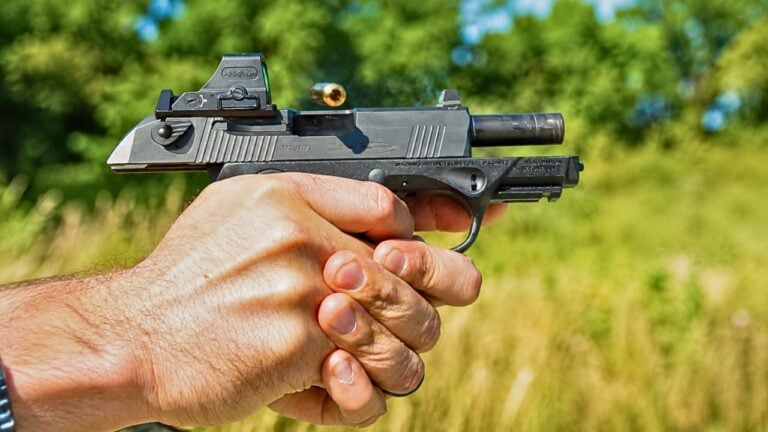
Beretta APX A1 Full Size

The APX A1 is built like a duty pistol should be: aggressive slide serrations, a real rail, and a size that’s meant to shoot easy. It also tends to run, which makes you trust it quickly.
Where some shooters get annoyed is the feel of the trigger and the way the gun returns in recoil. The break can feel a little “mushy” compared to what people expect from a service pistol, and that can pull shots if you’re trying to press quickly without disturbing the sights. The grip shape is secure, but if it doesn’t fit your hand, you’ll fight consistent placement and end up chasing a wandering group. It’s not a bad pistol—more like a pistol that rewards careful setup and repetition, not quick confidence.
FN 509 Tactical

The 509 Tactical sells itself as a ready-to-work package: threaded barrel, optics capability, suppressor-height sights, and a strong-duty vibe. It’s the kind of gun people buy because they want “serious” without a bunch of mods.
The accuracy complaint you’ll hear isn’t always about the barrel—it’s about the trigger and how it makes you shoot. Many 509s have a heavier, less crisp break than people like, and that can turn a tight group into a fist-sized cluster when you’re shooting at speed. The grip texture is excellent, but the pistol can feel “blocky” in some hands, which affects how consistently you index the gun. If you’re disciplined, you can shoot it well. If you’re not, it’ll make you blame the sights, the ammo, or the dot when the real issue is the interface.
Springfield Armory XD-M Elite 4.5″ OSP

The XD-M Elite looks like it’s built for duty work: full-size capacity, optics-ready slide, and controls that feel familiar to most shooters. On the rack, it seems like it should be a tack driver.
In practice, some shooters struggle to keep groups tight because the trigger feel and grip geometry don’t always encourage a straight, clean press. The gun can sit a little differently in the hand than a Glock-style frame, and that changes how your support hand drives the gun back to the target. If your grip pressure isn’t consistent, you’ll see it on paper fast. The other factor is that some XD-Ms are more ammo-sensitive in group size than you’d expect—certain loads shoot noticeably better than others. It’s a pistol that can shoot well, but it can also punish inconsistency.
CZ P-10 F

The P-10 F has a reputation for being a “shooter’s striker gun,” and it absolutely looks duty-ready with its full-size proportions, rail, and no-nonsense controls. It feels like it should make easy work of B-8s.
The surprise is that some shooters can’t make it group the way they want unless their grip and trigger press are on point. The trigger can be good, but it also has a distinct wall and break that not everyone times well under speed. The aggressive grip texture is great—until it encourages you to overgrip and steer the gun. That shows up as low-left (or low-right) patterns that look like a sight problem. The P-10 F can be very accurate mechanically. The issue is that it can be less forgiving of small input errors than people expect from a duty-size 9mm.
Ruger American Pistol

The Ruger American Pistol has all the duty cues: full-size frame, rail, and a robust slide profile that looks built for service. It’s also priced like a working gun, which makes it appealing.
Where it can disappoint is the overall shootability that leads to tight groups. The trigger often feels heavier and less refined than competing striker pistols, and that can make you drag shots when you’re pressing faster. The grip shape works for many, but for others it never feels “locked,” and that turns into inconsistent sight return. It’s not that the pistol can’t hit—it’s that it’s harder to shoot tiny groups with it compared to more polished duty pistols. If you’re doing practical drills inside 10 yards, you may never notice. If you’re trying to stack rounds at 25, it can feel like work.
Smith & Wesson M&P9 M2.0 (Full Size)

The M&P9 M2.0 looks and feels duty-ready in every sense: great ergonomics, proven reliability, and a grip that lets you hang on during fast strings. It’s one of the most common “serious use” pistols for a reason.
But groups can open up for some shooters because of trigger characteristics and how the gun rewards a consistent press. Even with improved triggers, the break can feel different than the cleaner wall some people prefer, and that changes how you time the shot. If you’re used to a crisp single-action or a very defined striker wall, you may throw shots until you adjust. The other issue is that the M&P grip is so comfortable that some shooters get lazy with support-hand pressure. Comfort is great, but it can hide small inconsistencies that show up downrange.
Walther PDP Full Size 4.5″

The PDP screams “duty-ready”: optics support, a real rail, deep serrations, and a modern full-size frame that points naturally. It also has a trigger that feels better than most striker guns, which makes people expect easy accuracy.
The problem is that the PDP can feel lively in recoil, and that can turn tight groups into spread-out patterns when you’re running drills fast. If the gun flips more in your hands, your sights or dot take longer to settle, and you start accepting sloppier pictures. That’s not the pistol “being inaccurate”—that’s the pistol encouraging you to shoot it like a race gun without the same recoil manners. If you slow down, it will usually print fine. If you push speed and demand small groups, you’ll need a grip that really clamps the gun and keeps the muzzle from wandering between shots.
H&K VP9

The VP9 looks like a premium duty pistol: excellent ergonomics, proven reliability, and a size that should make 25-yard work feel easier. In the hand, it’s one of the most comfortable striker guns out there.
Comfort can be the trap. The VP9 fits so many hands well that shooters sometimes mistake “feels good” for “shoots itself.” If you don’t build a consistent grip and press, your groups can be surprisingly average, especially as you speed up. The trigger is generally good, but it’s not a magic wand, and the reset feel can make some shooters slap it under stress. Another factor is sight preference—some people do better with a different front sight width or height than what comes stock. None of this makes the VP9 a bad pistol. It’s simply not automatically a tight-group machine for everyone.
Canik TP9SFx

The TP9SFx looks ready for hard use with a long slide, rail, optics capability on many variants, and a reputation for punching above its price. Plenty of people buy it expecting “cheap gun, expensive performance.”
The reality is that some Caniks shoot wonderfully, and some are more finicky in practical accuracy than fans admit. Part of it is trigger timing—because the trigger is often light and fast, it encourages you to run it hard, and that can expose grip issues quickly. The long slide also changes how the gun tracks, and if you don’t control it, you’ll see horizontal spread. The other variable is ammo. Some loads group noticeably better than others, and if you’re shooting bulk practice ammo, you might blame the gun when the load is the bigger culprit. When it’s on, it’s impressive. When it’s not, you chase the answer.
IWI Masada

The Masada looks like a clean, duty-minded striker pistol: simple controls, optics-ready options, and a shape that points naturally. It has the vibe of a no-drama service gun.
What can frustrate shooters is that the trigger and reset feel can be “serviceable” rather than sharp, and that affects how well you can call shots. If you’re trying to keep a tight group at 15–25 yards, that softer break can lead to little drifts you don’t notice until you walk up to the target. The grip is comfortable, but if it doesn’t match your hand size, you’ll see inconsistent indexing and a group that looks like it’s floating. The Masada can run reliably and still feel like it won’t stack rounds the way you hoped. It’s the difference between “works” and “shoots like a laser.”
Taurus TH9

The TH9 looks duty-ready in a traditional way: full-size frame, rail, hammer-fired controls, and a weight that suggests it should shoot smoothly. It also tempts buyers who want a service-size pistol without a service-size price.
The group problem often comes down to the trigger system. A longer, heavier double-action first shot followed by lighter single-action shots can make consistency tough if you’re not practiced. You end up with a first round that lands away from the group, then you chase it with the next few. Even in single-action, the trigger feel isn’t always clean enough to make tight groups easy. Combine that with sights that may not be as refined as higher-end duty pistols, and it’s easy to see why targets don’t look as tight as you hoped. It can absolutely be a functional pistol, but it often requires more effort to shoot “small.”
Kimber KDS9C

The KDS9C looks like a duty-capable modern 1911-style 9mm: optics-ready options, rail-equipped versions, and a premium vibe that suggests it should shoot like a match gun. People buy it expecting refined performance.
The frustration is that “premium feel” doesn’t always equal “premium grouping,” especially if you get a trigger that isn’t as clean as you expected or sights that don’t match your eyes. Some shooters also find that their grip pressure changes with a metal-framed gun, and that can steer shots without them realizing it. If you’re used to polymer duty pistols, the recoil impulse and return can feel different enough that you have to relearn your cadence. And because it costs real money, every mediocre target feels personal. The KDS9C can shoot well, but it’s not a guaranteed tight-group cheat code just because it looks like a serious pistol.
Staccato P

The Staccato P has a reputation that screams duty use: it’s carried by professionals, it’s built around a proven platform, and it feels like a high-end tool the moment you rack it. Most people assume it will shoot tiny groups with no effort.
Here’s the honest part: if you can’t keep shots together with it, the pistol often isn’t the limiting factor—you are. But the platform can still punish sloppy technique. The trigger is light and fast, and that tempts you to outrun your sights. The gun tracks flat, so you start “sending it,” and your group opens up because you’re accepting a sight picture that isn’t settled. Another issue is dot setup. A poorly mounted optic or a loose plate will make any pistol look inaccurate in a hurry. The Staccato P usually shoots extremely well, but it’s not a substitute for disciplined shooting.
Glock 17 (Gen 5)

The Glock 17 looks duty-ready because it basically defines the category. It’s reliable, common, easy to support, and built to take use. If you’re honest, it’s the baseline service pistol.
The accuracy complaint is usually about shootability, not mechanical precision. The trigger has a distinct feel that can encourage “mashing” if you’re not careful, and that turns into low hits and wider groups. The factory sights also don’t help—many shooters do better the second they swap to a better front sight and a cleaner rear notch. Grip angle and hand fit matter too. If the gun doesn’t lock into your natural point of aim, you’ll fight it and wonder why your target looks worse than it should. A Glock 17 can shoot tight groups. It simply demands clean trigger control, because it won’t cover your mistakes with a fancy trigger or soft recoil.
Like The Avid Outdoorsman’s content? Be sure to follow us.
Here’s more from us: