Photo credit: Savage Arms
“Any disaster” is a big claim, so let’s keep this honest: no gun is invincible, and “reliability” still depends on magazines, springs, ammo quality, basic lube, and the shooter not doing something dumb. But when you look at what trainers, armorers, and the more practical survival/field guides keep recommending, the same types of guns show up again and again—because they keep working when things get dirty, maintenance gets lazy, and ammo isn’t ideal.
This list is about designs with huge real-world track records, simple manual-of-arms, common parts/ammo, and fewer failure points. If you want a “grab-it-and-go” collection for rough conditions, these are the platforms that keep getting the nod.
Beretta 92FS / M9

The Beretta 92 earned its reputation the old-fashioned way: decades of institutional use where guns were carried, shot, and maintained on schedules that weren’t always ideal. The open-slide design is famous for helping avoid certain ejection issues, and the overall system is very tolerant of 9mm ammo variations. In the disaster framing, the 92’s edge is that it’s a big, smooth-running gun that tends to stay predictable over time.
It’s also easy to shoot well for a lot of people. A gun that’s easy to control is a gun you’ll actually train with, and training is part of reliability. If you want a full-size pistol that’s proven, supported, and mechanically straightforward, the 92 is still a legitimate “end of the world? fine” choice.
Marlin 336 (or similar proven lever gun)

Lever actions don’t get enough credit in “disaster” conversations because people get stuck on tactical fantasies. A lever gun like the Marlin 336 is simple, durable, and practical. It carries well, points fast, and doesn’t rely on detachable magazines that can get lost or damaged. It also excels at the kind of realistic work that shows up in messy times: defending property, taking medium game, and doing it with a platform that’s easy to understand.
The downside is you need good ammo and you need to keep it reasonably clean—like anything. But a proven lever gun is a “lifetime tool.” When everything is uncertain, lifetime tools matter.
A .308 bolt gun (Savage 110 / Ruger American / similar)

When you want “it will work even if I’m cold, tired, and half-paying-attention,” bolt actions shine. They are mechanically simple, tolerant of neglect, and they don’t care about cycling energy, gas settings, or magazine spring timing the way semi-autos can. In preparedness thinking, a bolt gun in .308 is a common recommendation because it covers hunting, defense at distance, and ammo availability better than niche calibers.
The point isn’t that it’s faster than a semi-auto. It’s that it’s predictable and easy to keep alive. In a long-term scenario, predictable guns win because you can diagnose issues quickly and keep moving.
Mossberg 500

If the 590A1 is the “hard use” badge, the Mossberg 500 is the everyman workhorse. It’s been around forever, it’s simple, it’s supported, and it tends to keep running. In survival discussions, pump guns like the 500 and 870 show up constantly as the “practical shotgun” answer because they’ll function with a wide range of shells and they’re mechanically easy to keep serviceable.
Again, the human-error warning applies: short-stroking causes problems. But if you train to run the action like you mean it, a Mossberg 500 is one of the most reliable “do a lot of jobs” guns you can own, and it won’t make you cry if it gets scratched up.
Henry AR-7 Survival Rifle
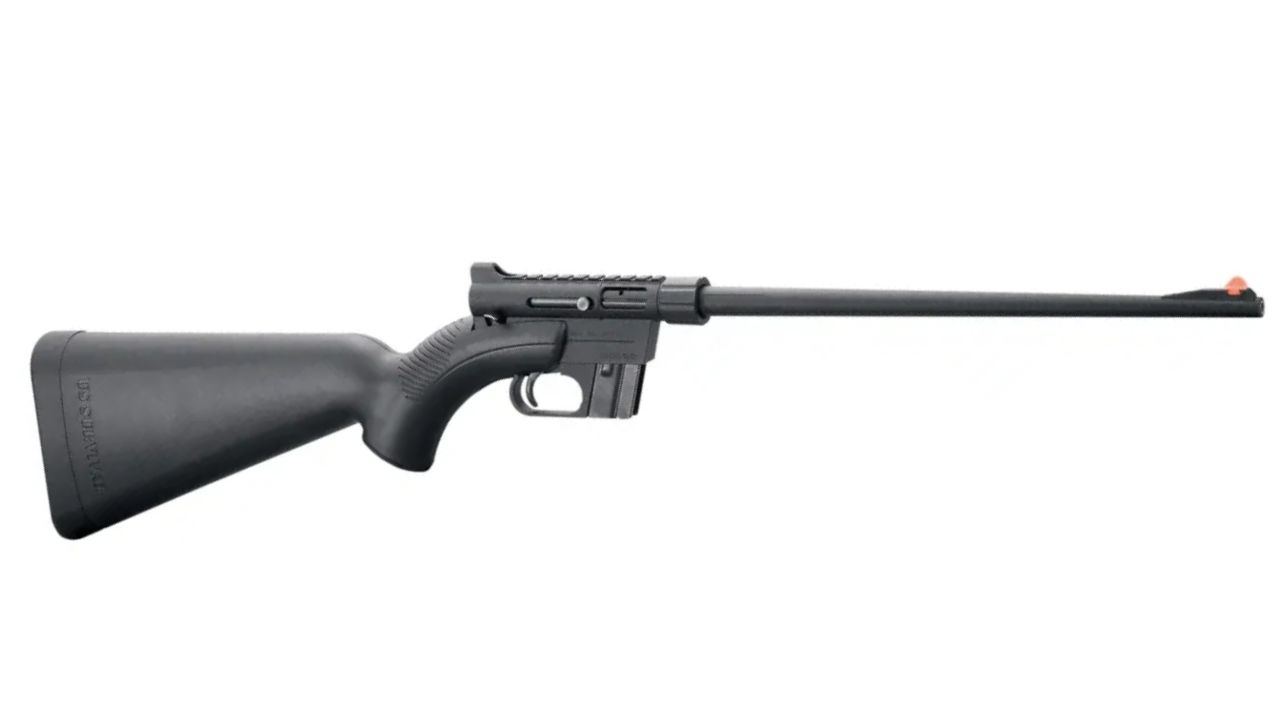
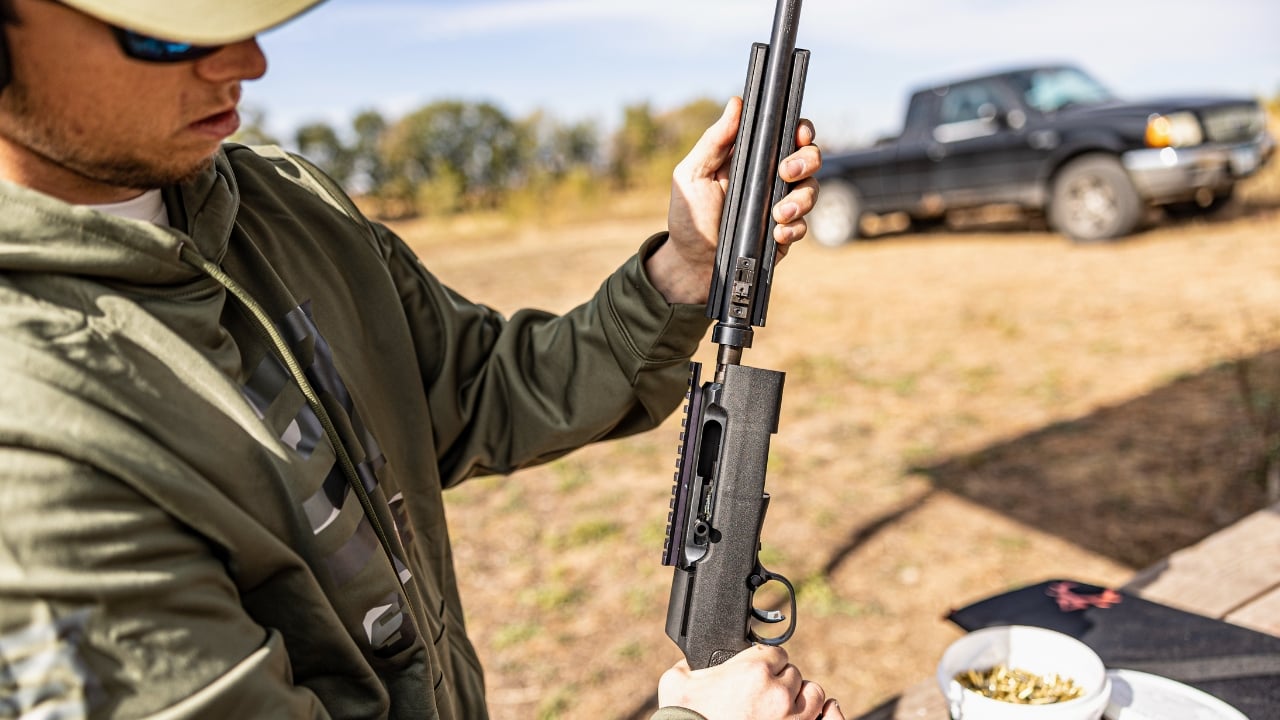
The AR-7 shows up in survival rifle lists because it’s compact, storable, and purpose-built around the “pack it away” idea. Pew Pew Tactical’s survival rifle guide, for example, lists it as the “most compact” takedown option in that category. The appeal is simple: it stores in the stock, it’s light, and it’s meant to live in a bag, boat, or vehicle.
The honest caveat: it’s a niche tool. It’s not the most rugged .22 ever made, and it’s not the easiest to shoot well compared to a 10/22. But for pure portability and “always have something,” it keeps getting recommended because it solves a different problem: having a functioning firearm when space and weight are the real constraints.
Glock 19

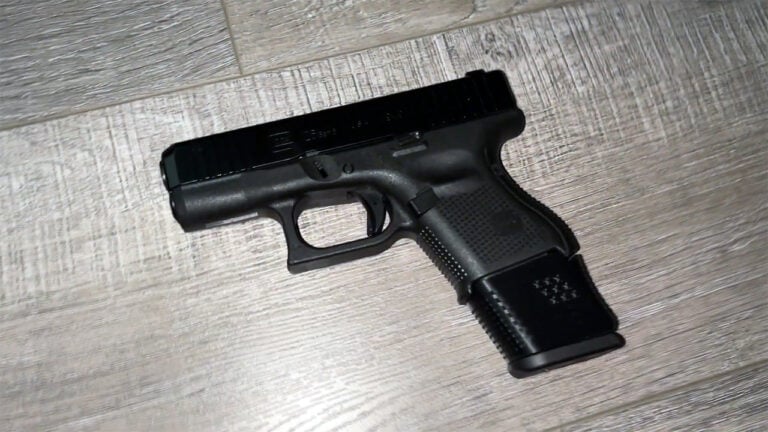
If you ask ten instructors what handgun they’d trust when everything’s uncertain, you’ll hear “Glock 19” more than you’ll hear anything else—because it’s a boring answer that keeps being right. It runs filthy, it tolerates mediocre maintenance, and it usually feeds a wide variety of 9mm without acting precious. The other big “disaster” advantage is logistics: magazines are everywhere, holsters are everywhere, spare parts are everywhere, and the gun is simple enough that you can keep it alive with minimal tools and minimal drama.
It also hits the practical size window. It’s small enough to carry and big enough to shoot. In a true “I might be moving for days” scenario, a handgun you can actually keep on you matters more than an impressive one you leave behind because it’s uncomfortable.
Ruger GP100

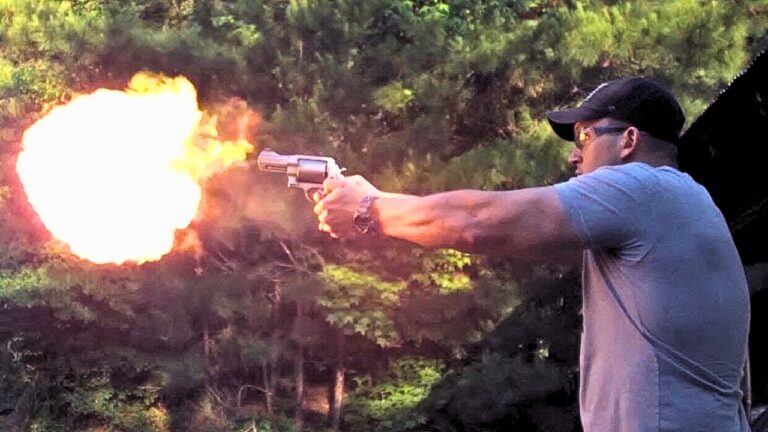
A .357 revolver is one of the most straightforward reliability plays when you’re worried about ammo weirdness, magazine failures, or a gun getting carried hard for years. The GP100 specifically shows up in “survival handgun” recommendations because it’s built like a tank and doesn’t need the same feeding/cycling conditions a semi-auto needs to stay happy. Field & Stream has flat-out called a .357 revolver hard to beat for survival use, with the GP100 singled out as one of the most rugged options.
The real reason it belongs here is flexibility. You can train on .38 Special, step up to .357 for defense, and you’re not dependent on magazine springs or perfect ammo geometry. It’s not the lightest solution, but it’s one of the least complicated under stress.
Mossberg 590A1

Pump shotguns keep showing up in disaster/survival conversations because they don’t depend on ammo pressure to cycle—you run the action, the gun runs. The 590A1 earns the “hard use” reputation because it’s built for rough handling and ugly environments, and it’s one of the models people point to when the goal is durability over refinement. You’ll see the 590/590A1 mentioned constantly in reliability debates against the 870, with a general consensus that a good example of either is tough—but the 590A1 specifically is often framed as a durability-first variant.
The caveat is user-induced malfunctions: short-stroking is real. Even pro guides note pumps “work great,” but human error can create jams if you don’t run the action aggressively every time.
If you’re willing to train that, a pump is a very hard platform to “break” in practical terms.
Remington 870 Police (or older 870 Wingmaster)

The 870 has been around forever, and the reason it still gets recommended is that it’s simple, proven, and supported everywhere. When people talk 870 reliability today, they often mean the higher-grade variants (Police, older Wingmaster-era guns) rather than bargain-era builds—because materials and QC matter. That shows up in durability discussions where folks note the 870P and 590A1 are comparable “hard use” choices, while lower-tier models are not the same animal.
In a disaster mindset, the 870’s biggest advantage is how easy it is to keep running with minimal gear. Springs, extractors, and small parts are common, and any decent gunsmith has seen a thousand of them. It’s also flexible—home defense, hunting, and deterrence—without needing specialized ammo or delicate tuning.
Ruger 10/22 Takedown

Survival guides love the 10/22 Takedown for one reason: it’s the easiest “do a lot of jobs with very little weight” rifle that regular people actually own. It’s light, parts are everywhere, magazines are everywhere, and .22LR is still the easiest cartridge to store in meaningful quantity. That’s why it lands at or near the top of multiple “survival rifle” lists, especially the takedown version for portability.
Is .22LR perfect? No. Rimfire ammo can be inconsistent. But in the real world, the 10/22’s reliability is good enough that it became the default. For small game, training, and “keep going when the goal is calories and quiet,” it’s one of the most practical rifles you can own. In a true long-term grind, practicality beats power fantasies.
AKM-pattern rifle (7.62×39)

If you wanted to design a rifle to run when it’s dirty, overgassed, under-loved, and fed whatever steel-case ammo you could scrounge, you’d end up near the AKM. Its clearances and operating system are famously forgiving. The AK isn’t a precision instrument—it’s a reliable one. In “SHTF” threads and preparedness breakdowns, the AK consistently lands in the recommended “fighting rifle” slot specifically because it’s tolerant and uncomplicated.
The “disaster survival” advantage is that it doesn’t ask much from you. You can keep it running with basic cleaning and minimal tools. It’s also a platform where “good enough” magazines and ammo still often work, which is exactly the kind of ugly reality preparedness people are planning around.
AR-15 (5.56)

ARs get called finicky mostly when people build them like race cars—over-tuned gas, lightweight everything, bargain magazines, and then they’re shocked when it hiccups. A basic AR with conservative parts and good mags is a very reliable rifle, and it shows up in the same “survival battery” recommendations as the 10/22 and AK for a reason.
The disaster advantage isn’t that it’s “more reliable” than everything else—it’s that it’s supported. Parts are standardized, magazines are common, and 5.56 is one of the easiest centerfire rifle cartridges to find in the U.S. If you break something, you can fix it. If you need to swap optics, mounts exist. If you need to keep it fed, ammo logistics are realistic. That support network is part of reliability.
Ruger Mark IV (.22 pistol)
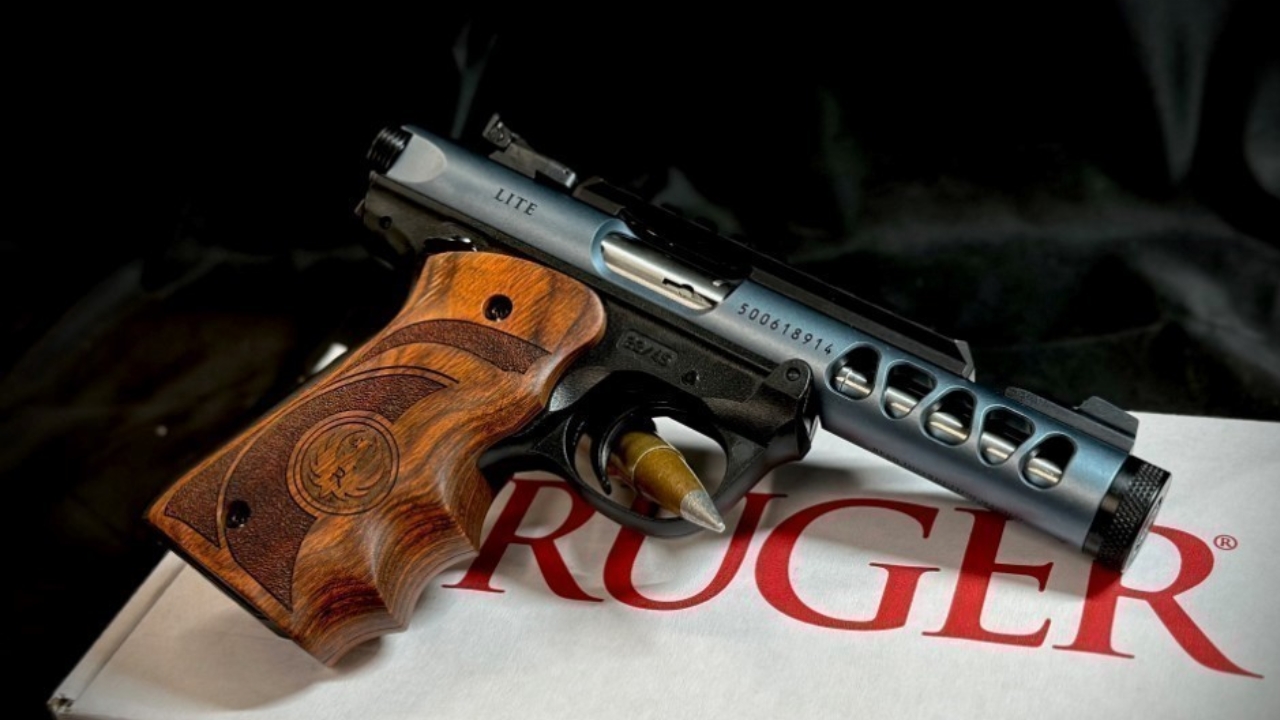
A suppressed or unsuppressed .22 pistol isn’t a “combat” fantasy gun, but it’s one of the most useful “keep moving” tools you can own. It’s cheap to practice with, easy to carry, and viable for small game and pest work when you’re not trying to announce your location with every shot. Rimfire isn’t perfect, but the Ruger Mark series has a long reputation for being less fussy than most .22 handguns, and the Mark IV’s easy takedown makes maintenance realistic in the field.
The real reason it belongs on a disaster list is training and utility. If you can shoot a .22 pistol well, you can keep skills sharp without burning precious centerfire ammo. That matters if “resupply” isn’t a guarantee. It’s not glamorous, but it’s one of the smartest tools in a hard-times lineup.
CZ 75

Steel, proven geometry, proven magazines, proven service history—there’s a reason the CZ 75 has a loyal following among people who care more about function than trends. It tends to feed well, it tends to shoot well, and it tends to keep working through high round counts. In a disaster context, that matters because you want a pistol that still runs after years of ownership without needing constant tinkering.
The CZ 75 is also one of those designs that forgives imperfect shooting. Heavier guns often do. If you’re tired, stressed, cold, and your grip isn’t perfect, a stable steel pistol can be more forgiving than a tiny, snappy micro. It’s not the lightest carry option, but for durability and shootability, it’s a strong “ride it hard” platform.
A quality .22 takedown option for small-game sustainment (category pick)

A lot of “experts say” survival talk eventually lands on the same conclusion: if you’re thinking long-term, you need a small-game solution that doesn’t burn your precious centerfire supply. That’s why survival rifle roundups keep pointing people toward .22 takedown guns and similar compact setups as part of a practical battery.
This slot isn’t about brand worship—it’s about the role. In real disasters, you’re far more likely to need quiet utility and consistent practice than you are to need movie-style firepower. A reliable .22 you can pack, maintain, and feed cheaply becomes a “daily driver” tool. That’s why it shows up so often in preparedness recommendations: it’s one of the few guns that can actually be used a lot without draining the resources you can’t replace.
Like The Avid Outdoorsman’s content? Subscribe to our newsletter so you never miss an article.
Here’s more from us: