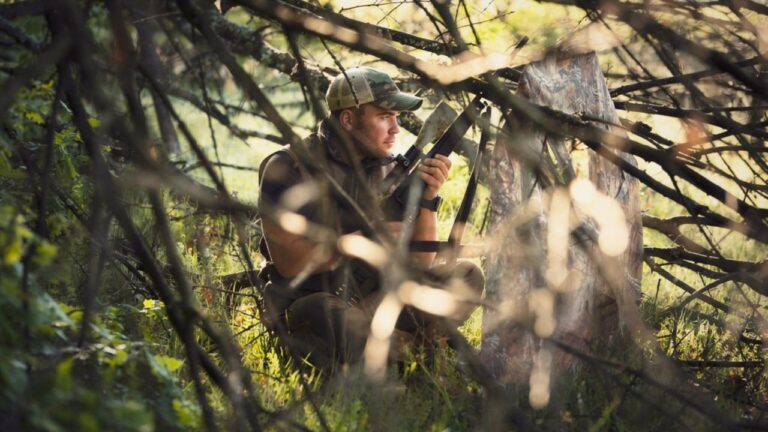
Photo credit: Browning
On public ground, the animals may be wild, but the people are remarkably predictable. Year after year, you can anticipate where pressure will stack up, how deer will react, and which overlooked pockets will quietly refill with opportunity. If you learn those recurring patterns and time them to weather and access, you can turn crowded public land into a calendar you read instead of a lottery you hope to win.
The annual rhythm of hunting pressure
Public land pressure is not random, it follows a rhythm tied to access, regulations, and human habit. You see the same surges on opening days, the same lull midweek, and the same spike when the rut or gun season hits. Experienced whitetail strategists point out that Deer can be somewhat unpredictable, but hunters are not, and that is exactly why you can build a plan around where people will cluster and how deer will slide away from that pressure.
Once you accept that hunter behavior is the most consistent variable on public land, you can start forecasting it the way a power engineer forecasts demand. In energy research, analysts note that Therefore they extend models to weekly horizons to capture recurring patterns, and you can treat your season the same way, mapping weekly waves of pressure across an area. Instead of reacting to trucks at the trailhead, you anticipate where those trucks will be, then slip into the seams and edges that pressure creates.
Where people go, and where deer stop going
On most public parcels, the first pattern you can bank on is that people gravitate to the easiest access. One veteran breakdown of pressured deer notes that Most hunters never venture over 100 yards from a road or trail, which means the first few hundred yards of cover around every parking lot get pounded. Deer respond by shifting to the path of least resistance, sliding into pockets where human traffic is lighter and more predictable.
Biologists see a similar displacement effect at landscape scale. In one study of red deer, researchers wrote that Moreover they predict that high numbers inside a protected Park will affect density in adjacent areas, echoing what local hunters and foresters already observe. On your local wildlife area, the same principle plays out at smaller scale: heavy pressure in one block pushes deer into neighboring cover, often just beyond where the average hunter is willing to walk.
Distance, access, and the “half-mile rule”
If you want a pattern you can almost set your watch by, start with distance from the road. A regional forecast for the Northeast notes that Your chances of success increase if you travel more than 1⁄2 mile from a road or parking area, a point made by deer biologist David Stainbrook with the Pennsylvania Game Commission. That half-mile is not magic, it is simply the distance at which casual pressure drops off, and deer start to feel safe moving in daylight again.
Terrain and ease of travel shape this pattern even more. Mountain hunters are blunt that Ease of access is often a direct link to hunting pressure, because if it is easy to navigate, more hunters will be there, and if it is steep, thick, or wet, fewer will bother. When you combine the half-mile rule with a willingness to cross a creek, climb a ridge, or weave through blowdowns, you are not just getting away from people, you are stepping into the predictable refuge where pressured deer stack up every season.
Weekends, key days, and the calendar you can read
Pressure does not just move across the map, it pulses across the week. Public land is hunted hardest on Saturdays and Sundays, and seasoned whitetail planners point out that public lands get hunted most on the weekends, which is why you are advised to hunt during the week to avoid other people. Another roadmap to big public bucks spells it out even more plainly in Step 6, urging you to Recognize Key Days and Conditions because Public and private ground both get hunted harder on weekends and Studies show deer respond by moving less (and further) during daylight.
Hunters who have watched this pattern for years echo the same advice. In one public discussion, a frustrated bowhunter said, “I used to hunt public property but it started to get over crowded with unethical so called hunters,” then added that the safest time to hunt public property is when first bow season comes in, before gun pressure and late-season crowds. If you treat the calendar as a pressure forecast, you can plan to be in your best spots on quieter weekdays, then shift to deeper or more remote setups when the weekend wave rolls in.
Terrain funnels, bedding, and how deer re-route
Once pressure hits, deer do not vanish, they reroute, and terrain is the script they follow. Whitetail tacticians talk about “compounding features,” explaining that Jun is a good time to study how multiple funnels in a small area multiply your odds, because every ridge, ditch, and bench that pinches movement becomes more valuable when deer are dodging people. If you learn those natural choke points in the offseason, you can predict where pressured deer will still have to travel when they abandon the obvious trails.
Bed locations are just as repeatable. One step-by-step guide urges you to Find the Beds by glassing and reading sign, then to Check the roadside for crossing tracks from your truck without blowing deer out, and to note how bucks often bed two-thirds up the hill where they can watch below and smell what is above. When pressure ramps up, those same beds become even more important, because deer will cling to terrain that lets them monitor both hunters and wind with minimal movement.
Weather, wind, and the days pressure matters less
There are windows when conditions override almost everything else, including pressure. Veteran cold-front hunters repeat the phrase “When temps and pressure meet, bucks will be on their feet,” and that simple rule explains why a sharp drop in temperature paired with rising barometric pressure can pull even wary deer into daylight. Another breakdown of seasonal movement notes that The Weather It is hard to argue against as the most direct driver of movement, especially outside the November rut.
Wind is the other constant you can never ignore. One detailed breakdown of scent control admits that But no matter what was tried, if a targeted deer came in from downwind, the hunt was over because human odor became an immediate factor. Another discussion of wind and lunar theories notes that Oct is a good reminder that wind direction, not the moon, usually decides how deer approach a setup. When you pair those realities with the observation that The most successful hunters are those who adapt tactics to conditions and always have multiple stand options for different winds, you get a clear pattern: on the right weather days, deer will move despite pressure, but only if you are set up with the wind in your favor.
Season phases: early, mid, and late pressure patterns
Pressure does not stay constant across the season, it shifts with each phase, and you can plan around those shifts. Early in the year, one public land breakdown compares timing to a quarterback, noting that When a quarterback throws a long pass, timing is everything, and the same is true when you slip into a bedding edge before the first big wave of hunters. Later, as October wears on, another analysis of the so-called lull points out that I often notice that the more I hunt an area, the more deer patterns change, and that the same thing happens on public land when more hunters pile in, which can often lead to changed travel patterns you can anticipate.
Late season brings its own predictable script. One hunter who has spent years on public ground in the Midwest wrote that After nearly a decade of hunting Midwest public land, he realized that life, work, and family obligations push most people out of the woods by December, even though seasons in states like Illinois open October 1 and run long. That attrition means food sources and thermal cover become magnets for the deer that survived gun pressure, and if you are willing to grind through the cold, you can hunt animals that are heavily educated but far less harassed than they were a month earlier.
Offseason scouting and learning from pressure
The offseason is when you turn all of these patterns into a map you can trust. Detailed public land scouting advice urges you to walk in winter and spring asking, Was that buck staging on a bench or bedding there, and was his use of that feature a response to hunting pressure on the ridge top above. When you tie old rubs, beds, and tracks to where you know people parked and walked, you start to see how deer consistently slide into the same overlooked corners once the orange army shows up.
Video breakdowns of public land strategy reinforce the same lesson. One discussion of how pressure can actually help you argues that Mar is a good time to think about the three ways public land hunting pressure makes buck locations more predictable, because you can see how deer use other hunters as a shield. Another series on pressured whitetails opens with “fun i’m Hunter Hogan. and welcome to Painting Public,” then walks through how repeated human intrusion reshapes bedding and travel. If you treat every boot track, cut branch, and spent shell as data, you can forecast how deer will respond the next time the same pressure pattern repeats.
Using other hunters as your most reliable predictor
In the end, the most reliable thing on public land is not the deer, it is you and every other hunter. One candid breakdown of excuses points out that Dec is when people start saying there are no deer left, but the reality is that blaming herd numbers will only leave you frustrated, because the animals are still there, just shifted by pressure. Another set of tactics for crowded ground notes that When it (pressured public land) comes to public land, things change on a daily and yearly basis and One spot might get hunted hard one year and be ignored the next, which means you need to track people as closely as you track deer.
That mindset extends to how you move and how often you intrude. One pressure-focused breakdown notes that If you have more time than other hunters to watch animal movement, you can get the better of them by learning when and where they push deer. Another look at reducing pressure on private ground explains that They will simply move to the path of least resistance when people overhunt a parcel, often shifting to a neighbor’s land that is quieter. On public, you can be that “neighbor” by hunting like a nonintrusive outlier, letting the crowd create pressure while you slip into the low-resistance routes deer choose in response.
Putting the patterns together
When you stack all of these insights, public land stops feeling chaotic and starts to look like a system you can read. You know that It’s true, public lands get hunted most on weekends, that opening days and gun seasons bring predictable surges, and that weekday and late-season windows are quieter. You know that deer respond by sliding beyond the first 100 yards of easy access, clustering beyond the half-mile mark, and using terrain funnels and off-the-side beds to monitor both people and wind.
Layered on top of that, you understand that weather can override even heavy pressure, that Oct winds and cold fronts can pull deer back into daylight, and that Always having multiple stand options for different conditions keeps you from educating deer yourself. You also know that The Weather It is a constant driver of movement, and that if you combine that with the human patterns you can predict every year, you turn crowded public land into a place where pressure is not your enemy but your most dependable ally.
Like The Avid Outdoorsman’s content? Be sure to follow us.
Here’s more from us: