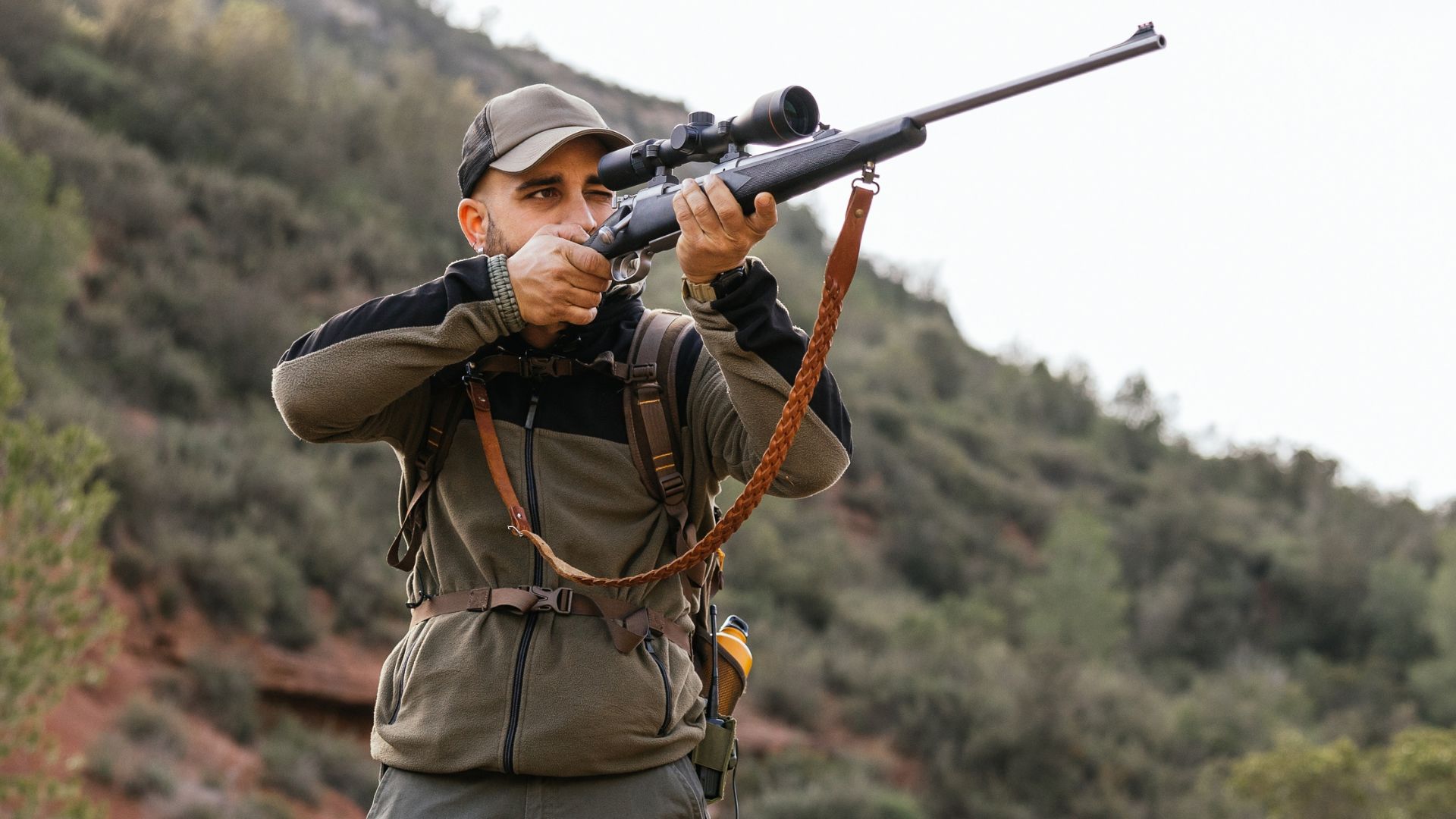
Photo credit: Jordi Mora/Shutterstock.com
Your rifle can stack bullets into a ragged hole at the range, yet the group seems to explode the moment you step into the timber. The difference is not magic or bad luck, it is the gap between a controlled benchrest environment and the messy reality of field shooting. If you want your performance in the woods to match what you see on paper, you have to understand what the bench hides, what the field exposes, and how to train so both tell the same story.
The bench is a laboratory, the woods are a stress test
On the bench you are essentially running a lab experiment. You sit still, control your breathing, and let sandbags or a rest carry most of the weight while you focus on a clean trigger press. Done correctly, the goal of benchrest technique is to remove the human element as much as possible so you can see what the rifle and load will do on their own. That is valuable, but it also means your range groups are often telling you more about mechanical potential than about how you actually shoot.
Once you leave the concrete pad, the human element comes roaring back. You are standing on uneven dirt, your heart rate is up from climbing, and you are twisting around brush to find a lane. In that setting, the same rifle that behaved like a laser on bags now rides on your muscles, joints, and nerves. As one experienced instructor put it, You need to get off the bench once the rifle is sighted in, because that is when you start learning how it moves when you move. Until you accept that the woods are a stress test of your body as much as your gear, your field results will lag behind your paper groups.
Mechanical accuracy is not your limiting factor
Most modern hunting rifles are more accurate than the people behind them, especially at typical big game distances. Experienced shooters on one long running forum point out that Most deer are wounded because of poor shot placement errors by the hunter, not because the rifle cannot hold a group. They go so far as to say that, Conservatively, the majority of misses and bad hits come from what people call deer fever, not from a barrel or action suddenly losing precision.
That distinction matters because it shifts your focus from chasing ever tighter bench groups to tightening your own consistency. One detailed breakdown of Physiological Factors in shooting accuracy notes that Visual Perception is central to how well you align sights and target, and that One of the primary contributors to good hits is how your eyes and brain process that alignment under stress. When your heart is pounding and your breathing is ragged, those human variables swamp the tiny mechanical differences you sweated over at the bench.
How the bench can hide bad habits
A solid bench setup can actually mask flaws in your technique. If your front rest has a good elevation adjustment, you can lock the rifle in place so it sits on target with almost no muscle input. Absent that feature, you end up muscling the gun or constantly fiddling with sandbags, which makes it harder to see whether your trigger press is clean or you are steering the rifle. On a perfect bench, you can get away with a sloppy grip or inconsistent shoulder pressure because the bags soak up your mistakes.
Those same habits fall apart when you are kneeling behind a stump or leaning against a tree. A detailed video on Nov benchrest mistakes shows how even small changes in how you load the rest or where the fore-end contacts the bags can shift point of impact, yet those shifts are often hidden inside a tight group at 100 yards. Another breakdown of common errors notes that Jul shooters frequently live with a misaligned optic because the bench still produces acceptable groups. Taking the time to mount the scope correctly and to build a repeatable position is what carries over into the woods, not just the number circled on your last target.
Field positions change everything
Once you leave the bench, your body becomes the primary support system. A comprehensive rundown of rifle positions explains that the prone position offers the most body support and stability, and that The prone position offers the steadiest platform and is usually the most accurate for long distance shots. Yet in real cover you often cannot go flat because grass, brush, or terrain block your view, so you are forced into sitting, kneeling, or standing with a hasty rest.
That is where deliberate practice in realistic stances pays off. One practical guide notes that Depending on the height you need, you can stand, sit, kneel, or even go prone behind a vertical rest, and that there is only one real rule for using those supports effectively. The author even suggests tucking a rolled up hat under your hand to fine tune elevation. When you rehearse those positions before the season, you teach your muscles how to build a stable triangle with your bones and the environment so the rifle does not wobble the moment you leave the bench.
Uneven ground, rifle cant, and real terrain
Real hillsides and cutbanks introduce problems you never see on a level concrete pad. Ground is rarely precisely level, which is why experienced hunters favor bipods with adjustable legs and enough flexibility to straighten the rifle on uneven dirt. If you simply flop down and accept whatever angle the slope gives you, the rifle may be canted even if the crosshairs look centered, and that tilt can push your shots sideways.
Testing on rifle cant has shown just how dramatic that effect can be. One detailed analysis found that at 6 degrees of cant, the average distance from the target was 10.5 inches to the right, and that Lastly, at 12.7 degrees of cant, the miss distance grew even larger. On a bench you almost never see that kind of tilt, but on a steep sidehill or when you brace against a tree, it is easy to introduce several degrees of lean without noticing. Training yourself to level the rifle with a bubble or by referencing vertical lines in the scope is one of the simplest ways to make your field groups look more like your range work.
Recoil, anticipation, and what your body does under pressure
Even if your position is solid, your own nervous system can sabotage the shot. Many shooters who hit low and left are not victims of bad zero, they are victims of their own flinch. A detailed coaching guide labels this Problem number one and calls it Recoil Anticipation, explaining that the leading cause of shooting low and to the left is your brain trying to preempt the bang. Recoil is uncomfortable, so your body tenses, pushes, or jerks the trigger in an unconscious attempt to control it.
On the bench, heavy bags and a firm seat can blunt some of that movement, and you may not notice the flinch because the rifle still prints an acceptable group. In the woods, with the butt tucked into a puffy jacket and your elbows floating in space, the same anticipation can move the muzzle inches off target. One video on Oct bench versus field accuracy stresses the importance of training both environments so your trigger press stays the same whether you are on concrete or kneeling in snow. Dry fire, ball and dummy drills, and shooting from hunting positions with reduced recoil loads are all ways to retrain your instincts so the shot breaks as a surprise instead of a flinch.
Rests, supports, and how contact changes point of impact
How and where your rifle touches a rest can change where the bullet lands, even if your sight picture looks identical. Seasoned hunters warn that you should Never rest the barrel directly against any solid object, because that contact will usually change the point of impact. The same rifle that shoots perfectly off bags under the fore-end can throw shots high or low if you slide the rest closer to the action or clamp the stock against a fencepost.
That is why some experienced shooters prefer simple bags under the fore-end and butt stock, well away from the pistol grip, when they are checking a hunting rifle. One detailed discussion notes, My preferred method is to use individual sandbags under the fore-end and butt stock, and that this setup tends to preserve the same point of impact, or POI, you will see in the field. A quick diagnostic like the advice to Do the Dollar Bill Test (sliding a bill between barrel and stock to check clearance) can also reveal whether pressure points in the stock are shifting your groups. If your rifle only shoots well in one very specific bench configuration, you should expect surprises when you rest it on a backpack or a tree limb in the woods.
Distance, expectations, and knowing your real limits
Another reason your field results disappoint is that you quietly move the goalposts once you leave the range. At home you might test at 100 yards, but in the field you are tempted by a buck at 300 because the rifle is “a half minute gun.” A seasoned long range hunter points out that Regardless of target size, the farther you wish to shoot, the more accuracy is needed, and that it becomes harder to maintain consistent groups as distance increases. Wind, cant, and small errors in range estimation all stretch out with every extra yard.
That is why some instructors hammer the message that once your rifle is sighted in, you should Hartman style, get off the bench and practice at realistic distances from realistic positions. The same discussion emphasizes that Once you move your gun off target to cycle the bolt or shift your body, you have to rebuild your position and sight picture, which is where many misses start. A candid online debate about automatic weapons even notes that Mechanically speaking, inaccuracy can always be introduced by reducing the stability of the platform, and that you will have little luck getting benchrest precision from a standing position. The same physics apply to your deer rifle, which is why your ethical range should be based on what you can do from field positions, not what your rifle did from bags.
Training to close the gap between bench and backcountry
If you want your rifle to behave in the woods the way it does on the bench, you have to train the way you hunt. That starts with a clean mechanical baseline, using a stable rest and careful setup so you know the rifle is zeroed and the scope is solid. Then you deliberately add back the human element you removed at the bench. One practical tip is to shoot strings from prone, sitting, kneeling, and standing, using packs, trees, and trekking poles as improvised rests, and to track how your groups open up in each stance. Over time you will see patterns that tell you which positions need the most work.
It also helps to be honest about fatigue and time pressure. A detailed video on Nov benchrest mistakes points out that your groups often open up when you are tired, and that rushing your shots to beat the clock only magnifies small errors. Another breakdown of Jul shooting mistakes notes that training schedules should cooperate with your life, not fight it, so you can build consistency instead of cramming a few frantic sessions before season. If you treat every range trip as a chance to rehearse real shots, not just to punch tiny groups from a bench, you will find that your rifle starts to behave the same way whether it is sitting on sandbags or balanced across a mossy log.
Like The Avid Outdoorsman’s content? Be sure to follow us.
Here’s more from us: