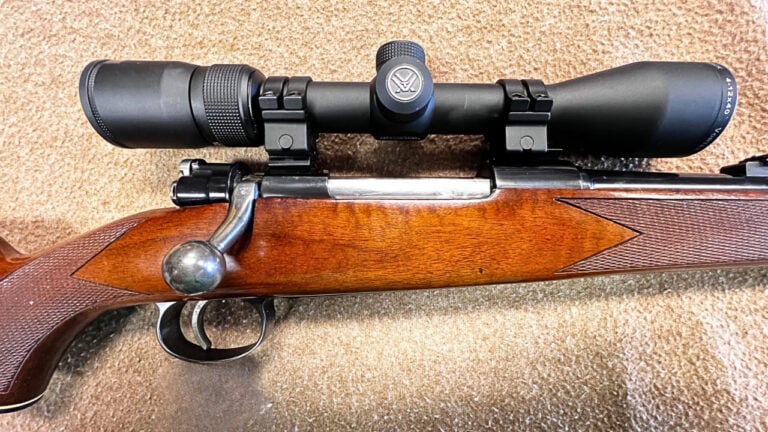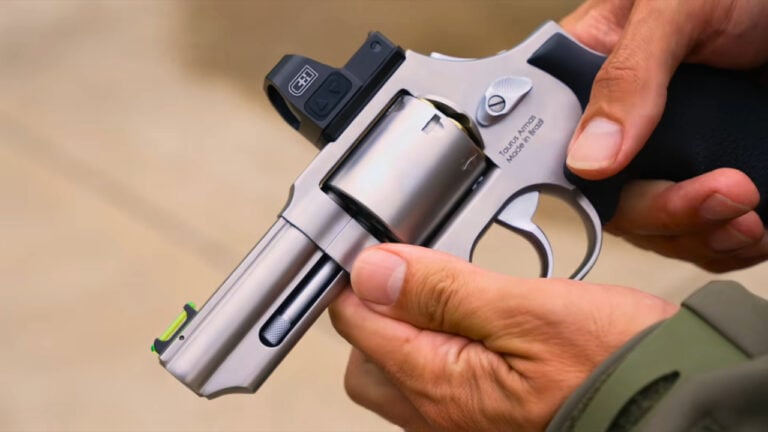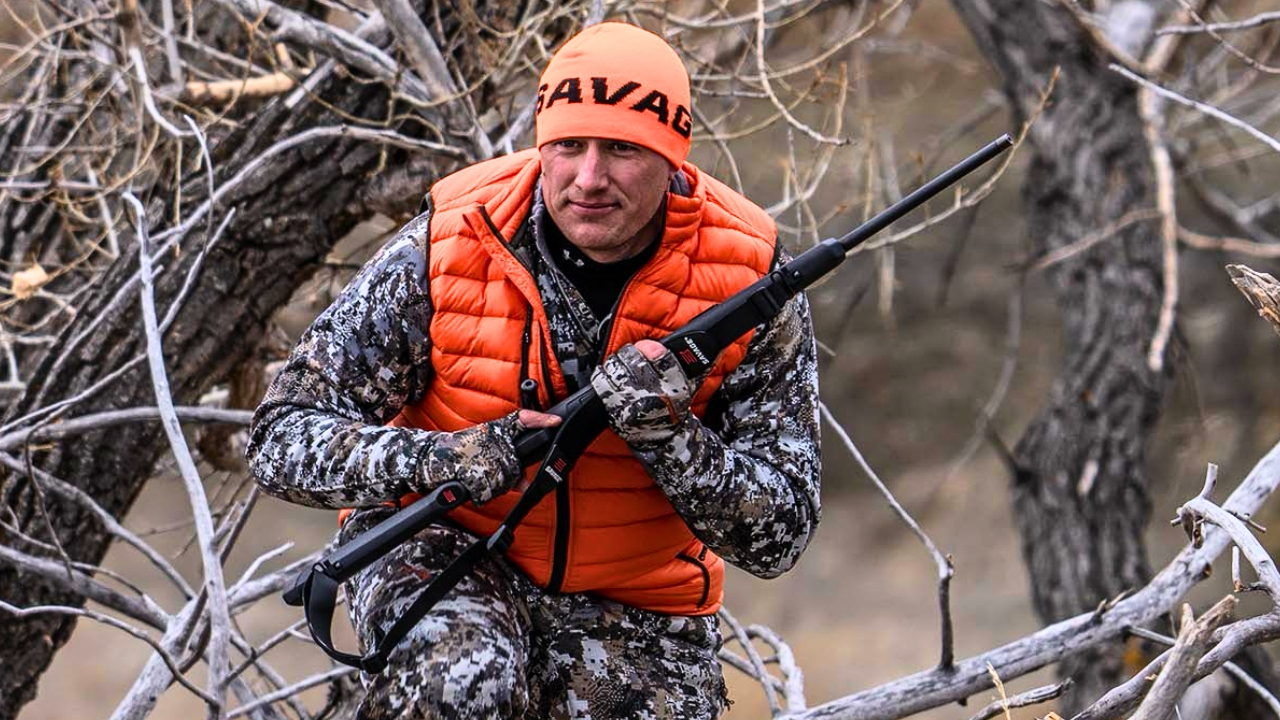
Photo credit: Savage Arms
Woods hunting changes what matters in a rifle cartridge. You usually do not need a laser-flat trajectory or enough retained velocity for a 500-yard shot. What matters more is quick handling, reliable penetration, manageable recoil, and enough bullet weight to work through a less-than-perfect angle at close range.
That is why some cartridges make much more sense in timber than they do on open prairie. They may look slow on paper or give up long-range performance, but inside 150 yards that often does not matter. A compact rifle chambered in a cartridge that hits hard, carries a useful bullet, and does not require a long barrel can be a much better woods gun than a high-velocity magnum. These 20 fit that role especially well.
.30-30 Winchester

The .30-30 has probably done more woods hunting than nearly any other centerfire cartridge in America. It is mild enough to shoot well, works beautifully from short lever guns, and has plenty of power for deer inside the ranges where thick timber usually limits shots.
Its biggest advantage is how naturally the cartridge fits compact rifles. A short lever gun is easy to carry through brush and quick to shoulder when a deer appears in a narrow opening. The .30-30 does not need a long barrel or heavy rifle to work properly, and modern hunting bullets have improved terminal performance without changing the cartridge’s basic character. In the woods, that old formula still makes sense.
.35 Remington

The .35 Remington gives up trajectory compared with faster cartridges, but it brings more bullet weight and frontal diameter than the .30-30. That makes it a natural fit for close-range deer and black-bear hunting.
A 200-grain bullet at moderate velocity hits with authority without creating the recoil or muzzle blast of a magnum. The cartridge also works well in compact lever rifles, which is where much of its reputation was built. Ammunition availability is the main drawback today, not performance. If you already have a good .35 Remington rifle and a supply of hunting ammunition, thick timber is exactly where it belongs.
.308 Winchester
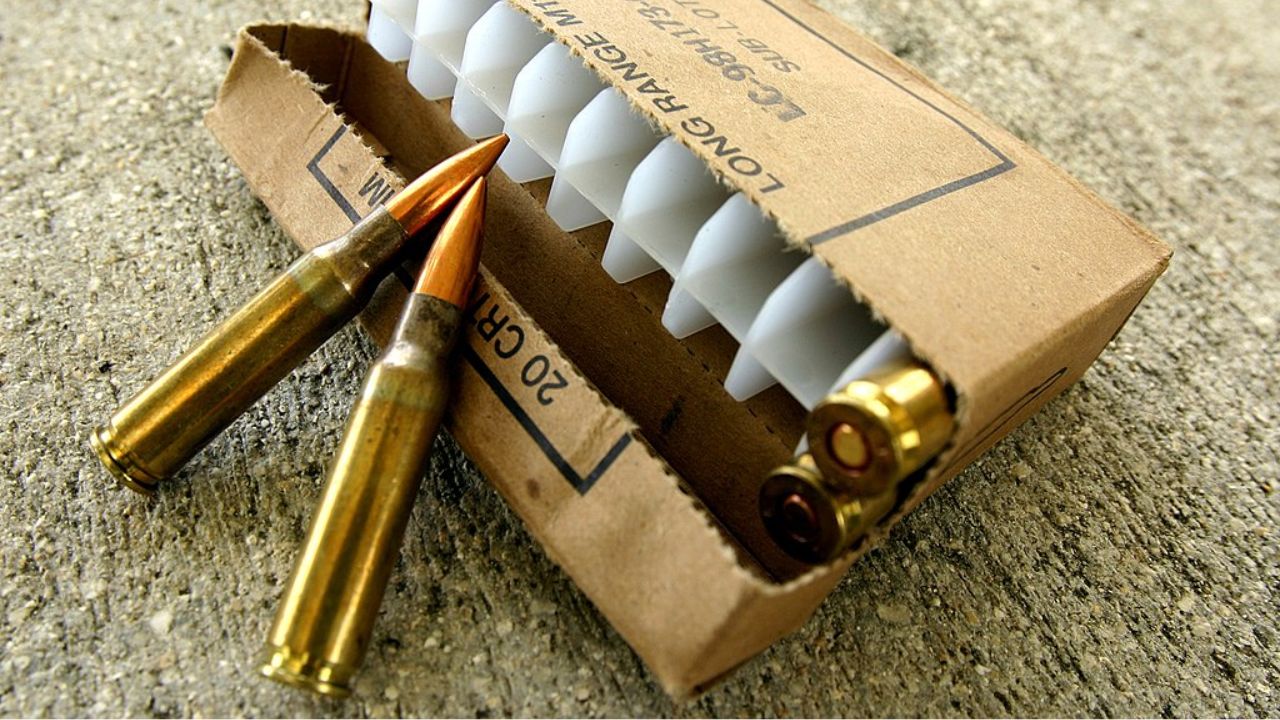
The .308 is usually discussed as a do-everything cartridge, but it is especially good in the woods because it performs efficiently from shorter barrels. You do not need a long rifle to get useful velocity, and the cartridge handles a wide range of bullet weights.
That makes a compact .308 bolt gun very hard to beat for timber hunting. You can use lighter bullets for deer or heavier bonded bullets for hogs, black bear, and elk without changing platforms. Recoil is manageable, ammunition is everywhere, and the cartridge does not punish the shooter with unnecessary blast. It may be less romantic than a lever gun, but practically, .308 is one of the strongest woods cartridges around.
.358 Winchester

The .358 Winchester takes the .308 case and opens it up for much heavier .35-caliber bullets. That gives it exactly the kind of performance that makes sense in timber.
You get a lot of frontal area, good penetration, and enough power for deer, hogs, black bear, and elk at realistic woods distances. The cartridge does not need extreme velocity because it was never designed around long-range shooting. In a short-action rifle, it stays compact and efficient. Factory ammunition is limited, which keeps it niche, but the performance is almost perfectly suited to the kind of hunting where shots are measured in dozens of yards rather than hundreds.
.338 Federal

The .338 Federal follows the same efficient short-action idea but steps up to .338-caliber bullets. It gives hunters heavier projectiles and excellent penetration without requiring a full-length magnum action.
That combination works especially well in timber. A compact rifle can carry substantial bullet weight without becoming overly heavy or loud, and the cartridge has enough authority for larger game without the recoil of a .338 Winchester Magnum. The trajectory is not especially flat, but that is almost irrelevant inside normal woods ranges. If you want a short-action rifle that hits harder than .308 without going magnum, the .338 Federal makes a lot of sense.
.45-70 Government

The .45-70 is about as far removed from flat-shooting magnum logic as you can get. It throws very heavy bullets at moderate velocity and delivers tremendous close-range authority.
That is exactly why it works so well in timber. A short lever rifle chambered in .45-70 is handy, quick, and powerful enough for nearly anything you are likely to hunt in North America. You do not need maximum-pressure loads either. Moderate ammunition is plenty effective at woods distances and is much easier to shoot. The cartridge’s limitations are obvious in open country, but in thick cover those same limitations barely matter.
.444 Marlin

The .444 Marlin gives lever-gun hunters a heavy .44-caliber bullet at true rifle velocity. It was built around the kind of short- to moderate-range hunting where frontal area and penetration matter more than ballistic coefficient.
That makes it an excellent woods cartridge. It hits harder than a .30-30 and gives you more reach than a handgun cartridge while still fitting a compact lever action. The biggest drawback is ammunition availability, especially compared with .45-70. Performance-wise, though, it remains one of the better close-range big-game cartridges ever designed.
.350 Legend
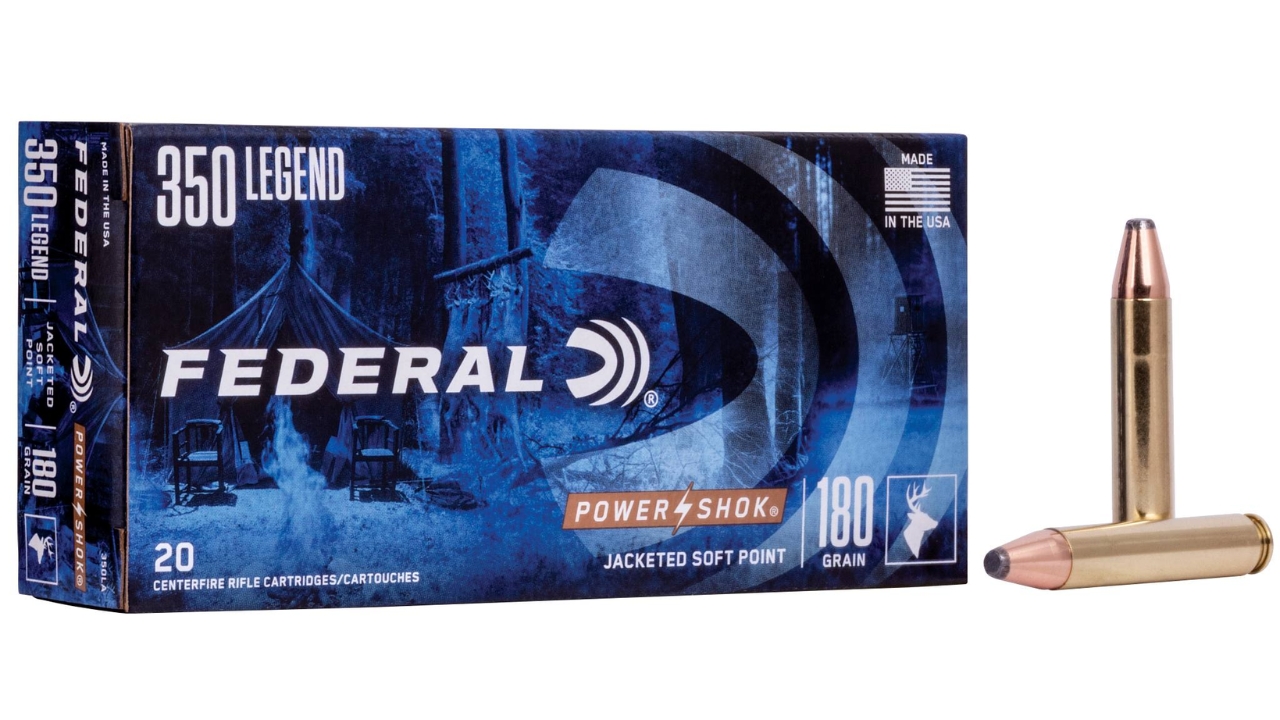
The .350 Legend became popular because of straight-wall hunting laws, but it also happens to fit thick-country hunting very well. Recoil is mild, rifles can be compact, and the cartridge performs well at the distances common in the woods.
It also works in bolt guns and AR-style rifles, giving hunters plenty of platform choices. The bullet diameter is useful for deer and hogs, and the cartridge does not require a long barrel to be effective. It is not a powerhouse, but that is not necessarily a weakness. A mild cartridge you shoot accurately is often better in tight cover than something much heavier.
.360 Buckhammer
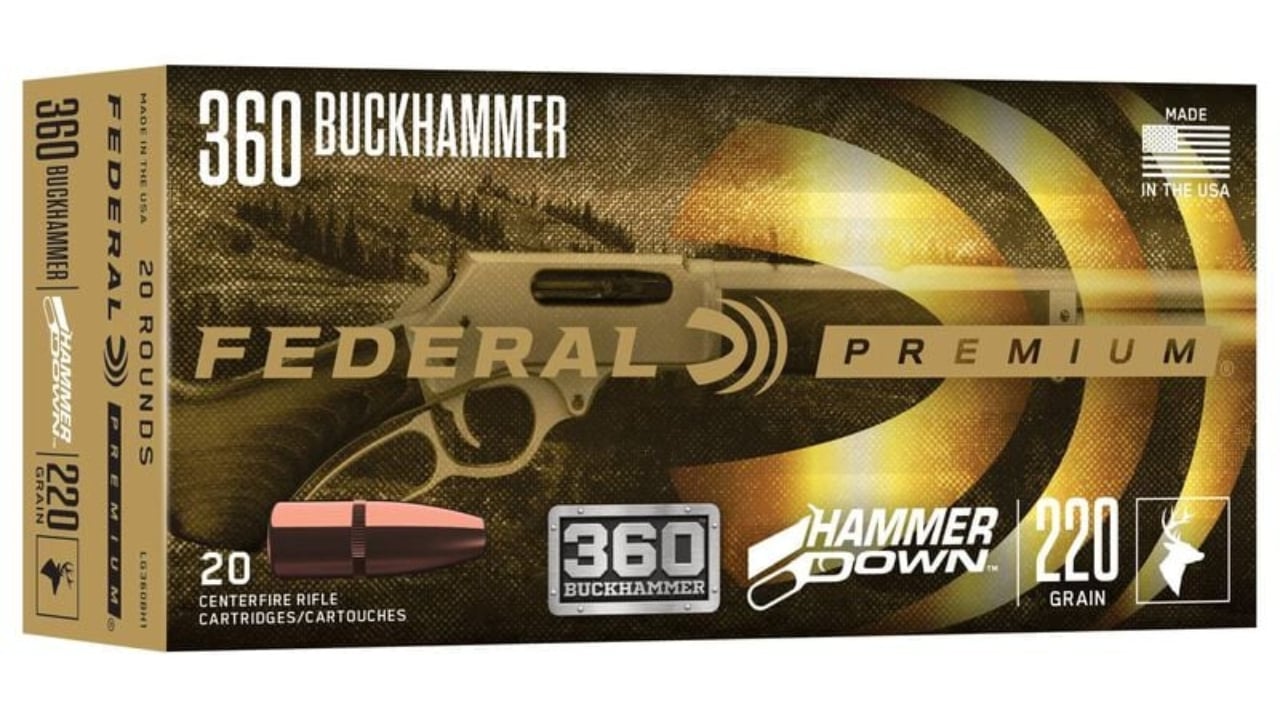
The .360 Buckhammer is another straight-wall cartridge that makes more sense in the woods than it does across open country. It launches relatively heavy .358-caliber bullets and is designed around moderate-range hunting.
The cartridge fits lever guns especially well, which gives it a major handling advantage in thick timber. It carries more bullet weight than .350 Legend and offers the kind of close-range authority many hunters want without stepping up to .45-70 recoil. It is still relatively new compared with the old woods classics, but the basic formula is sound.
.450 Bushmaster

The .450 Bushmaster is powerful, compact, and capable of working in AR-platform rifles. That combination makes it a strong woods cartridge for deer and hogs.
The round launches a large bullet with plenty of energy at close range, and its trajectory is perfectly adequate for the distances most timber hunters actually see. Recoil is significantly heavier than .350 Legend, but the payoff is greater frontal area and power. In a compact semiautomatic or short bolt gun, the .450 Bushmaster is a very practical heavy hitter.
.44 Magnum

From a rifle barrel, the .44 Magnum becomes a much more capable hunting cartridge than most people realize. Velocity jumps, recoil stays manageable, and the cartridge works especially well from short lever guns or compact bolt actions.
That makes it nearly ideal for deer and hogs in heavy cover. The rifles are light, ammunition is widely available, and the cartridge does not need long barrels or bulky actions. It is not something I would choose for open-country hunting, but inside 100 to 125 yards it can be very effective. For woods hunting, that is often all the range you need.
.357 Magnum

The .357 Magnum gets a major boost from a rifle barrel and becomes a legitimate deer cartridge at close range with the right hunting ammunition. It also gives you extremely mild recoil compared with most centerfire rifle rounds.
That makes it attractive for smaller-framed hunters or anyone who wants a very light, compact woods rifle. Lever guns chambered in .357 are particularly easy to carry and shoot. It is not the right answer for every state or every size of game, and shot placement matters, but for close-range deer and hog hunting it can make much more sense than people expect.
.45 Colt
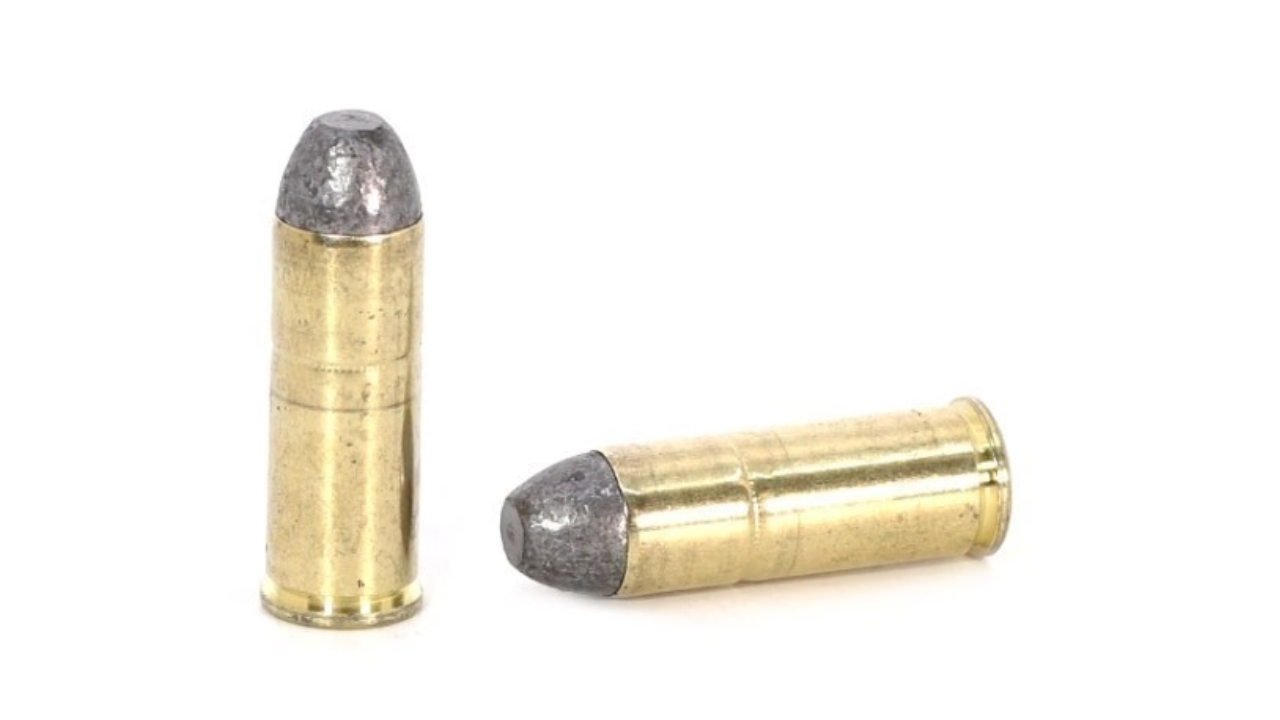
The .45 Colt can be surprisingly effective from a strong rifle when loaded appropriately. In modern lever guns rated for heavier ammunition, it offers substantial bullet weight and excellent short-range performance.
It also gives hunters the kind of mild blast and easy handling that fits the woods well. The important part is understanding the rifle and load because .45 Colt ammunition varies enormously in pressure. Standard cowboy loads are not the same thing as heavy hunting ammunition. In the right platform, though, a .45 Colt lever gun can be a very effective timber rifle.
.32 Winchester Special
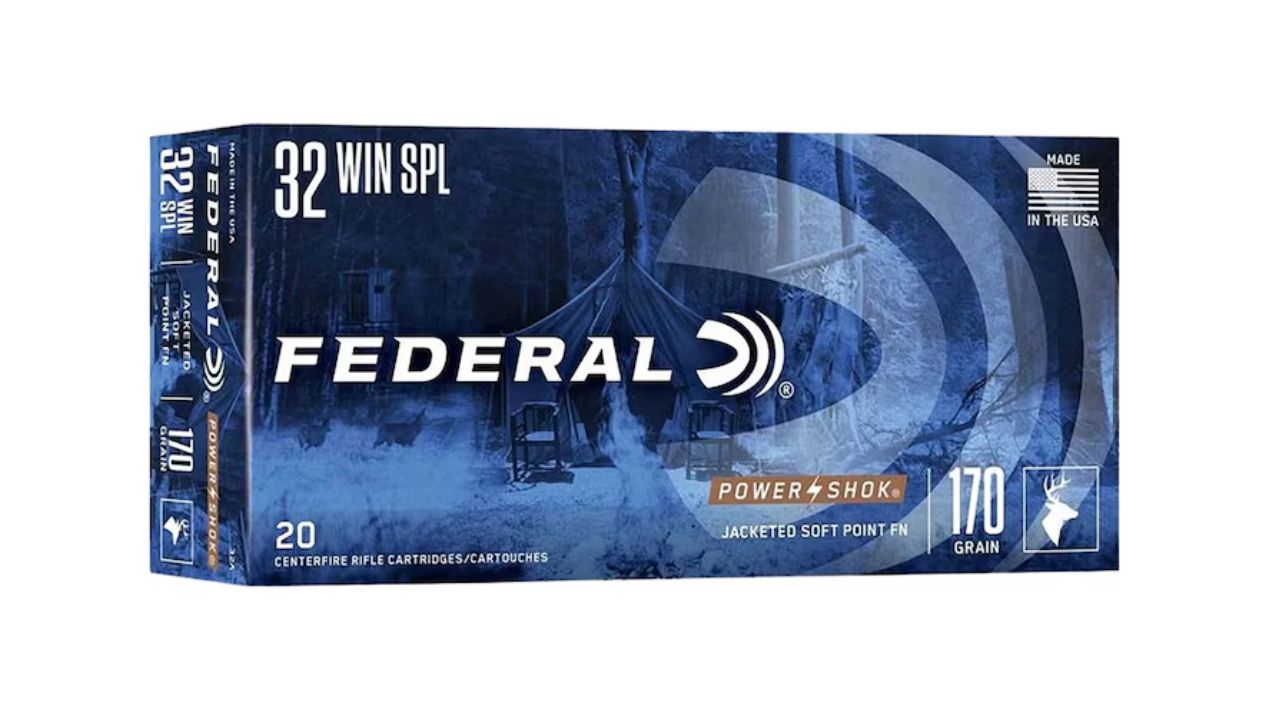
The .32 Winchester Special was designed around the same basic woods-hunting role as the .30-30. It throws a slightly larger bullet and spent generations riding in lever guns across deer country.
It never offered enough advantage to replace the .30-30, but that does not mean it is poorly suited to the woods. At close and moderate range, it works extremely well on deer and black bear. Ammunition availability is the real problem now. If you already own one, though, there is no reason to think the cartridge suddenly stopped doing what it did for generations.
.375 Winchester

The .375 Winchester was built for strong lever actions and gives you much more bullet than a .30-30 without moving into the bulk of a large magnum rifle.
That makes it an excellent close-range woods cartridge for deer, hogs, and black bear. The heavy bullet and substantial frontal area are useful when shots are close and angles are not perfect. It never gained enough popularity to become mainstream, so ammunition is a challenge today. Purely from a performance standpoint, though, the cartridge fits thick-cover hunting extremely well.
7mm-08 Remington

The 7mm-08 is usually thought of as a light-recoiling all-around cartridge, and that is exactly why it works in the woods. It fits short-action rifles, handles shorter barrels well, and does not create excessive recoil or blast.
You can carry a compact rifle all day without giving up much hunting capability. The cartridge also has enough bullet weight and sectional density for deer, black bear, and elk with proper loads. It is flatter shooting than most traditional woods cartridges, which gives you more flexibility if the timber opens into a field. That balance is hard to beat.
.30-06 Springfield
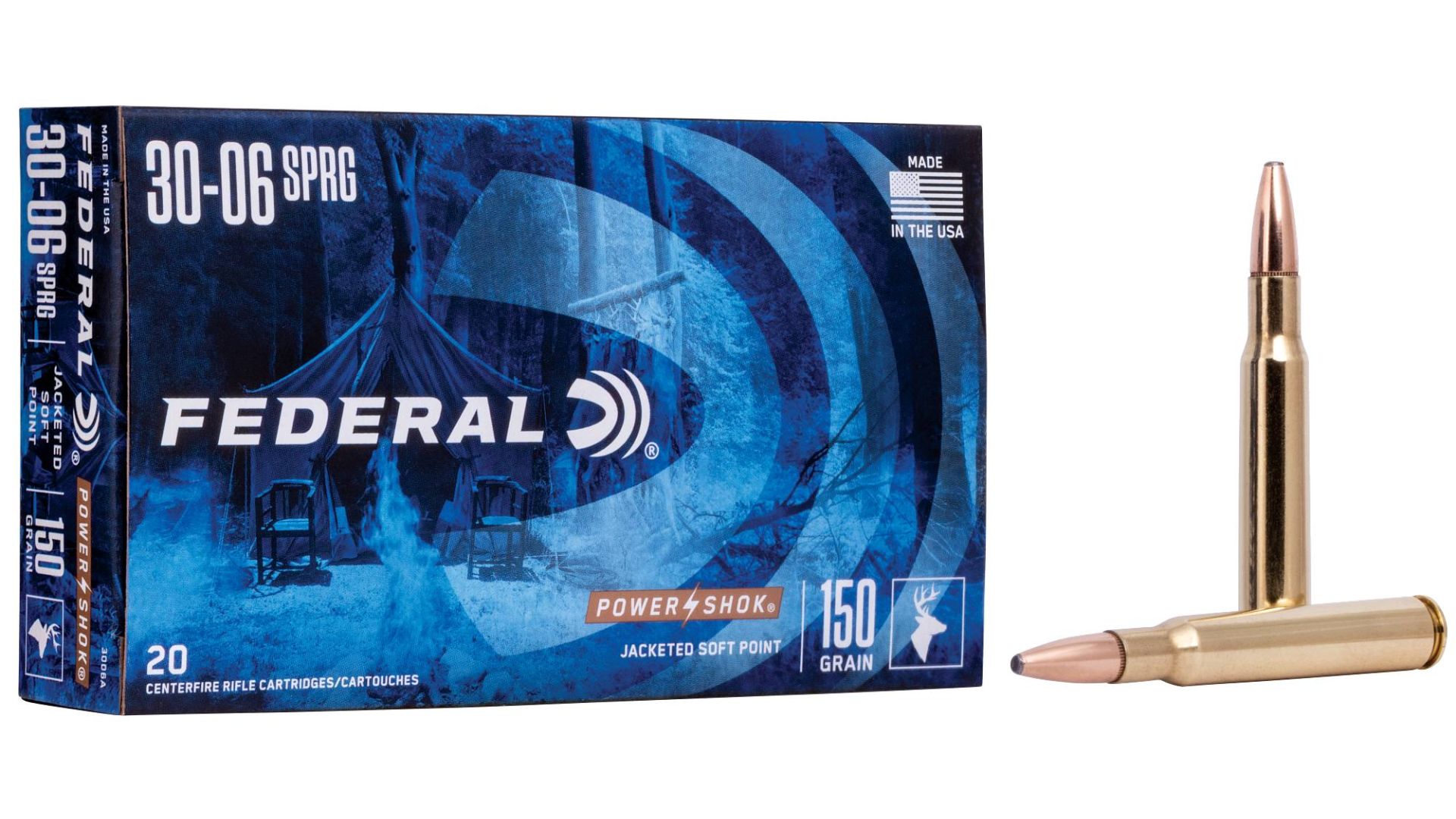
The .30-06 is not specifically a woods cartridge, but it works exceptionally well there because of how broad its bullet selection is. You can use moderate 150-grain loads for deer or step up to heavier bullets for elk and bear.
A short-barreled .30-06 can be louder than a .308, but the cartridge still gives you a lot of flexibility without needing magnum power. For hunters who move between timber and more open terrain, it remains a practical one-rifle solution. In the woods, the ability to use heavy bullets matters far more than the fact that the cartridge can also reach well beyond typical timber distances.
.338-06 A-Square

The .338-06 is one of those cartridges that almost seems designed for hunters who care more about bullet performance than velocity. It gives you heavy .338 bullets from a standard-length action without the recoil of a full magnum.
That makes it excellent for elk, black bear, hogs, and larger deer in heavy timber. The cartridge penetrates well, hits hard, and does not require extreme velocity to work. It is mostly a handloader’s cartridge today, which limits its appeal, but the concept is extremely sound. In the woods, the .338-06 does almost everything a much larger magnum would do with less punishment.
.35 Whelen

The .35 Whelen is one of the best heavy woods cartridges ever created. It takes the .30-06 case and opens it up for .358-caliber bullets, giving hunters serious penetration and frontal area without magnum recoil.
It is particularly strong for elk, black bear, moose, and hogs where shots are close enough that trajectory does not dominate the decision. A 225- or 250-grain bullet carries plenty of authority through heavy tissue and bone. The Whelen is bigger than most deer hunters need, but in thick country where larger game is on the menu, it makes far more practical sense than many magnums.
.300 Savage

The .300 Savage is an older cartridge, but its performance remains well suited to woods hunting. It gives you near-.308-class utility in a compact package and was one of the reasons the Savage 99 became such a respected hunting rifle.
At normal timber distances, the cartridge is still plenty for deer, hogs, and black bear. It does not need a long barrel, recoil is manageable, and the bullet weights are familiar and effective. Factory ammunition is less common than it once was, which keeps the cartridge from being an easy recommendation for a new rifle. If you already own one, though, it is still a very sensible woods round.
Like The Avid Outdoorsman’s content? Subscribe to our newsletter so you never miss an article.
Here’s more from us: