Photo credit: The Avid Outdoorsman
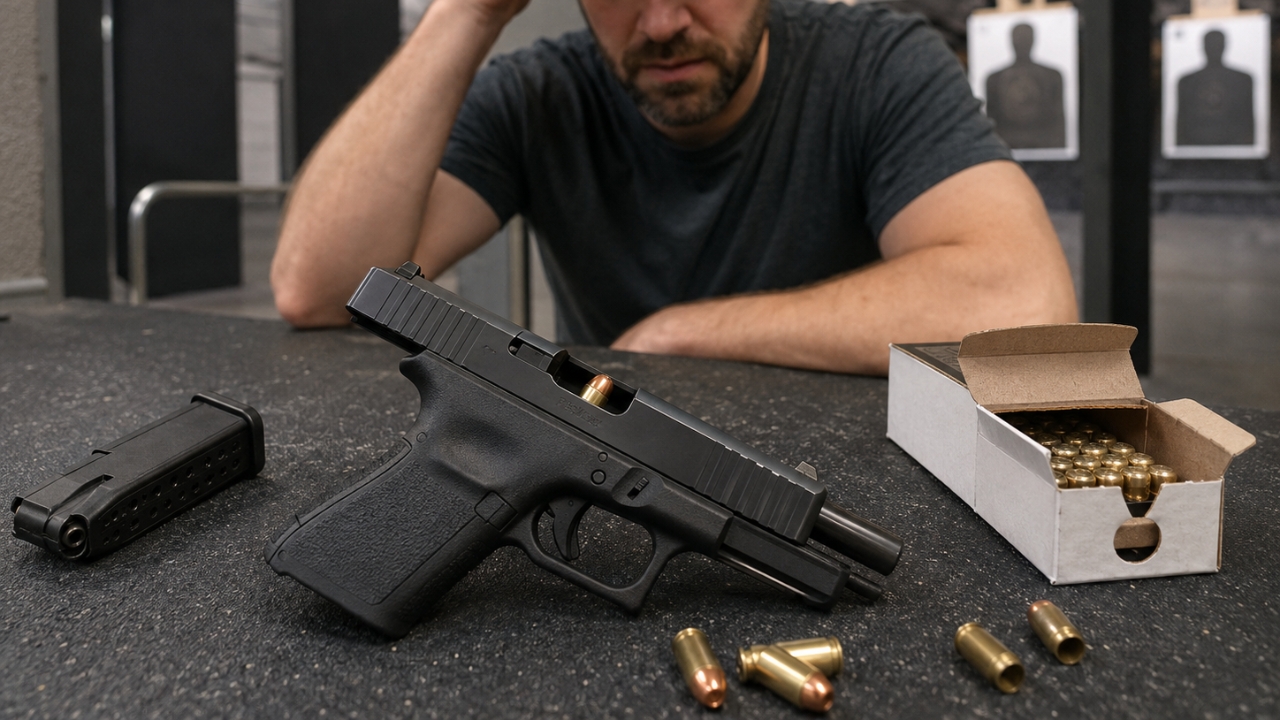
The Shield Plus owner did not walk into the range expecting a confidence problem.
That is usually how these things go. You bring a carry-sized pistol to the range, load up normal practice ammo, and expect the session to be routine. Maybe you are working on draw speed, maybe grip, maybe groups at a few distances. The goal is boring reliability.
Then the pistol stops.
In a Reddit post, the gun owner said his Shield Plus had a nasty malfunction during a range trip, and the big question afterward was whether the problem came from the gun or the ammunition.
That is the frustrating part.
A failure to feed can come from several places. Sometimes it is the gun. Sometimes it is the magazine. Sometimes it is the shooter’s grip. Sometimes it is a weak or oddly shaped round. Sometimes it is dirt, dryness, or a recoil spring that is not doing what it should. A single bad round can make a good pistol look questionable, and a real gun issue can make perfectly fine ammo look guilty.
The owner was stuck sorting through that gray area.
A Shield Plus is a popular carry pistol because it is small enough to conceal but still shootable enough for regular practice. That means a malfunction in one gets attention. This is not just a range toy for most people. It is the kind of pistol someone may actually carry, load with defensive ammo, and trust in a bad moment.
So even one ugly failure can plant doubt.
At the range, the shooter can stop, lock the gun open, look at the round, clear the chamber, and inspect what happened. In real life, there may not be time for that. A failure to feed means the gun is out of action until the shooter clears it. If the round is jammed badly, that can take more than a quick tap-rack. If the shooter is under stress, that small mechanical problem can feel enormous.
That is why the owner was right to take it seriously.
The key is not to overreact to one malfunction, but also not to pretend it did not happen. A carry gun does not need to be worshiped as perfect. It needs to be tested honestly. If it fails, the owner needs to ask what changed. Was it a new box of ammo? A new magazine? A dirty gun? A weak grip late in the session? A round with a damaged case or bullet seated oddly? Did the failure happen from a full magazine, the last round, or somewhere in the middle?
Those details matter.
The “ammo or gun” question often starts with looking at the cartridge. If the round is dented, crushed, set back, or visibly odd, the ammo becomes a stronger suspect. If the same gun runs fine with other ammo, that also points toward the round or that box. But if the same failure repeats across different ammo and different magazines, the pistol needs a closer look.
A single malfunction is a clue.
A repeated malfunction is a pattern.
The magazine should not get ignored either. In small carry pistols, magazines do a lot of work. Feed lips, follower angle, spring pressure, and how the rounds sit can all affect feeding. If one magazine causes problems and another does not, that is useful information. Marking magazines is one of those boring habits that saves a lot of guessing later.
The shooter also has to be honest about grip. Compact pistols can be less forgiving than full-size guns. A loose grip, especially late in a range session when hands are tired, can cause cycling issues. That does not mean every malfunction is “limp-wristing,” and people can be too quick to blame the shooter. But it belongs on the list.
The right move after a range failure is a controlled retest.
Clean and lube the gun. Inspect the magazines. Try quality factory ammo. Shoot enough rounds to see whether the failure repeats. If the gun is meant for carry, test the actual defensive load too. If the malfunction repeats, stop carrying it until the cause is fixed. If it runs clean through a solid follow-up session, confidence can start coming back.
That is the part people sometimes miss.
Reliability is not a feeling. It is evidence. The Shield Plus may be fine. The ammo may have been the problem. The magazine may have caused it. But the owner cannot know by guessing. He has to make the gun prove itself again.
The best thing about this malfunction is where it happened.
It happened at the range, not during a defensive moment. Nobody was hurt. The shooter had time to stop and ask the right questions. That is irritating, but it is also exactly what practice is for.
A bad round or bad feed can shake confidence.
A careful retest is how you get it back — or find out the gun does not deserve it yet.
Commenters mostly treated the malfunction as something to diagnose carefully rather than panic over.
Several people said one failure does not automatically condemn the Shield Plus, especially if the ammo looked suspicious or the gun had otherwise run well. But they also agreed it should not be ignored if the pistol is used for carry.
Others focused on magazines. Mark the magazine involved, test it again, and see if the issue repeats. A single bad magazine can make a reliable pistol look unreliable.
A lot of advice came down to trying different ammo. If the gun runs clean with other factory loads but chokes on one box or one brand, the ammo may be the problem. If it keeps happening with everything, the gun needs attention.
Some commenters also mentioned grip and maintenance. Compact guns can be sensitive to weak grip, and small carry pistols still need proper cleaning and lubrication.
The main takeaway was simple: a carry gun gets to make one mistake at the range only if the owner follows up and proves it was not a pattern.