Photo credit: The Avid Outdoorsman
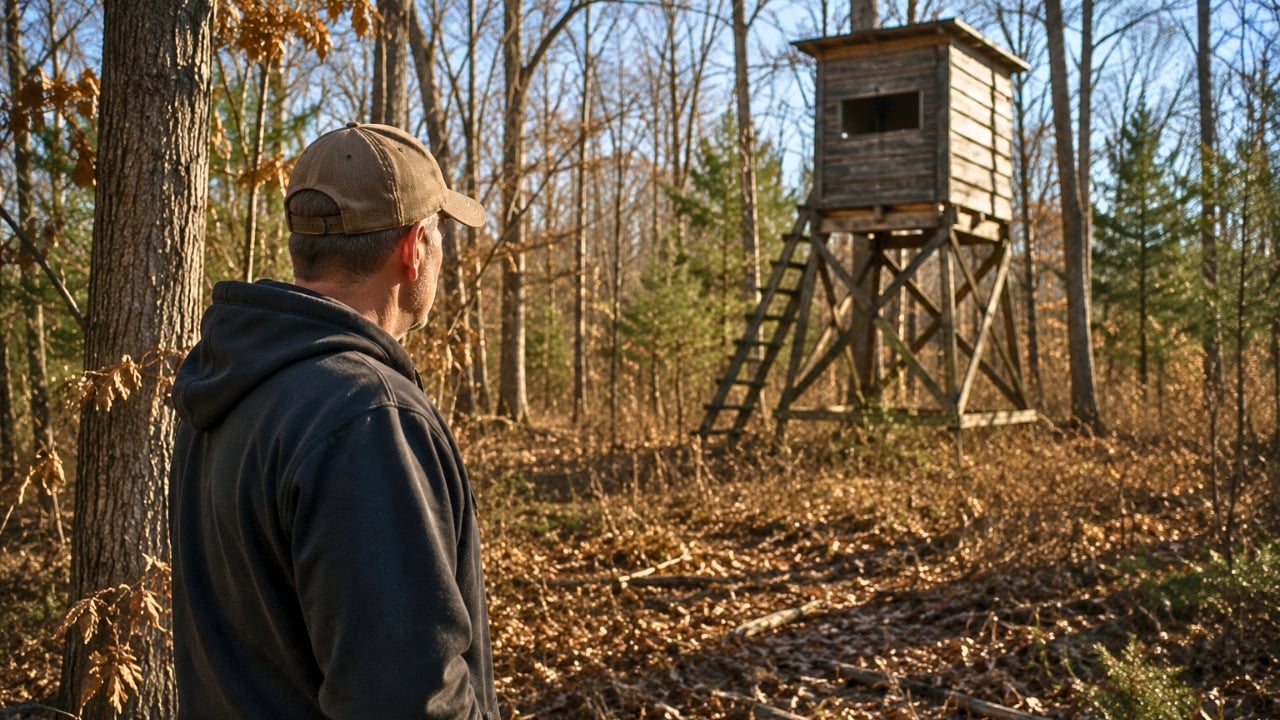
The homeowner said the issue was not complicated at first glance. There was a deer stand on his private property, and he did not put it there. That alone raised the obvious question: who did?
According to the Reddit post, the stand was freestanding, which meant someone had hauled it onto the property, set it up, and likely planned to come back and use it. That does not happen by accident. A hunter does not randomly drop a stand in the woods without scouting the area, finding a spot, and deciding it is worth sitting there.
The original Reddit post can be found here: https://www.reddit.com/r/legaladvice/comments/q5xerv/can_i_destroy_free_standing_deer_stands_on_my/
For the landowner, the stand created two problems at once. First, someone had been trespassing. Second, that person might return with a firearm or bow during hunting season. That changes how you move around your own property. You start wondering whether someone is already watching trails, baiting nearby, cutting shooting lanes, or assuming they can hunt there because nobody has stopped them yet.
The homeowner wanted to know if he could destroy the stand or remove it. That is where it gets tricky. From a common-sense point of view, it feels like anything left on your private land without permission should be yours to deal with. But legally, destroying someone else’s property can create a separate issue, even if that property was placed there wrongfully.
That leaves landowners in an irritating spot. They did not invite the problem. They did not give permission. But if they smash the stand or drag it away without documenting anything, the trespasser could later claim theft, damage, or some misunderstanding about permission.
The smarter path is usually slower and more careful: take pictures, mark the location, document the property boundary, contact local law enforcement or a game warden, and find out what state law allows. That may feel like too much effort when the stand clearly should not be there, but it protects the landowner from turning a trespass complaint into a property-damage argument.
There is also a safety concern. If the person who put it there comes back and finds it gone, they may not react calmly. Confronting an unknown hunter in the woods is not ideal, especially before daylight or during season. A camera, report, and paper trail can be safer than waiting beside the stand to catch them.
Commenters generally told the homeowner not to destroy the stand right away. Several said he should photograph it, note exactly where it was, and contact a game warden or conservation officer. Since the issue involved possible hunting trespass, wildlife officers could explain the best legal process.
Others said the landowner should make sure the property was clearly posted. No-trespassing signs, boundary markings, and visible warnings would make it harder for the stand owner to claim confusion later.
Some commenters suggested leaving a written notice on the stand first, telling the owner it was on private property and had to be removed by a certain date. Others preferred calling authorities first, especially if the landowner suspected active hunting trespass.
A few people recommended a trail camera pointed at the stand. That could identify who came back without requiring a direct confrontation. If someone returned armed, the landowner would have evidence and could let the game warden handle it.
The post ended with the homeowner facing a problem many rural landowners know too well. The stand was sitting on his land, but the safest way to remove it was not necessarily the fastest one.
Like The Avid Outdoorsman’s content? Be sure to follow us.
Here’s more from us: